




Traditional Solitaire Engagement Ring
A traditional solitaire engagement ring distils centuries of romantic design into a single stone held securely on the finger.
Traditional Solitaire Engagement Ring
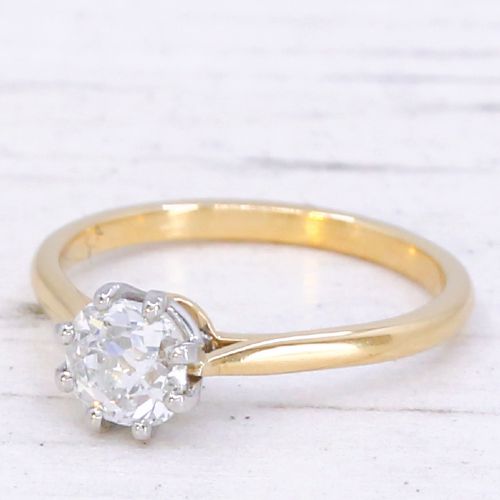
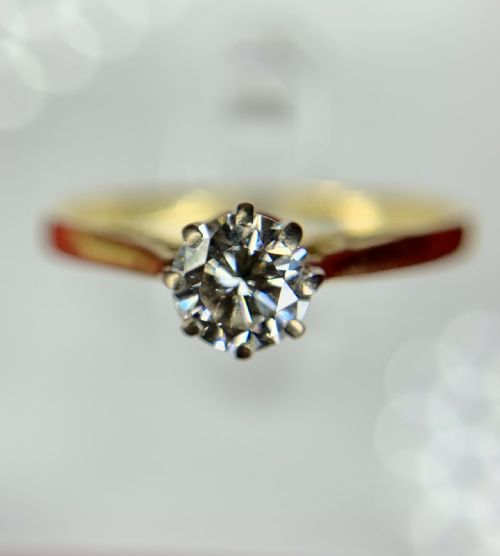
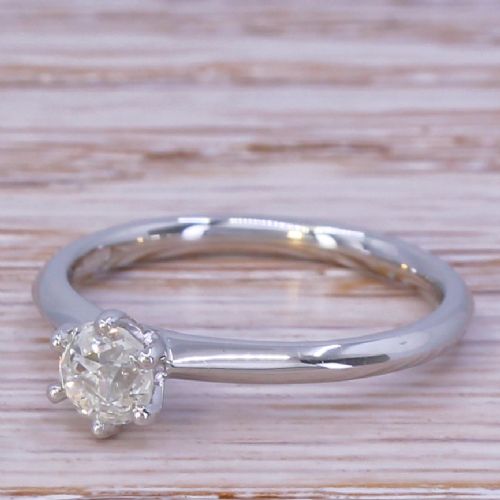
A traditional solitaire engagement ring centres upon a single gemstone set into a precious metal band, presenting a clean silhouette that has endured for generations.
The selections available here span from Victorian claw-set opals and illusion-set diamonds to Edwardian mine cuts and mid-century platinum mountings.
Buyers seeking this classic style encounter various periods including the late nineteenth century, the 1920s, and the 1940s, each bringing distinct mounting characteristics to the form.
Materials and Construction
Goldsmiths shape these rings from yellow gold, 18ct white gold, and durable platinum, frequently combining yellow gold bands with platinum settings to enhance the brilliance of the stones.
Stones are secured using traditional claw settings or illusion settings that increase the perceived presence of the central gem.
Cut techniques range from old European and mine cuts to old cushion cuts, reflecting the hand-faceted methods of their respective periods.
Listings feature periods from the Victorian era through the 1960s, utilising diamond, platinum, opal, and gold materials.
Evaluating Quality
The excellence of these rings rests in the integrity of the original setting work and the proportion of the central stone relative to the band.
Finer examples maintain crisp metalwork around the claws and bezels, preserving the intended geometry without excessive thinning from past wear.
The presence of independent gem reports provides documentation for stone weight, colour, and clarity grades, adding certainty to older examples.
The Traditional Solitaire Engagement Ring Glossary
- Solitaire
- A ring featuring a single set gemstone, typically a diamond, designed to draw focus entirely to the central stone.
- Old cut
- A term for diamonds faceted by hand before modern machinery standardised proportions, often exhibiting smaller tables and higher crowns.
- Claw set
- A mounting style where metal prongs hold the gemstone in place, allowing maximum light to enter the pavilion.
- Illusion set
- A mounting technique designed to make the central diamond appear larger by surrounding it with a faceted metal plate.
- Platinum
- A dense, durable white metal utilised in fine jewellery making for its strength in secure stone settings.
Traditional Solitaire Engagement Ring: Frequently Asked Questions
How can I tell the period of a ring?
Dating relies on stylistic clues such as the mounting technique, metal choice, and the specific facet pattern of the central diamond.
Victorian pieces often employ claw settings in yellow gold, whereas Edwardian and later pieces frequently utilise platinum.
Are all solitaire rings made with diamonds?
While diamonds remain the predominant choice, historical examples incorporate alternative gems such as opals or rubies.
These varied centrepieces offer distinct colours while maintaining the single-stone solitaire format.
How do I care for an antique ring?
Preserving these pieces requires gentle cleaning with warm soapy water and a soft brush, avoiding harsh chemical ultrasonic cleaners.
Periodic inspection by a jeweller ensures that older claws remain secure around the central stone.