





Traditional Slipper Chair
A traditional slipper chair brings low seating and nineteenth-century upholstery to a bedroom or fireside, offering comfort and compact proportion.
Traditional Slipper Chair
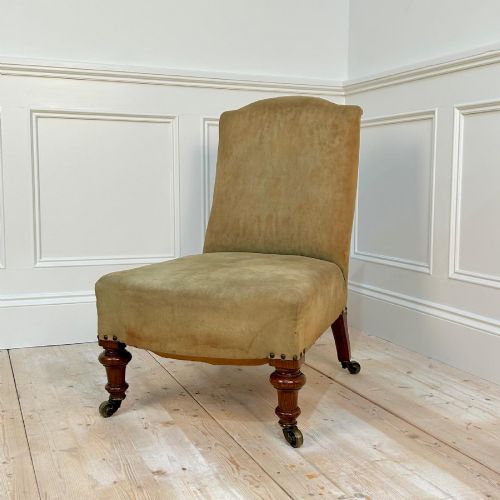
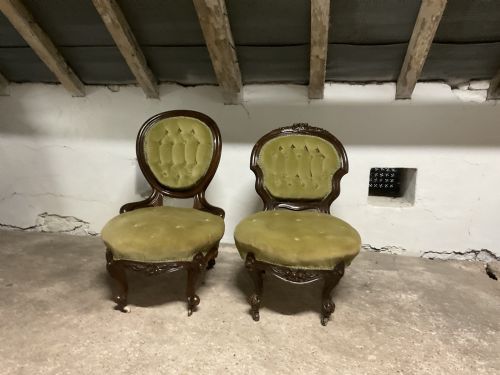
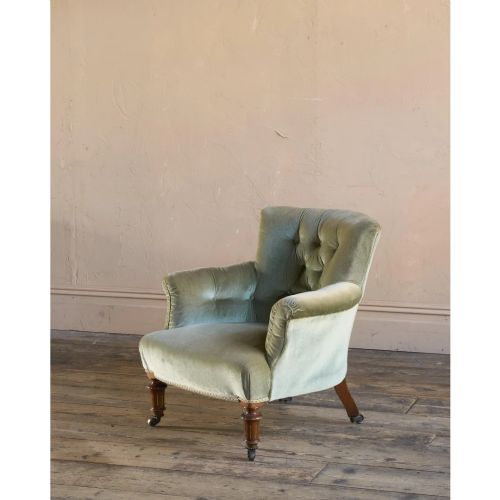
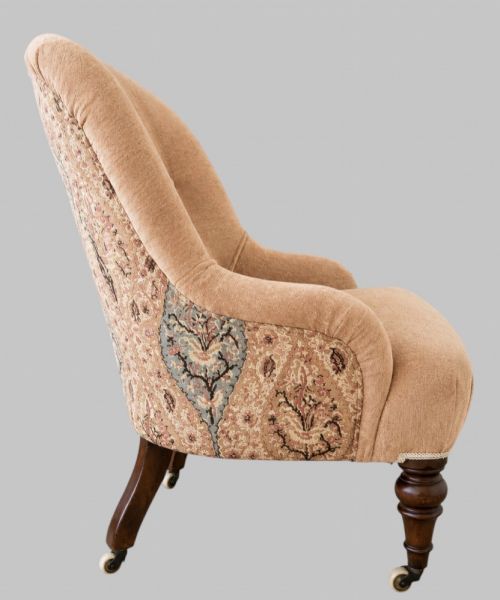
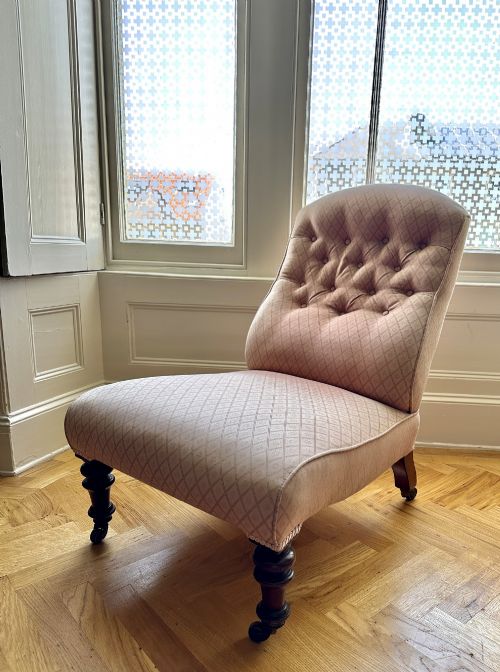
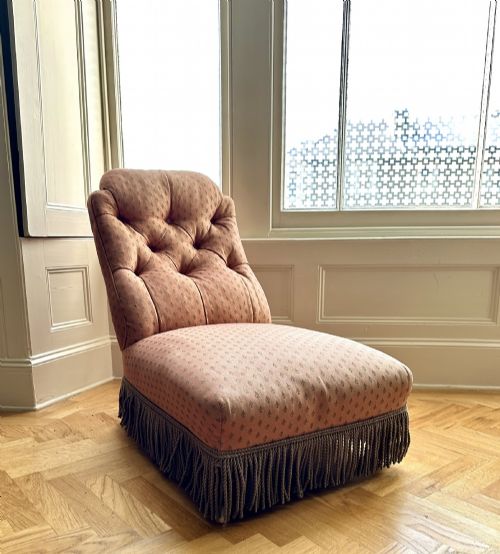
When you search for a traditional slipper chair, you are looking at low-slung, upholstered seating designed originally for nineteenth-century bedrooms to allow ladies to dress comfortably. The most common examples met on this page date from the Victorian and Edwardian periods, appearing in forms such as nursing chairs, bedroom chairs, and low fireside seats.
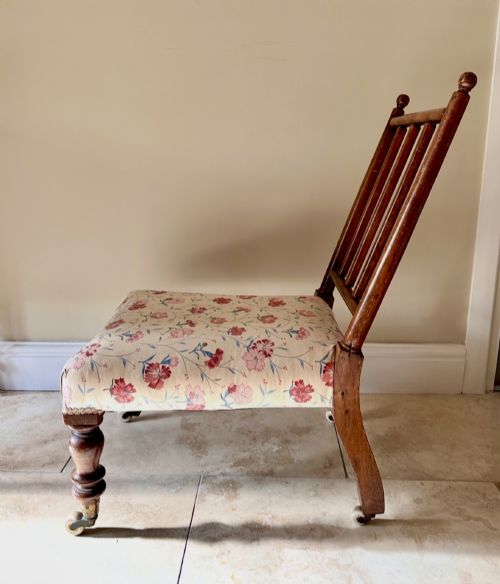
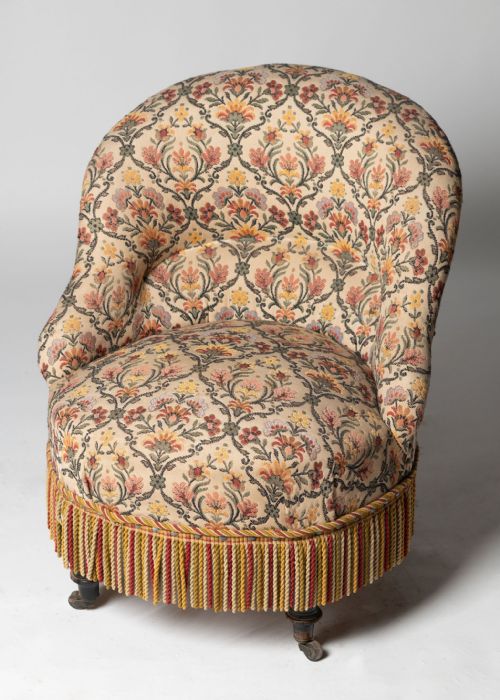
These pieces frequently feature mahogany, walnut, or oak timber frames paired with button-backed upholstery, spindle backs, or scrolled frames. They sit close to the floor on short legs, often fitted with brass castors to ease movement across heavy carpets.
Originating largely within nineteenth-century English domestic spaces, these chairs reflect diverse stylistic influences ranging from William IV and Georgian restraint to French Napoleon III and Chippendale revival designs. Buyers select them for their diminutive scale and suitability for modern bedrooms or intimate corners.
How they were made
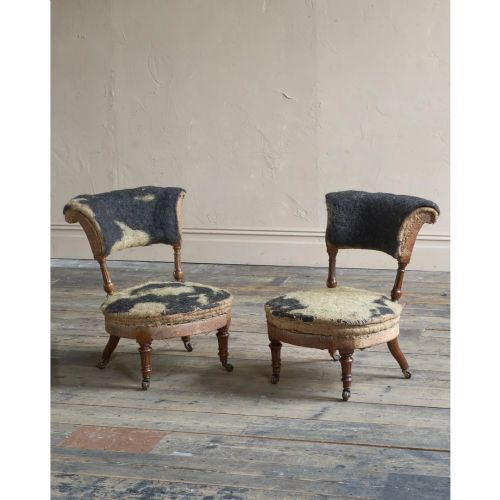
Makers constructed the structural frames of these chairs from hardwoods including mahogany, walnut, oak, and rosewood, joined with traditional cabinetmaking techniques. Timber components were carved, turned into spindle backs, or left as polished show-wood frames around the upholstered core.
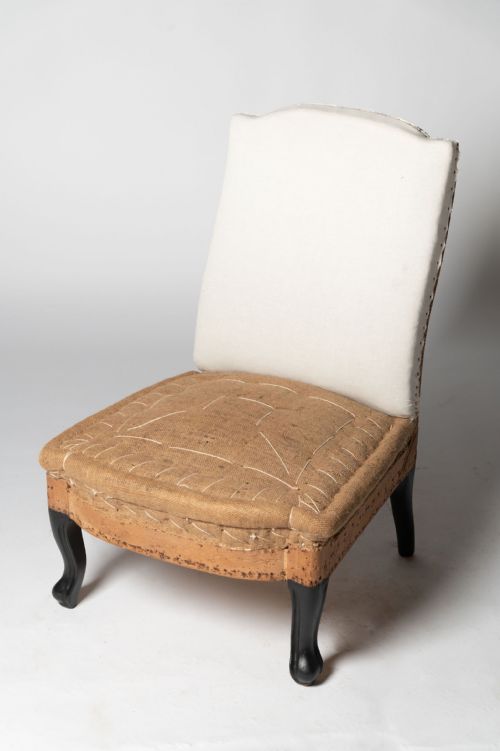
Upholstery techniques relied on webbing, hessian, and traditional stuffing materials beneath outer layers of cotton, velvet, linen, and patterned fabrics. Button-tufting secured the interior padding deeply into the backrests, while decorative fringes and brass castors finished the lower sections.
Traditional Slipper Chair Retail Price Guide 2026
Typical asking prices for traditional slipper chair among the pieces listed under this phrase on Sellingantiques today, from the lower quarter to the upper quarter. They describe what is for sale here now, not the wider market.
Periods represented span from the Georgian era through William IV, Victorian, and Edwardian times up to the early twentieth century.
What varies in quality
The distinction between standard production and finer examples rests in the crispness of the timber carving and the integrity of the frame construction. Chairs displaying well-figured mahogany, walnut, or rosewood show greater material selection by the original cabinetmaker.
Upholstery detailing also separates the tiers, where deep buttoning and traditional hand-stitching demonstrate superior craftsmanship compared to simpler sprung insertions. Stamped maker marks or specialised workshop attribution further elevate the standing of a piece within the range.
Howard and Sons·Gillows
The Traditional Slipper Chair Glossary
- Slipper chair
- A low-seated upholstered chair traditionally used in bedrooms for changing shoes or dressing. These pieces sit close to the floor without arms to accommodate voluminous nineteenth-century garments.
- Nursing chair
- A low-backed Victorian armchair designed for nursing infants, sharing a similar compact proportion with the slipper chair. They often feature sprung seats and padded button backs.
- Button back
- An upholstery method where deep indentations are formed by stitching through the padding to buttons on the surface. This technique secures internal stuffing while creating a geometric quilted pattern.
- Castor
- A small wheel attached to the base of furniture legs to assist movement. Nineteenth-century examples commonly incorporate brass mountings with ceramic or wooden wheels.
- Show-wood
- Exposed timber framework on an upholstered chair where the polished wood grain remains visible around the fabric body. This feature highlights the cabinetmaker's skill alongside the upholsterer's work.
Traditional Slipper Chair: Frequently Asked Questions
What is a traditional slipper chair used for?
Originally designed for nineteenth-century bedrooms, these low chairs assisted women with dressing and putting on footwear. Today, buyers use them as accent seating in bedrooms, dressing rooms, and fireside corners where space is limited.
Their low profile and comfortable upholstered backrests make them practical for relaxed sitting while maintaining a compact footprint that suits smaller rooms.
How do I date a Victorian slipper chair?
Dating relies on examining the timber frame, upholstery style, and construction methods. Mid-nineteenth-century examples often feature solid mahogany or rosewood frames with elaborate button-backed velvet or floral upholstery.
Later Victorian and Edwardian pieces frequently utilise lighter oak or walnut frames, sometimes incorporating spindle backs or turned legs characteristic of the turn of the twentieth century.
Are slipper chairs comfortable for daily sitting?
Yes, despite their diminutive height, these chairs offer supportive seating thanks to deep sprung bases and padded backrests. Their low posture provides a relaxed lounging angle suited to reading or resting.
Many period examples have been re-upholstered using modern interior foams while retaining their traditional outer fabrics and antique wooden frames.
What is the difference between a slipper chair and a nursing chair?
Slipper chairs are traditionally armless with very low seats designed for bedrooms and dressing tasks. Nursing chairs share the low profile but often include slightly higher backrests and occasionally low side arms to support a person holding an infant.
In historical listings, the two terms frequently overlap as both describe nineteenth-century low upholstered seating.