


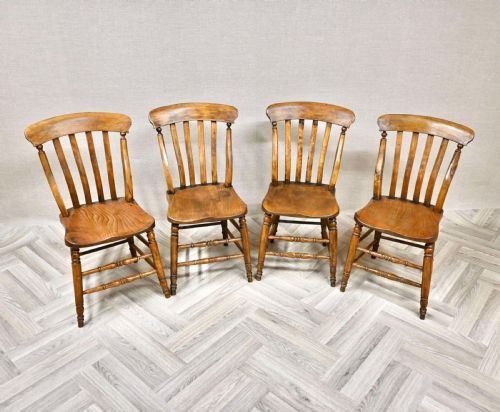
Traditional Slat Back Chairs
Traditional slat back chairs bring vernacular warmth to a room, offering sturdy wooden seating shaped by centuries of country cabinet-making.
Traditional Slat Back Chairs
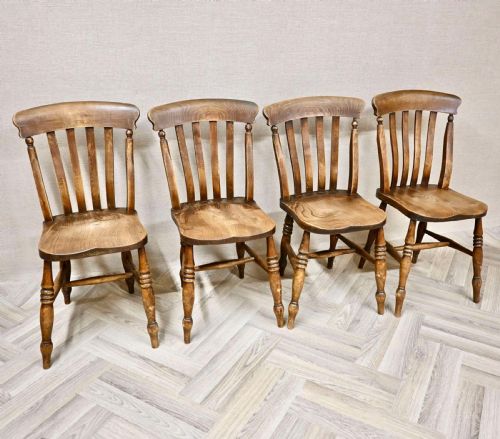
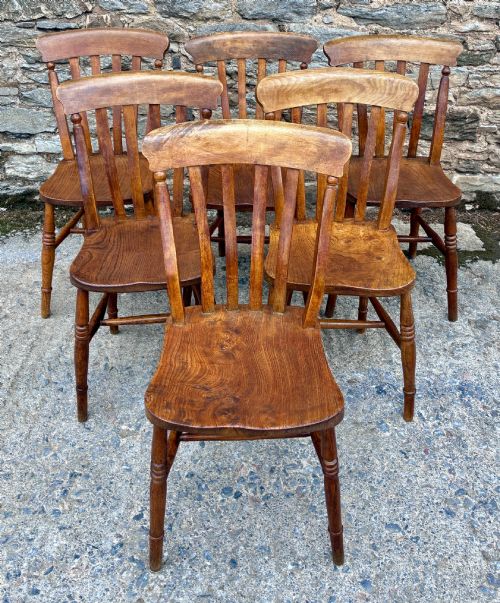
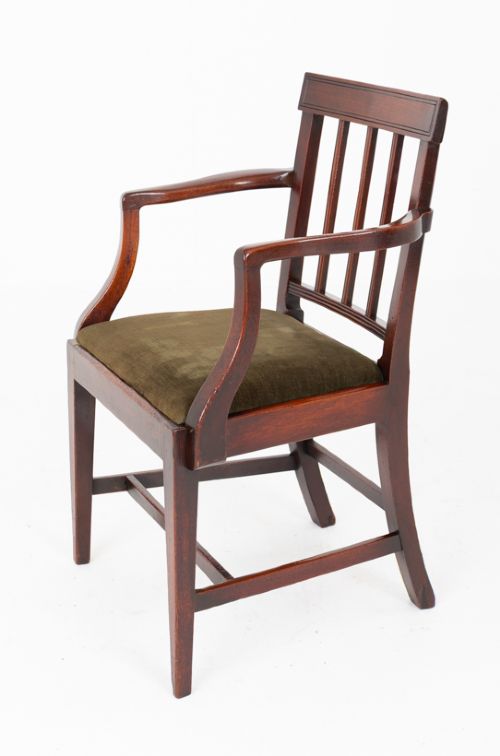
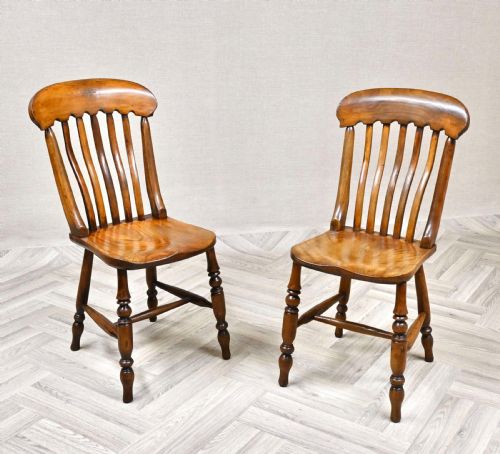
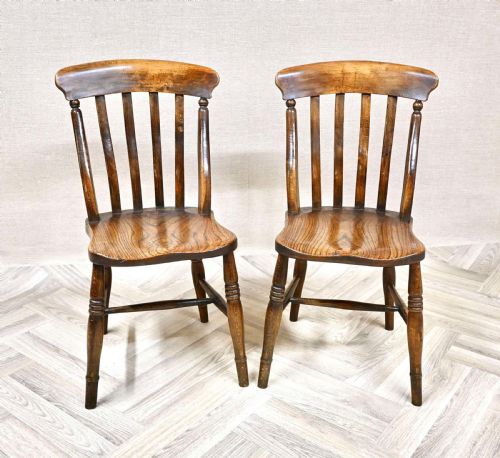
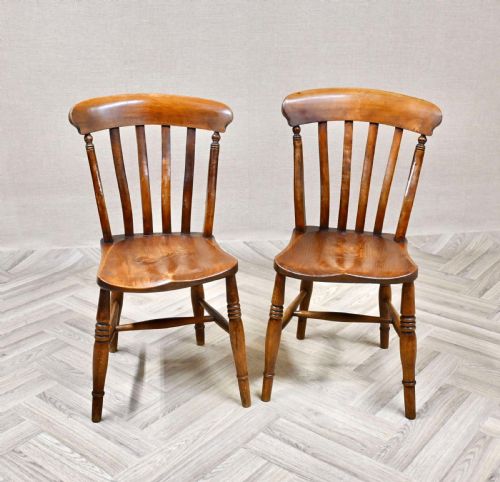
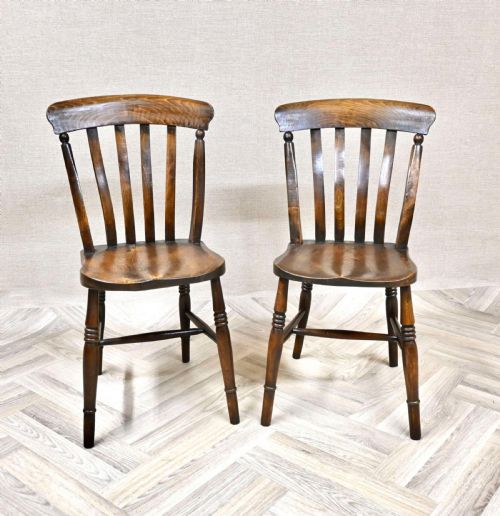
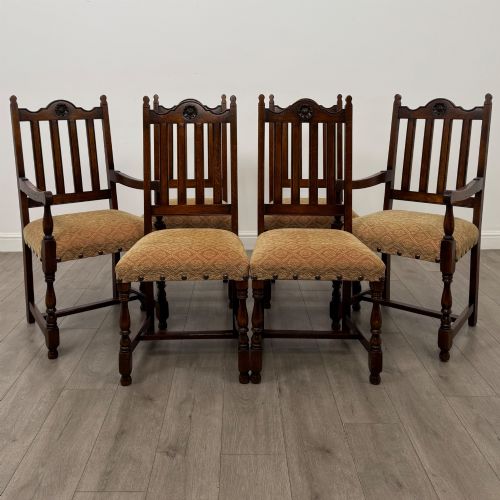
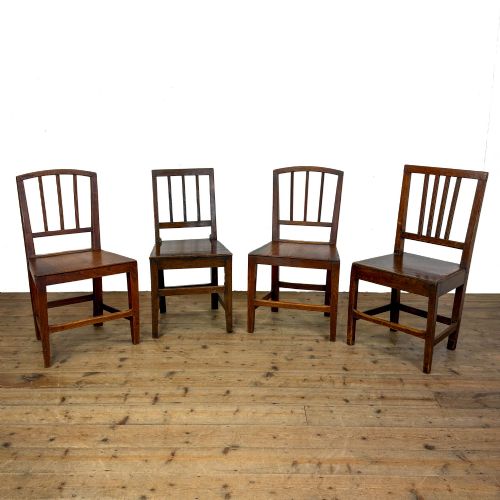
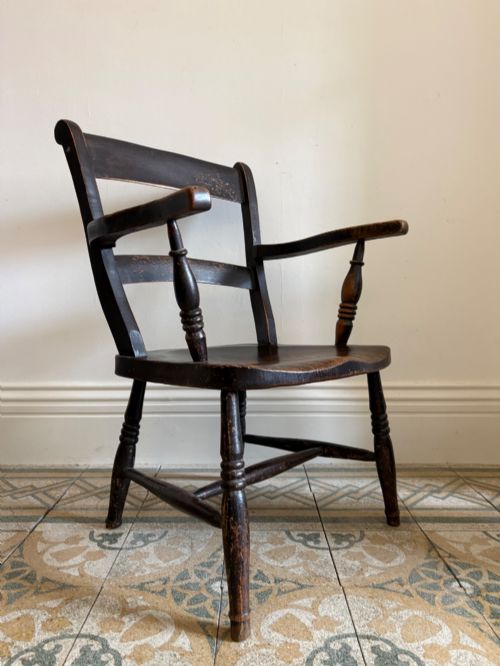
Traditional slat back chairs span the eighteenth, nineteenth, and early twentieth centuries, drawing on English, Victorian, and Edwardian country styles. Buyers encounter various forms here, ranging from single farmhouse kitchen chairs and matching sets to carvers, desk chairs, and fireside armchairs.
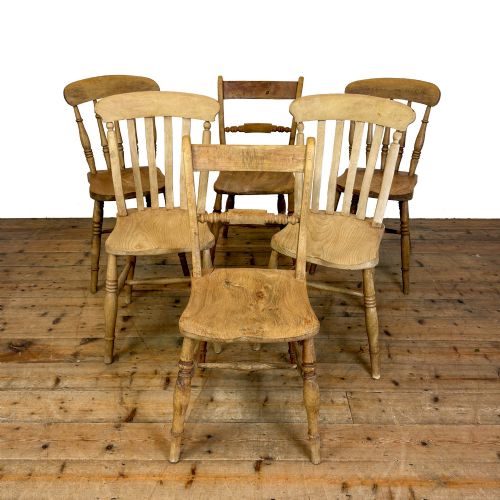
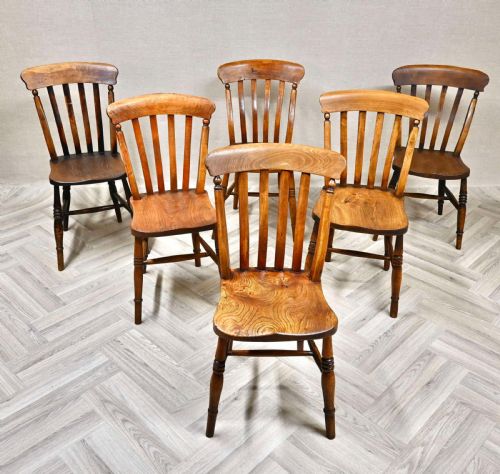
Nineteenth-century vernacular pieces dominate the selection, often appearing as Windsor or lath back designs intended for everyday domestic use. Workshops produced these chairs in substantial sets for dining spaces or as individual armchairs for bedrooms, studies, and kitchens.
Materials and Construction
Cabinet-makers relied on native British hardwoods, frequently pairing elm for shaped seats with ash, beech, or oak for spindles, legs, and bentwood bows. This mixed-timber construction gave the framework resilience against daily wear while keeping the seat comfortable.
Makers shaped solid wood components using traditional turning and steaming techniques, joining parts with mortise and tenon joints or wedges. Some regional pieces incorporate rush seating or leather pads, while others rely entirely on carved wooden contours.
Quality and Character
Differences in quality rest on timber selection, structural integrity, and the preservation of original surfaces. Chairs built from deeply grained elm and well-turned ash display greater longevity and visual depth than later or more utilitarian equivalents.
The degree of wear and originality in the timber patina distinguishes standard utility seating from finer vernacular examples. Retaining original components and unpainted wooden surfaces elevates the standing of a set.
The Traditional Slat Back Chairs Glossary
- Windsor chair
- A wooden chair built with a heavy solid timber seat into which the legs and back spindles are directly fitted. This construction provides robust support through a combination of bentwood and turned parts.
- Lath back
- A chair back featuring flat horizontal or vertical wooden slats rather than turned spindles. These slats offer sturdy back support and appear frequently in nineteenth-century kitchen seating.
- Vernacular furniture
- Domestic items made by local tradesmen for everyday use rather than following high-style metropolitan fashions. These pieces reflect regional materials and practical design needs.
- Rush seat
- A seating surface woven from dried marsh reeds, twisted into cords and patterned across the chair frame. This technique creates a resilient and flexible seat common on ladderback chairs.
- Harlequin set
- A collection of chairs that match in general style and period but vary slightly in minor details, turning, or proportions. Such sets formed naturally as households accumulated chairs over time.
Traditional Slat Back Chairs: Frequently Asked Questions
How do I identify a Windsor chair?
Look for a thick wooden saddle seat that holds the legs underneath and the back spindles directly from above. The upper frame often incorporates a bentwood bow or a solid central splat.
Traditional examples rely on these joined components rather than standard framed upholstery, creating a distinctive profile found in farmhouse kitchens.
Are these chairs suitable for daily dining?
These solid wood chairs were originally built for hard kitchen and dining use, making them durable for contemporary seating. Their robust construction handles regular daily activity well.
Adding loose pads can increase comfort during longer meals while preserving the wooden seat beneath.
What timber was used most often?
Elm appears frequently for the seats because its interlocking grain resists splitting when shaped into a saddle curve. Ash, beech, and oak provide strong, straight grain for the legs and spindles.
Cabinet-makers combined these native hardwoods to harness the specific mechanical strengths of each tree species.
How do I care for antique wooden chairs?
Maintain the timber by applying natural beeswax periodically to nourish the surface and protect the grain from drying out. Avoid placing chairs near direct heat sources or strong sunlight.
Regular dusting with a soft cloth keeps the finish clean without stripping the historic patina built up over generations.