





Traditional Room Divider
A traditional room divider creates private corners and divides large spaces using folding panels of wood, lacquer, and painted canvas.
Traditional Room Divider
A traditional room divider functions as a movable partition to segment large living areas or shield specific corners of a space. When exploring this selection, buyers frequently encounter multi-fold panels arranged in varying panel counts.
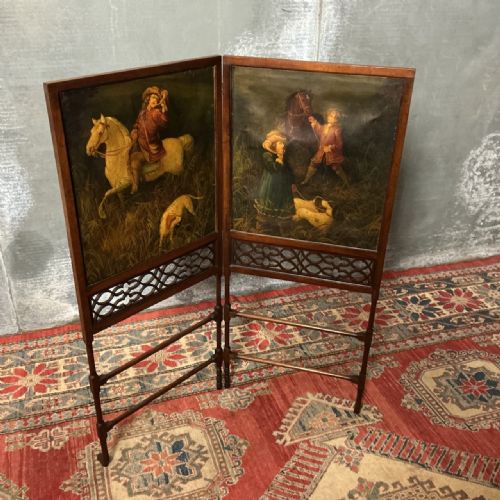
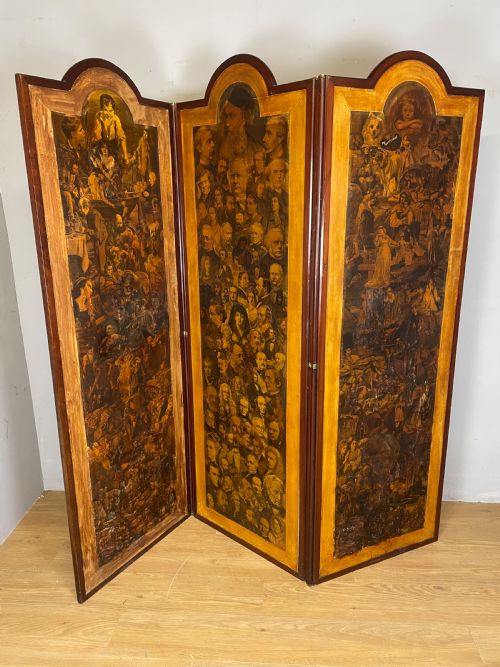
The objects spanning this category encompass folding screens, fire screens, and specific room dividers originating from the eighteenth, nineteenth, and early twentieth centuries. Pieces range from Victorian scrap work and Edwardian mahogany frames to Chinese Coromandel lacquer and painted Indian fretwork.
Materials and construction
Constructed primarily from solid hardwoods and mahogany, these panels rely on sturdy wooden frames hinged together to allow multi-directional folding. Many incorporate intricate fretwork or carved details directly into the timber structure.
Surface decoration employs traditional lacquer techniques, gold leaf application, and hand-painted oils on canvas or wood. Specialised examples feature dense Coromandel incision work or applied decoupage and paper scraps.
Traditional Room Divider Retail Price Guide 2026
Typical asking prices for traditional room divider among the pieces listed under this phrase on Sellingantiques today, from the lower quarter to the upper quarter. They describe what is for sale here now, not the wider market.
Victorian scrap work screens let past households paste millions of tiny paper scraps onto wood, inventing the ultimate indoor collage.
Assessing quality
The standard of execution in the painted or carved surface decoration dictates the visual strength of each panel. Depth of carving in wooden elements and the richness of multi-layered lacquer distinguish finer examples from simpler painted pieces.
Structural integrity depends on the original hinge mechanisms and the stability of the folding joints across numerous panels. Superior pieces maintain balanced proportions and secure joining that supports the weight of heavier hardwood or multi-fold configurations.
The Traditional Room Divider Glossary
- Coromandel lacquer
- A Chinese incised lacquer technique where designs are carved into a dark ground and filled with colours before polishing.
- Scrap work
- A Victorian decorative method utilising pasted paper cutouts or prints arranged across a folding screen surface.
- Fretwork
- Ornamental perforated woodwork created by cutting intricate patterns through a thin board.
- Chinoiserie
- Western stylistic interpretations of Chinese and East Asian artistic traditions applied to furniture and screens.
Traditional Room Divider: Frequently Asked Questions
How do I place a room divider?
Position the folding panels at slight angles to ensure stability and allow the screen to stand securely on a flat floor. They work effectively to partition corners, soften large wall expanses, or screen doorways.
Ensure clearance is maintained around the hinges so the panels fold smoothly without straining the joints or damaging adjacent walls.
Are these screens fully reversible?
Certain Victorian and Edwardian examples feature finished surfaces or specific panel treatments on both sides, allowing flexible placement within an open room. Check the individual description to confirm if both faces carry decorative elements.
Single-sided screens are traditionally intended to have their reverse side placed against a wall or corner.
How do I clean a lacquered screen?
Dust the wooden and lacquered surfaces gently with a soft, dry cloth to remove everyday particles without scratching the finish. Avoid commercial polishes, water, or chemical solvents that can damage antique lacquer and painted details.
Keep antique screens away from direct sunlight and sudden temperature shifts to protect the wood and prevent the lacquer from cracking.
How many panels do these screens have?
The listings on this page include three, four, five, six, and eight-fold configurations depending on the specific maker and period style. Larger panels suit expansive rooms, while three-panel variants fit compact spaces.
Panel count directly influences the overall width and stability of the divider when arranged in a zig-zag formation.