
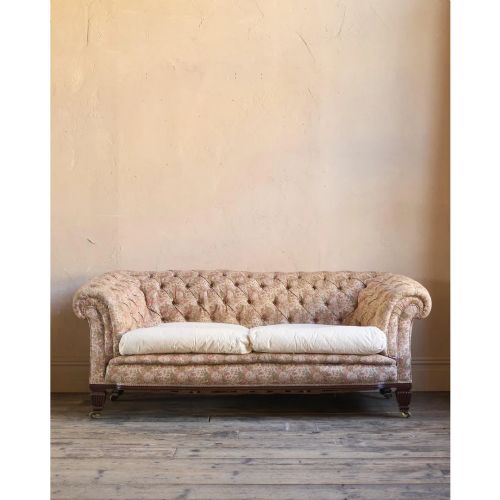


Traditional Rolled Arm Sofa
A traditional rolled arm sofa brings deep buttoned comfort and classic form to a room.
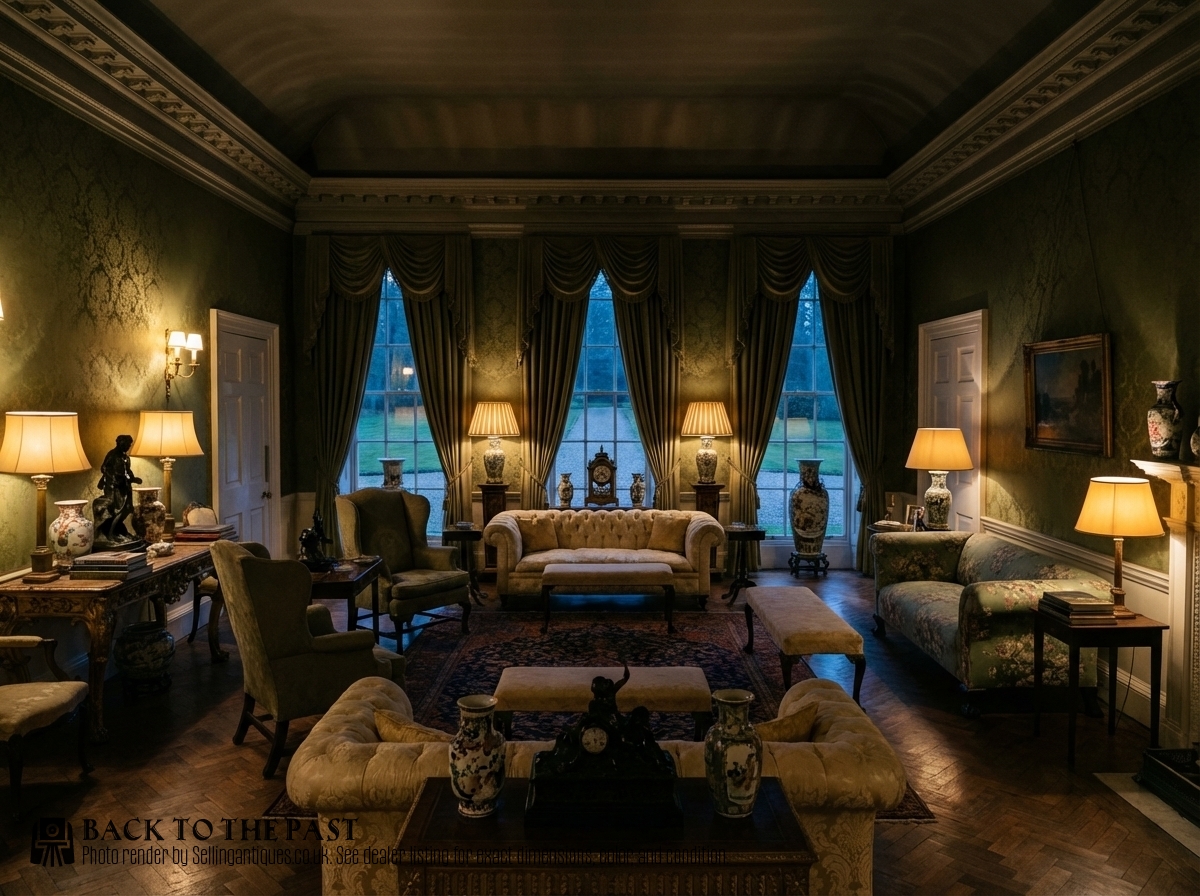
Traditional Rolled Arm Sofa
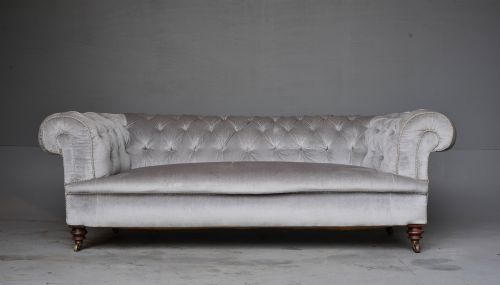
A traditional rolled arm sofa is fundamentally a Chesterfield or deep buttoned settee dating from the nineteenth and early twentieth centuries. Buyers searching for a traditional rolled arm sofa encounter substantial leather and fabric seating featuring characteristic low backs and sweeping arms. These pieces range from compact two-seater examples to large multi-seater club sofas built for generous lounging.
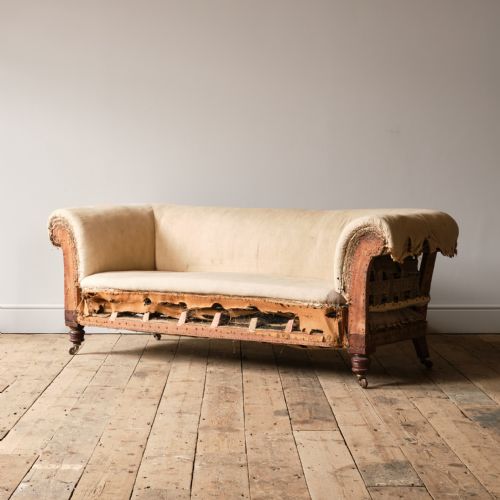
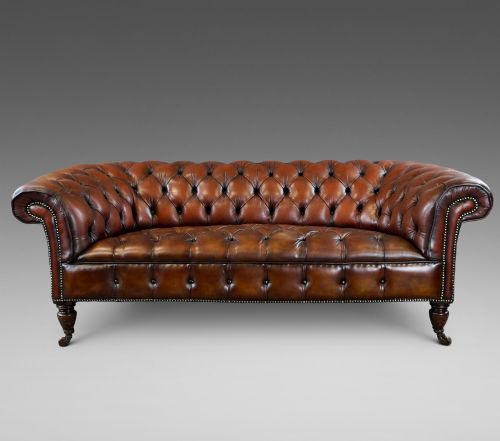
The selection centres heavily on Victorian and Edwardian examples upholstered in rich leather, alongside pieces attributed to prominent London makers. Mahogany and hardwood frames underpin these builds, often accompanied by brass castors on the feet. Unrestored frames and pieces awaiting reupholstery sit alongside fully hand-dyed leather iterations.
How they were made
These sofas rely on sturdy timber and hardwood frames built to support heavy sprung interiors and deep buttoning. Leather and specialist fabrics are pulled tight across the frame and secured by hand, creating the characteristic tufted surface.
Brass fittings, including castors on the feet, appear frequently on nineteenth-century examples to aid movement. Exposed wood elements utilise mahogany or general hardwood, shaped to match Victorian and Edwardian stylistic preferences.
The inventory includes items designated for reupholstering alongside fully restored and hand-dyed leather club sofas.
What varies in quality
The calibre of a traditional rolled arm sofa rests in the integrity of its timber frame and the depth of its original upholstery work. Superior pieces exhibit robust hardwood construction that maintains stability through decades of heavy use.
Leather quality dictates the finish at the upper end, where hand-dyed patinas and untouched original hides command greater attention than modern replacements. The precision of the deep buttoning and the weight of the underlying springs further separate standard workshop output from premier maker commissions.
Hampton & Sons·Howard and Sons·Maple and Co
The Traditional Rolled Arm Sofa Glossary
- Chesterfield
- A traditional sofa style characterised by low rolled arms and a back of the same height, typically featuring deep button tufting. This form remains the primary archetype found across nineteenth-century seating.
- Deep buttoning
- An upholstery technique where buttons are pulled deep into the padding in a diamond pattern to secure the filling and create texture. It defines the tactile surface of classic leather club seating.
- Hardwood
- Dense timber derived from broad-leaved trees used to construct the internal frames of durable antique seating. It provides the necessary structural rigidity to support heavy sprung interiors.
- Castor
- A small wheel mounted on a swivel attached to the foot of a sofa, historically cast in brass. It allowed heavy Victorian furniture to be repositioned across carpeted drawing rooms.
Traditional Rolled Arm Sofa: Frequently Asked Questions
How do I care for antique leather?
Antique leather requires gentle cleaning and occasional conditioning to maintain its suppleness and prevent cracking over time. Avoiding direct sunlight and strong heat sources protects the natural patina of older hides.
Original un-restored leathers particularly benefit from specialist balms rather than modern chemical treatments.
Were these sofas always upholstered in leather?
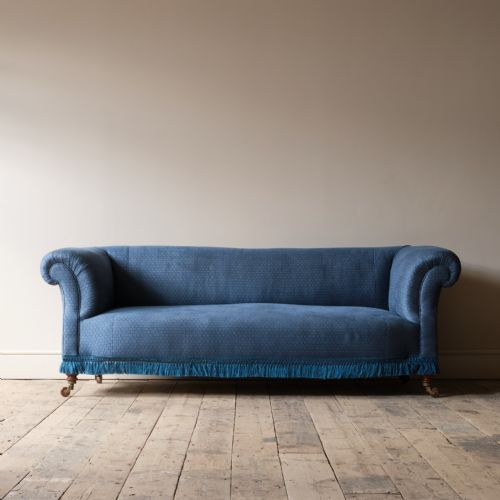
While leather is predominant in surviving examples, traditional rolled arm sofas were also finished in heavy fabrics and patterned textiles. Makers utilised patterned cloths alongside plain hides depending on the interior style of the period.
Fabric-covered pieces from the nineteenth century frequently appear in specialised prints.
How can I tell a Victorian piece from an Edwardian one?
Victorian examples generally feature heavier proportions, darker woods like mahogany, and dense buttoning designed for formal reception rooms. Edwardian pieces often display slightly lighter frames and varied upholstery depths as domestic tastes shifted. Nomenclature in listings usually reflects the specific decade of manufacture between eighteen-fifty and nineteen-twenty.