



Traditional Regional Windsor Chair
A traditional regional windsor chair brings tactile warmth and local character to an interior through sculpted timber seats and expressive spindle backs.
Traditional Regional Windsor Chair
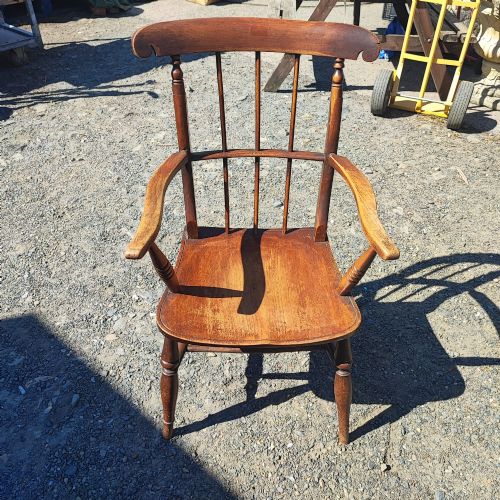
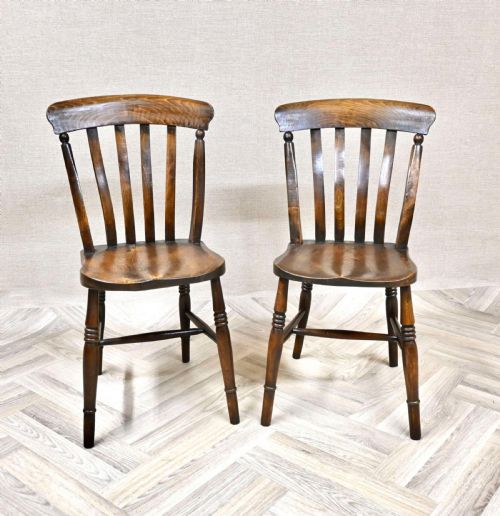
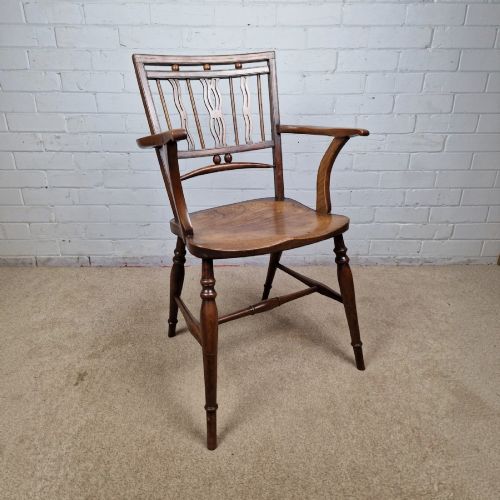
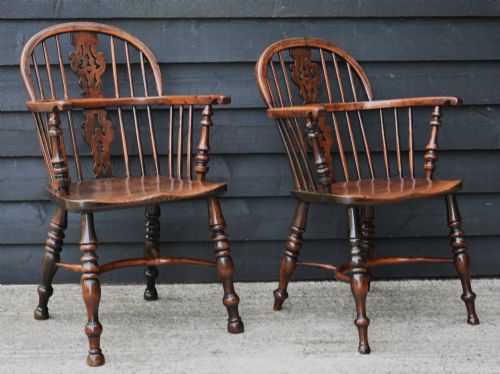
A traditional regional windsor chair is a seat constructed with a solid timber saddle seat into which the legs and back spindles are wedged and pegged directly. Buyers searching for a traditional regional windsor chair will encounter examples spanning the eighteenth, nineteenth, and early twentieth centuries, shaped by local vernacular traditions across regions such as the Thames Valley, Yorkshire, Nottinghamshire, and the West Country.
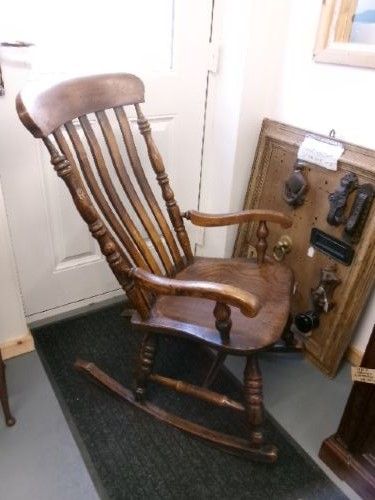
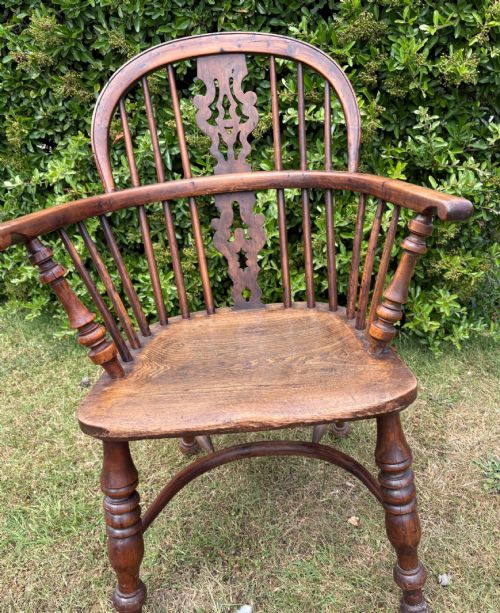
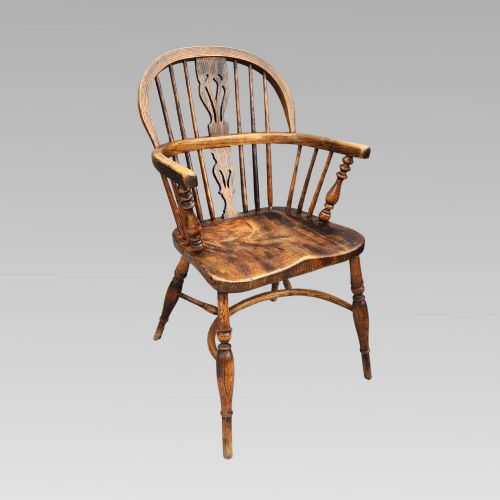
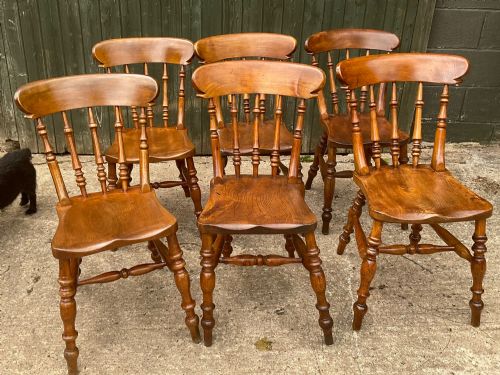
The selections on this page appear as armchairs, low back chairs, rocking chairs, and matching pairs or sets intended for dining and kitchen use. Regional forms range from comb-back and stick-back variants to expansive broad arm designs and wheelback chairs, reflecting the distinct output of rural English cabinet makers and bodgers.
Dating across these pieces extends from the georgian and regency periods into the victorian era and edwardian times. The vernacular nature of the craft means that local timber selection dictates the final silhouette, uniting seat, arm, and spindle into an integrated seating form.
How they were made
Makers constructed these chairs by combining contrasting native timbers, typically pairing elm for the carved solid saddle seat with ash, beech, or oak for the structural undercarriage and bending spindles. Yew and fruitwood, including cherrywood, appear frequently in high-status regional models for their rich grain and warm tone.
The saddle seats were deeply sculpted using an adze and drawknife to provide ergonomic comfort, while flexible woods like ash were steam-bent to form the continuous bows and crest rails. Traditional construction relied on wedged tenon joints, securing the vertical spindles and leg posts firmly without metal fasteners.
Regional forms span Thames Valley wheelbacks, Yorkshire farmhouse rocking chairs, and West Country stick backs.
What varies in quality
Quality in these chairs rests upon the fluidity of the timber bending and the architectural harmony of the regional form. Superior pieces exhibit deeply figured yew wood, crisply turned spindles, and generous proportions that balance structural stability with sculptural grace.
The refinement of the saddle seat carving and the integrity of the original wedged joints distinguish master regional outputs from utilitarian workshop productions. Maker attribution through stamped signatures or distinct regional bracing further elevates the standing of an individual piece.
Gabbitass Worksop·John Brand of Sleaford·Rockley Maker·John Moss Worksop·Allsop Worksop
The Traditional Regional Windsor Chair Glossary
- Broad arm
- A chair featuring an expanded, paddle-shaped armrest carved directly from a solid piece of timber, often designed to provide a writing surface.
- Comb back
- A Windsor chair design where the central vertical spindles extend upward to support a horizontal top rail resembling a traditional hair comb.
- Saddle seat
- A thick wooden seat base sculpted with hollowed contours to fit the human form, traditionally shaped from a single block of elm.
- Stretcher
- The horizontal timber rod connecting and stabilizing the legs of a chair beneath the seat, arranged in H-pattern or crinoline formations.
- Thames Valley
- A recognised regional style of Windsor chair making known for the use of yew wood and graceful cabriole or crinoline undercarriages.
Traditional Regional Windsor Chair: Frequently Asked Questions
How do I identify regional variations?
Regional variations reveal themselves through timber choice, turning styles, and structural geometry. Chairs from the Thames Valley frequently showcase figured yew and cabriole legs, whereas northern pieces from Yorkshire favour sturdy ash frameworks and distinctive pierced splats.
Examining the undercarriage and the method of securing the arm supports provides further clues to the specific rural workshop tradition behind the piece.
Were these chairs used outdoors?
These chairs were primarily built for domestic interior use in farmhouses, cottages, and country houses. Their robust construction and solid timber seats suited daily kitchen and dining environments.
While constructed from hardy native woods, prolonged exposure to outdoor elements damages the traditional glue joints and dries out the timber.
How should I care for yew wood?
Yew wood benefits from stable room humidity and protection from direct sunlight to preserve its deep natural lustre. Applying a light coat of traditional beeswax helps nourish the grain without building up heavy chemical residues.
Avoid placing these chairs near direct heat sources, which causes shrinkage and loosens the wedged joints of the spindles.