


Traditional Pine Low Dresser
A traditional pine low dresser brings working domestic history straight into a room, offering low-level storage with enduring utility.
Traditional Pine Low Dresser
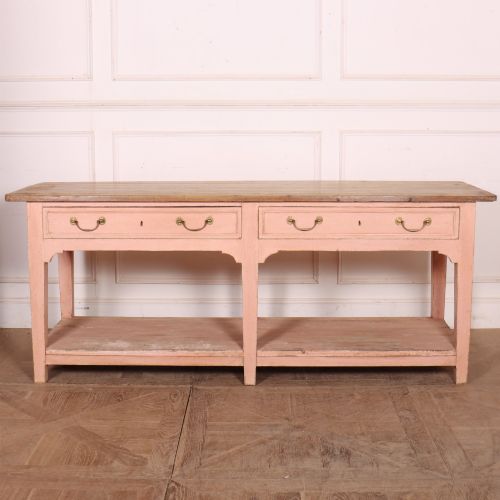
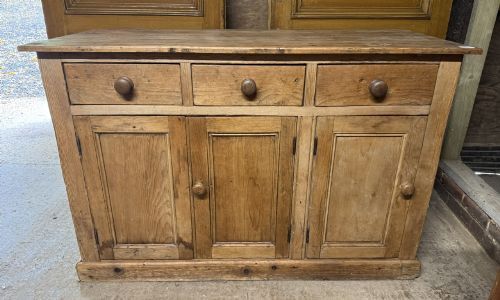
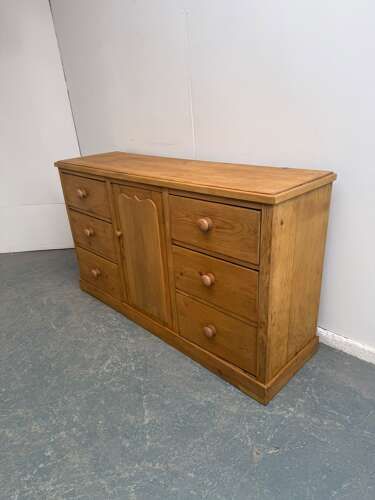
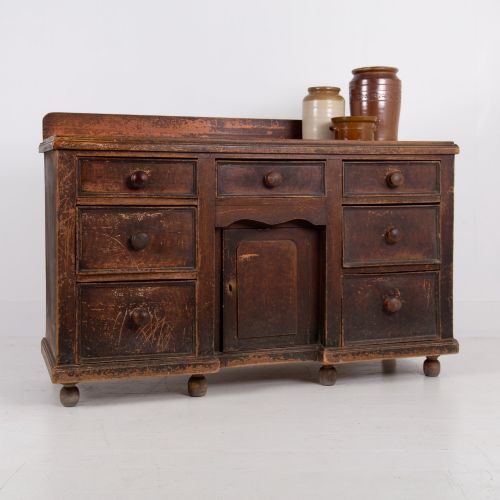
When you search for a traditional pine low dresser, you encounter pieces primarily from the nineteenth century, including Victorian examples dated around 1870 and 1890. These items encompass kitchen dresser bases, potboard dresser bases, storage cupboards, and low wide chests of drawers.
The styles seen on this page range from Victorian Country and Rustic Farmhouse to English Country and Rustic English Country. The form most commonly met here is the low dresser base or wide storage cupboard, designed for practical utility in domestic spaces.
How they were made
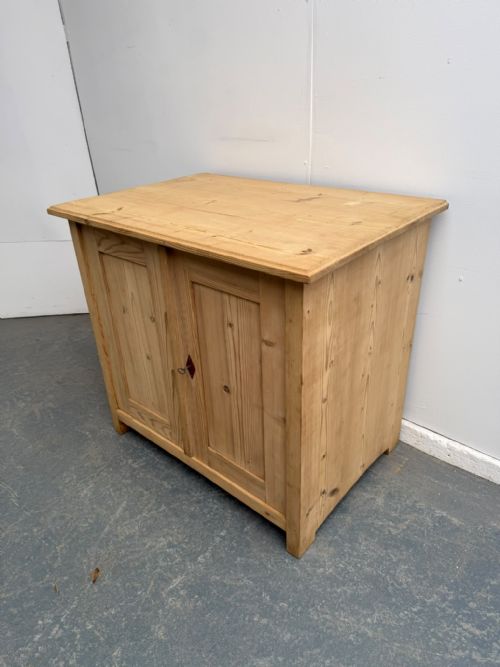
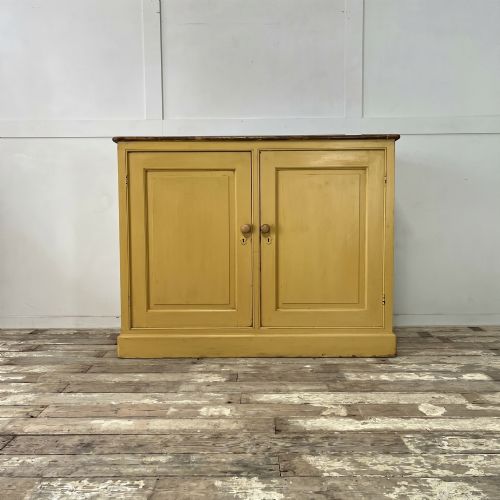
Makers constructed these pieces from solid pine, often finishing the timber with a waxed surface or retaining original paint. Brass and iron hardware provided functional fastenings and structural support.
Joinery techniques suited to utility furniture meant straightforward construction focused on daily service. Surfaces show the marks of hand-finishing and long domestic use.
Object types include potboard dresser bases, kitchen cabinets, and low wide storage cupboards.
What varies in quality
Quality differences lie in the survival of original finishes, such as early paint versus later waxed surfaces. The integrity of the timber and the retention of original brass or iron hardware also distinguish finer examples.
The Traditional Pine Low Dresser Glossary
- Potboard dresser base
- A dresser base featuring an open lower shelf, known as a potboard, traditionally used for storing heavy pots and pans. This form sits low to the ground for stable kitchen work.
- Pine
- A softwood utilised extensively for utilitarian furniture due to its availability and workability. It accepts wax and paint readily.
- Waxed pine
- A finish applied to timber using natural waxes to nourish the wood and impart a soft sheen. This treatment highlights the grain and knots characteristic of old pine.
- Original paint
- Surface coating applied during the period of manufacture that has survived without later stripping or overpainting. It provides historical evidence of a piece's domestic context.
Traditional Pine Low Dresser: Frequently Asked Questions
What is a traditional pine low dresser?
A traditional pine low dresser is a nineteenth-century utilitarian furniture piece designed for storage and kitchen work. These items typically feature low profiles and solid pine construction.
Examples on this page include potboard dresser bases, kitchen cabinets, and low wide storage cupboards from the Victorian era.
How do I date a pine dresser?
Dating relies on construction methods, timber characteristics, and stylistic markers associated with nineteenth-century periods. Pieces are frequently attributed to specific decades like 1870 or 1890.
Examining whether the hardware, paint, or wax finishes are original also assists in determining the age of the piece.
Where were these dressers used?
These dressers originated in kitchens, farmhouses, and school rooms for everyday storage and food preparation. Their low height facilitated domestic tasks.
Today, they transition easily into modern living spaces as sideboards or storage units.
Are these dressers painted or waxed?
Surviving pieces exhibit both original paint finishes and waxed pine surfaces. Some examples retain their early paint from the nineteenth century.
Others have been waxed to showcase the natural grain and warmth of the solid wood.