
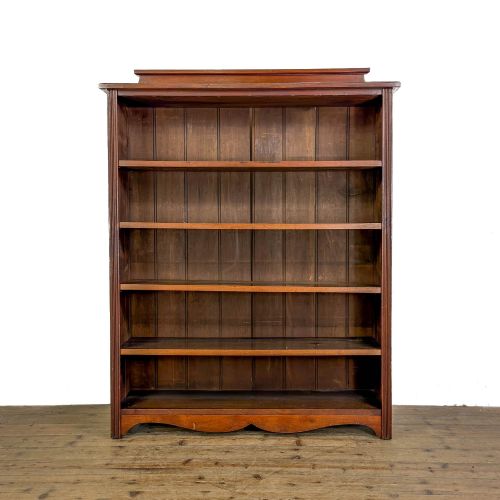
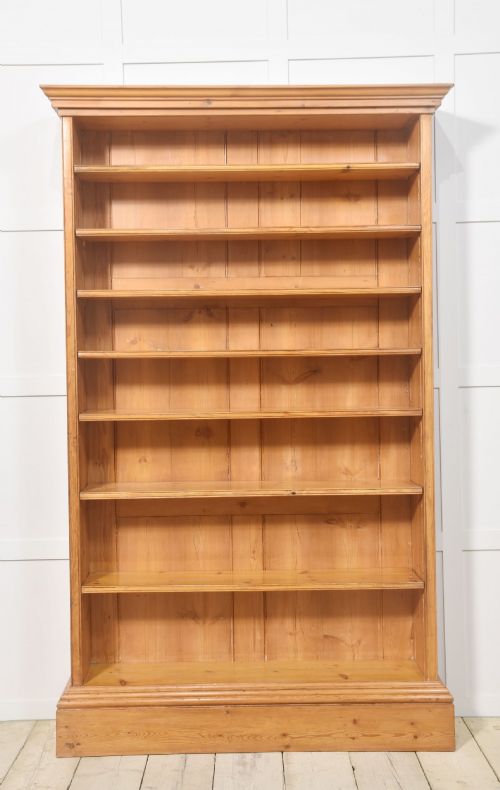
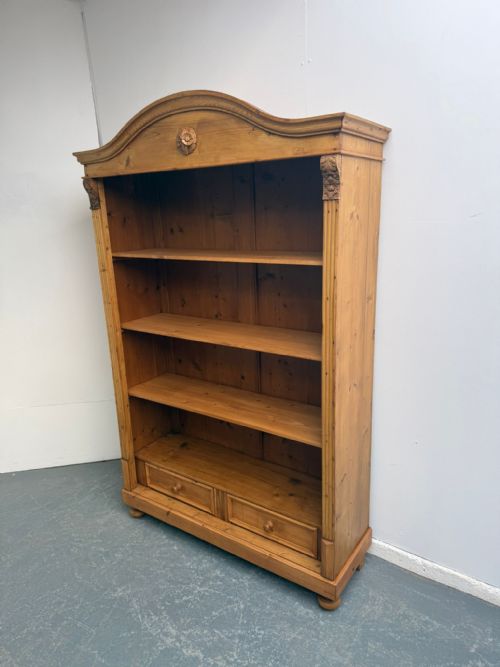


Traditional Pine Bookshelves
Traditional pine bookshelves bring honest, sturdy utility and warm timber grain into a room, offering practical storage with genuine period character.
Traditional Pine Bookshelves
Traditional pine bookshelves are practical open storage units designed to hold volumes while adding warmth and utility to a room. When searching for traditional pine bookshelves, buyers encounter pieces primarily spanning the Victorian era, the nineteenth century, and early decades like nineteen hundred, nineteen twenty, and nineteen thirty.
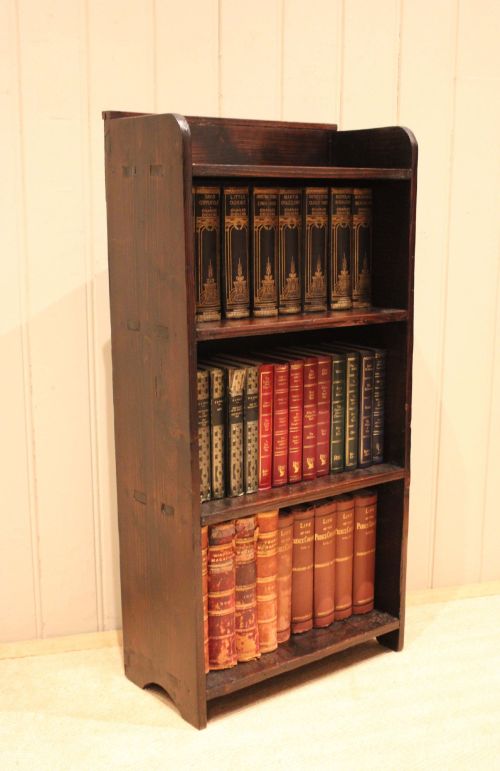
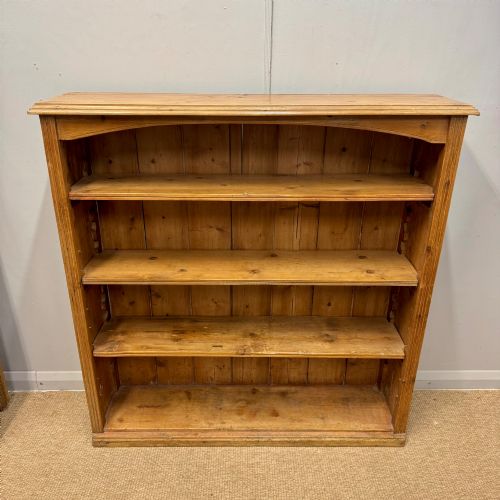
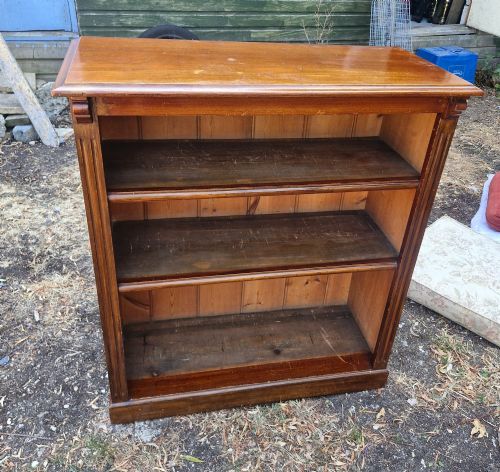
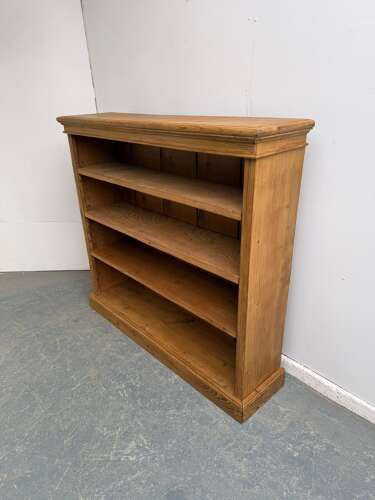
The inventory on this page consists entirely of bookcases, mostly presenting as open front variants or adjustable shelf designs. These items range from small rustic pieces to large deal wood furniture rooted in rustic country and Victorian country styles.
How they were made
Makers constructed these bookcases using solid softwoods and hardwoods, relying principally on pine, deal wood, pitch pine, and occasionally walnut. Surfaces received traditional finishes, most notably clear wax to protect the timber grain while developing a rich sheen over decades of use.
Construction methods focused on durability and function, incorporating adjustable shelf mechanisms in several Victorian examples to accommodate varying book sizes. Joinery remained straightforward and robust, suiting the utilitarian demands of nineteenth and early twentieth-century domestic spaces.
What varies in quality
Quality in these pieces depends heavily on the grade of timber selected, with dense pitch pine and well-figured deal wood offering superior substance compared to standard softwoods. The presence of functional mechanisms, such as original adjustable shelf brackets, elevates a piece above fixed-shelf utilitarian storage.
Proportion and scale also define the better examples, where simpler rustic country forms are balanced by careful edge moulding and honest joinery. The depth of the waxed finish contributes to visual appeal, distinguishing carefully maintained surfaces from dry or neglected timber.
The Traditional Pine Bookshelves Glossary
- Deal wood
- A term historical carpenters used for pine or fir timber obtained from coniferous trees. It forms the primary carcass of many utilitarian nineteenth-century bookcases.
- Pitch pine
- A dense, resinous softwood known for its durability and pronounced grain patterns. It provides exceptional structural strength for heavy book storage.
- Adjustable bookcase
- A shelving unit equipped with tracks, pegs, or ratchet mechanisms allowing shelves to be moved to different heights. This feature offers practical versatility for varied book collections.
- Open front bookcase
- A storage unit lacking doors, providing direct, unhindered access to the books within. This form remains a staple of nineteenth and early twentieth-century domestic interiors.
Traditional Pine Bookshelves: Frequently Asked Questions
Are these bookcases suitable for heavy books?
Solid pine and pitch pine construction provides substantial structural integrity for supporting heavy volumes across open shelves.
Heavier pieces from the nineteenth century and Victorian periods often feature thicker timber boards that resist sagging under weight.
How do I care for a waxed pine surface?
Maintaining the finish requires occasional applications of traditional beeswax to nourish the timber and preserve the warm sheen.
Avoiding direct sunlight and excessive moisture protects the softwood from drying out or warping over time.
What is the difference between deal wood and pine?
Deal wood is simply a historical trade term specifically applied to pine or fir boards used in furniture construction.
Both materials offer the same pale, workable qualities typical of nineteenth-century utilitarian cabinet making.
Do these bookcases come with adjustable shelves?
Certain Victorian examples incorporate adjustable shelf mechanisms, allowing owners to customise shelf heights for different volumes.
Simpler rustic variants often feature fixed shelves secured permanently within the outer uprights.