



Traditional Pillar Dining Table
A traditional pillar dining table brings solid timber gravitas and flexible seating to a room, built on sturdy wooden columns that seat guests comfortably.
Traditional Pillar Dining Table
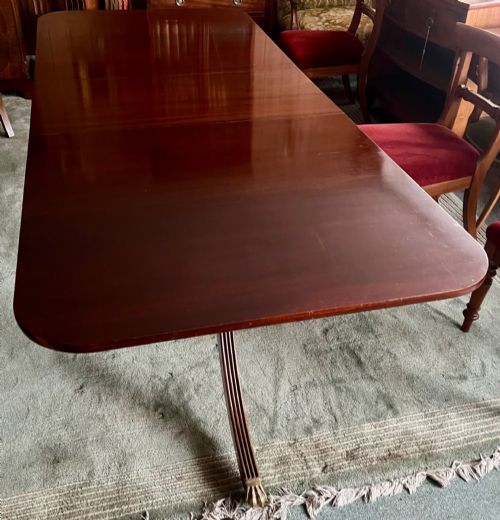
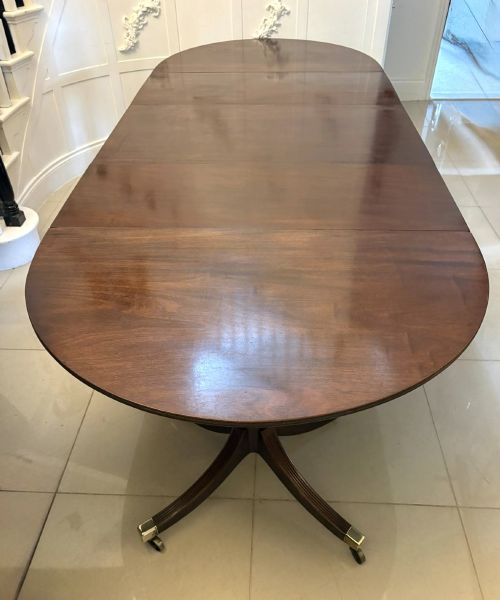
A traditional pillar dining table stands on one or more sturdy wooden columns supported by branching feet, offering generous legroom for diners seated around the perimeter. These pieces frequently feature extendable sections with removable leaves to accommodate larger gatherings.
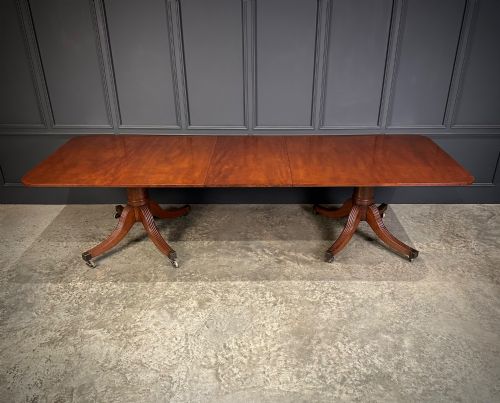
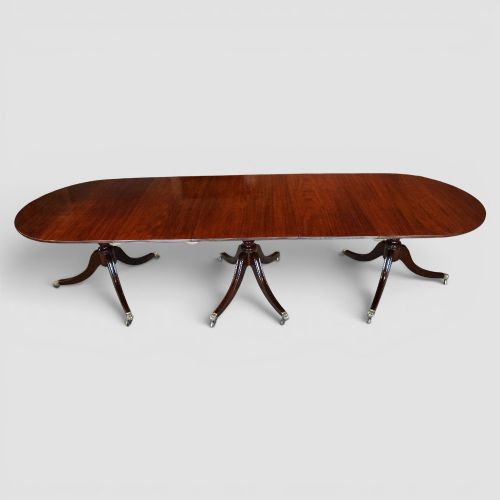
Most examples found here date from the nineteenth century or early twentieth century, drawing heavily on earlier Regency, Georgian, and Sheraton design vocabularies. Twin pillar and triple pillar configurations dominate the selection, often utilising figured mahogany timber.
How they were made
Makers constructed these tables primarily from solid mahogany and mahogany veneers, prized for rich grain patterns and durability. Brass accents appear frequently, particularly on the caster wheels and claw feet that support the heavy pillars.
Joinery focused on stability across extending mechanisms, allowing leaves to drop in smoothly when extra seats are needed. The central pillars often split into three or four curved legs, providing balance for long tabletops under heavy loads.
Traditional Pillar Dining Table Retail Price Guide 2026
Typical asking prices for traditional pillar dining table among the pieces listed under this phrase on Sellingantiques today, from the lower quarter to the upper quarter. They describe what is for sale here now, not the wider market.
Listings span the nineteenth century through the early twentieth century, featuring mahogany and brass materials built in Regency and Georgian styles.
What varies in quality
Quality rests in the choice of timber and the complexity of the pillar carving, where richly figured mahogany and crisply turned columns distinguish finer pieces from plain utility builds. The cleverness of the extending mechanism and the snugness of fit when leaves are added also separate standard workshop output from superior work.
Proportion and scale dictate the visual weight of a table, with well-balanced triple pillar designs offering greater structural harmony across extended lengths than awkwardly stretched twin pillars. Original brass hardware and well-matched timber grains across added leaves signal higher manufacturing ambition.
The Traditional Pillar Dining Table Glossary
- Pillar
- A vertical wooden column supporting the tabletop, often resting on branching feet. It distributes weight down to the floor while freeing up knee space for diners.
- Extension leaf
- A removable section of timber inserted into the centre of the table to lengthen the surface. These boards allow the table to grow or shrink depending on the company.
- D end
- A table end shaped in a semicircle resembling the letter D, often found on pillar tables designed to stand against a wall when unextended.
- Brass castor
- A small swivelling wheel mounted in a brass housing attached to the foot of a table leg. It allowed heavy dining furniture to be repositioned across a floor without lifting.
Traditional Pillar Dining Table: Frequently Asked Questions
How do I add leaves to the table?
Most traditional pillar dining tables pull apart at the centre to reveal a track or alignment pins where separate wooden leaves drop securely into place. Winding handles or simple manual sliding actions draw the sections together to lock the extra timber tightly.
Leaves should be stored flat in a dry environment when not in use to prevent warping. Keeping them near the table ensures they acclimatise to the same humidity and temperature as the main top.
What is the difference between twin and triple pillars?
Twin pillar tables feature two central columns and typically seat moderate dinner parties, whereas triple pillar tables utilise three columns to support much longer extending surfaces. The extra pillar prevents sagging along the centre line of large twelve to fourteen seater boards.
Selecting between them depends entirely on the dimensions of your dining room and how many guests you routinely host. Triple pillar versions require substantial floor space both in length and width.
How do I care for a mahogany surface?
Polishing mahogany with traditional beeswax helps nourish the timber and maintain a deep lustre over decades of daily use. Avoid placing hot dishes or wet glasses directly onto the bare wood to prevent staining.
Direct sunlight can cause mahogany to darken or fade unevenly over time, so positioning the table away from intense south-facing windows preserves the finish. Regular dusting with a soft cloth keeps abrasive particles from scratching the polish.
Can I seat people comfortably around the pillars?
The branching feet of a pillar table are specifically engineered to curve outward, leaving sufficient clearance for chair legs and diner's knees. Triple pillar designs manage this by spacing the columns evenly down the underside length.
When adding leaves, the weight shifts across the pedestals to maintain balance without trapping anyone's legs. Position chairs thoughtfully between the feet to maximise comfort during long meals.