
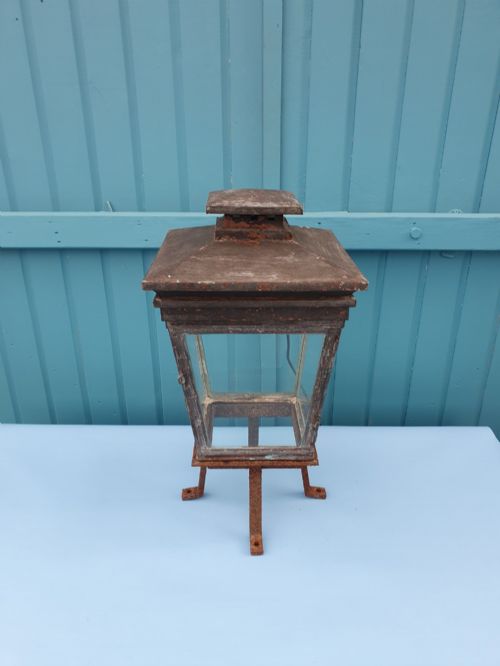


Traditional Outdoor Lantern
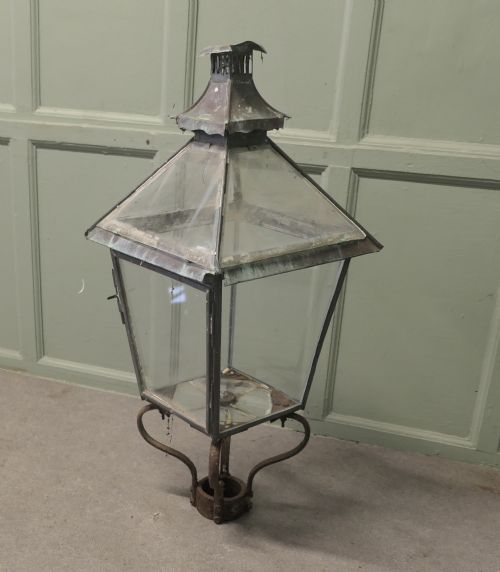
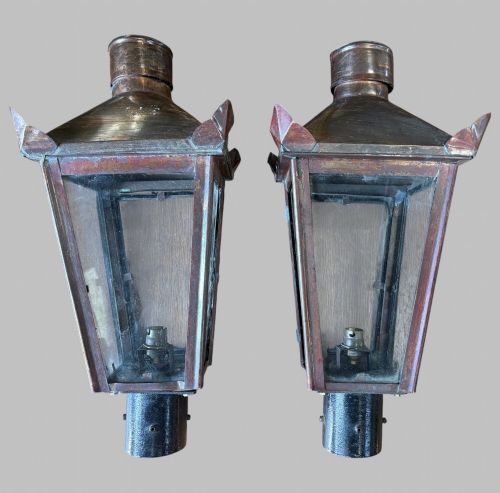
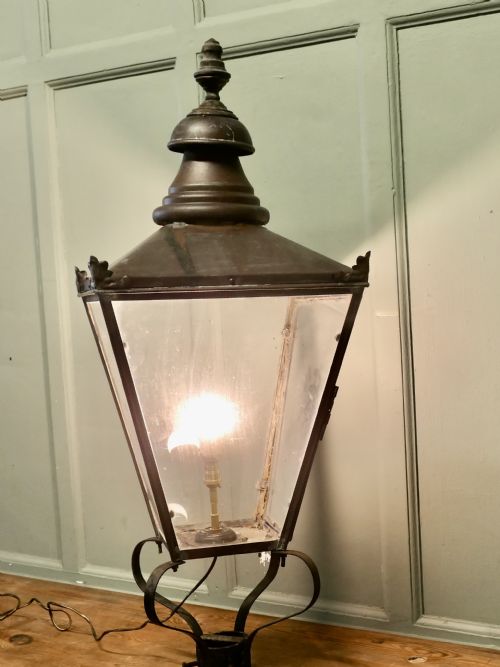
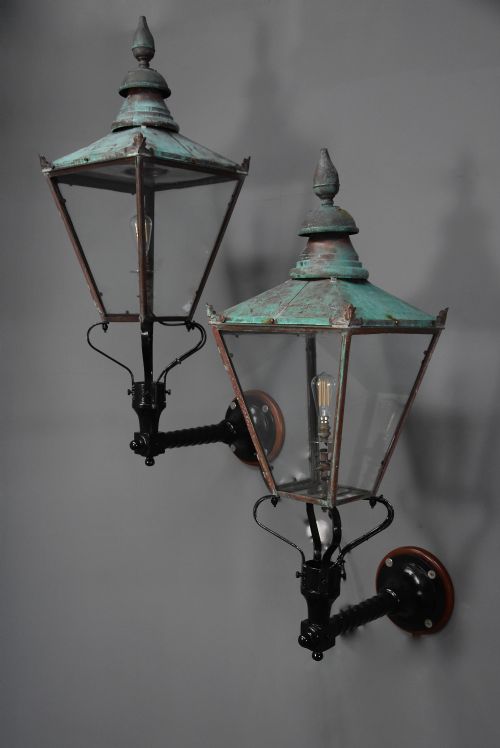
These traditional outdoor lantern pieces bring genuine period character to a garden or entrance, shaped from copper, iron, and glass.
Traditional Outdoor Lantern
A traditional outdoor lantern brings historical form to exterior lighting, drawing on Victorian, Edwardian, and early twentieth-century designs. Buyers seek these pieces to illuminate porches, gates, and garden walls with authentic period presence.
The most common examples on this page are copper and iron wall lanterns, street lights, and post-mounted fixtures dating from the nineteenth century up to the 1930s. Many retain their original structural forms, though gas conversions are frequently encountered.
Forms vary from large octagonal wall lanterns and hanging fixtures to specialised gate post lights and porch lanterns. Styles range across Victorian Gothic, Industrial, and Arts and Crafts aesthetics, reflecting the architectural demands of their original placement.
How they were made
Makers constructed these lanterns using sheet copper, cast iron, and wrought iron, often combining metals within a single piece such as brass and copper or steel and copper. Structural frames were riveted, soldered, or forged to withstand exposure to the elements.
Glazing typically involved clear or frosted glass panes fitted securely into metal channels, while gas-era lights incorporated internal burners later adapted for electrical wiring. Decorative elements like shamrocks or spiral twist brackets were hand-wrought or cast.
The listings on this site combine copper, iron, brass, and steel across Victorian, Edwardian, and 1930s periods.
What varies in quality
Quality rests in the heaviness of the metal gauge, the crispness of the casting, and the integrity of the joinery. Substantial copper sheets and robust cast iron frames distinguish high-grade architectural installations from lighter utility pieces.
The sophistication of the design dictates distinction, separating standard functional street lamps from sculptural pairs featuring spiral twist brackets, complex octagonal geometry, or decorative motifs like shamrocks.
The Traditional Outdoor Lantern Glossary
- Gas conversion
- A lighting fixture originally designed to burn coal gas that has been subsequently rewired for electricity. This adaptation preserves the original metal body while updating the internal illumination.
- Post lantern
- A light fixture designed to sit upright upon a gate pier, pillar, or exterior post. These pieces are typically viewed from all sides, requiring finished detail around the full circumference.
- Wall sconce
- A bracket-mounted light fixture attached directly to an exterior wall or porch surface. They project outward to cast light across architectural entryways.
- Octagonal
- A geometric form featuring eight distinct sides, commonly utilised in the construction of lantern bodies to diffuse light evenly. This shape defines many early twentieth-century wall and street lanterns.
- Frosted glass
- Glass treated on the surface to diffuse light and soften illumination. It appears frequently in porch and street lighting from the Victorian and Edwardian eras.
Traditional Outdoor Lantern: Frequently Asked Questions
Are these lanterns wired for modern electricity?
Many period lanterns have been adapted for modern electrical supplies, particularly those previously operated by gas. Buyers should inspect individual listings to confirm the current wiring status.
Professional rewiring is often recommended to ensure compliance with current safety standards upon installation.
How do I date a copper street lantern?
Dating relies on construction techniques, metal thickness, and stylistic clues such as Victorian Gothic detailing or Arts and Crafts simplicity. Formats changed from nineteenth-century gas street lights to 1930s post mounts.
Comparing bracket designs, fixing methods, and glass configurations helps narrow the manufacturing period.
Can exterior iron lanterns withstand modern weather?
Historic iron and copper lanterns possess durable construction designed for outdoor exposure. Protective finishes and natural patination help shield the metal from environmental wear.
Routine maintenance ensures these robust architectural pieces remain functional in exposed exterior positions.
What is the difference between a post lantern and a wall sconce?
Post lanterns mount vertically on top of pillars, gates, or posts, featuring designs visible from every angle. Wall sconces attach flush against a vertical surface with supporting brackets.
Choosing between them depends on whether the mounting point is a flat wall or a freestanding pillar.