

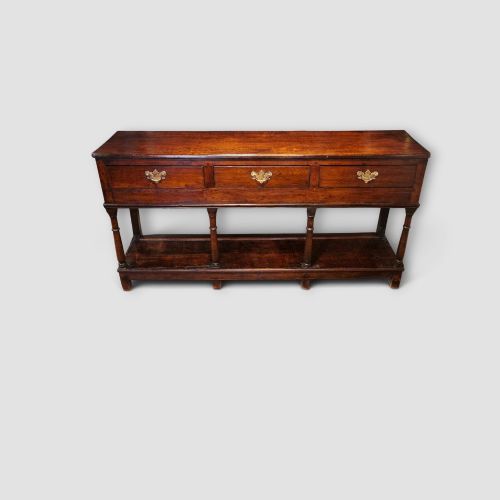
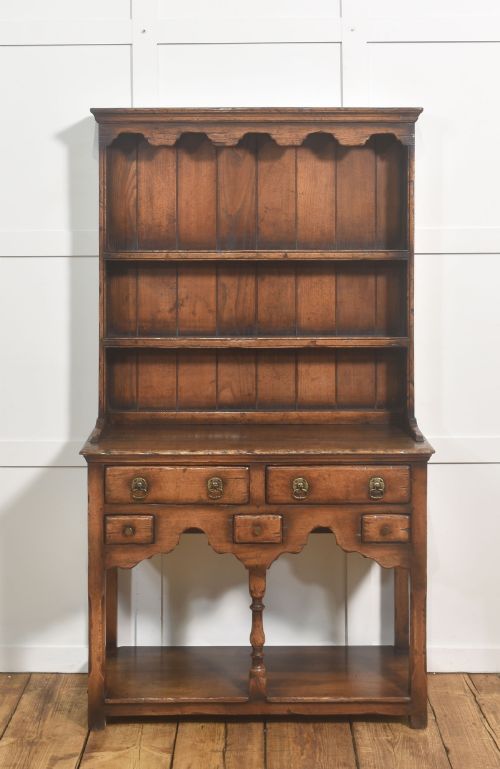
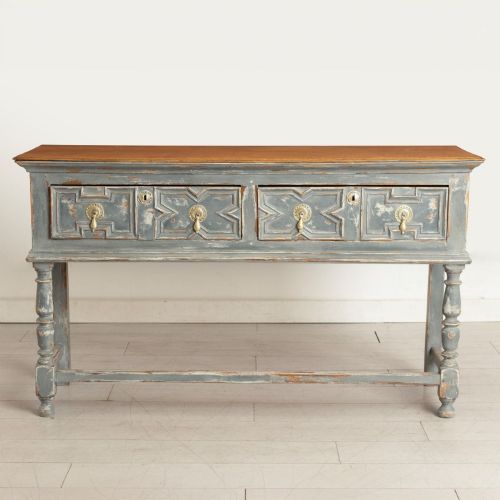
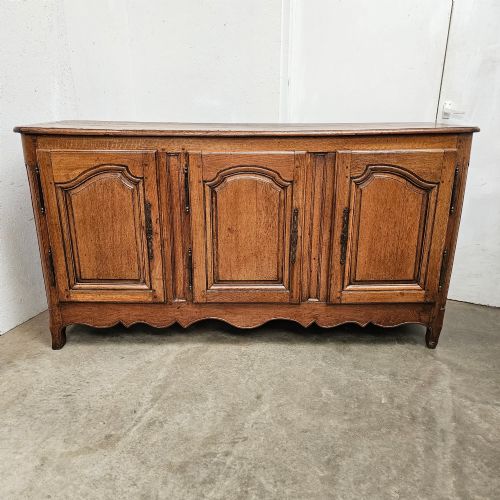
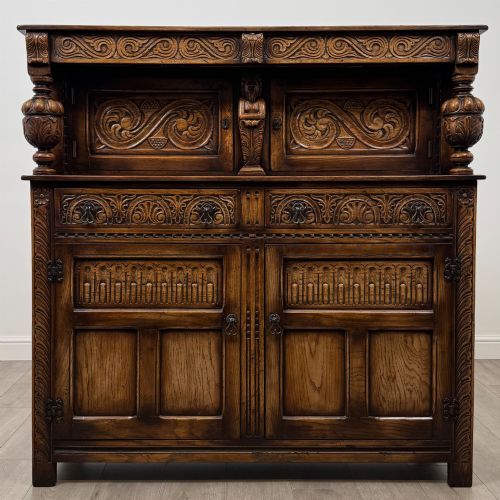
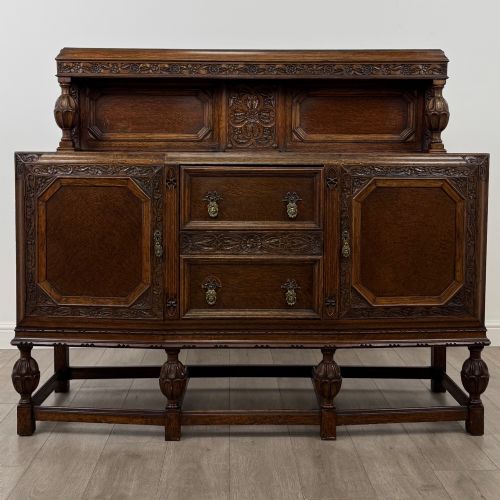
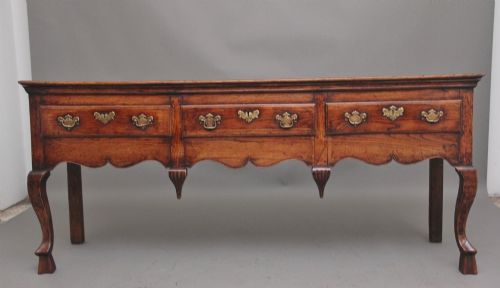
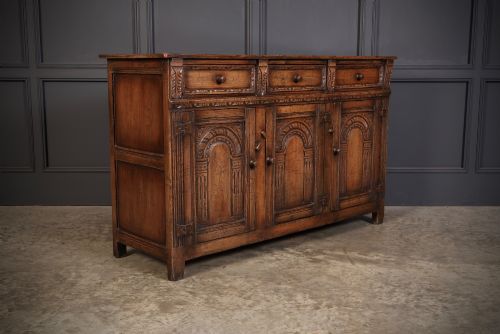
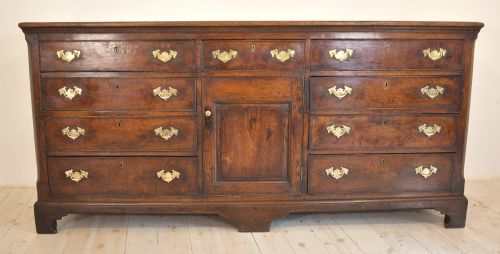
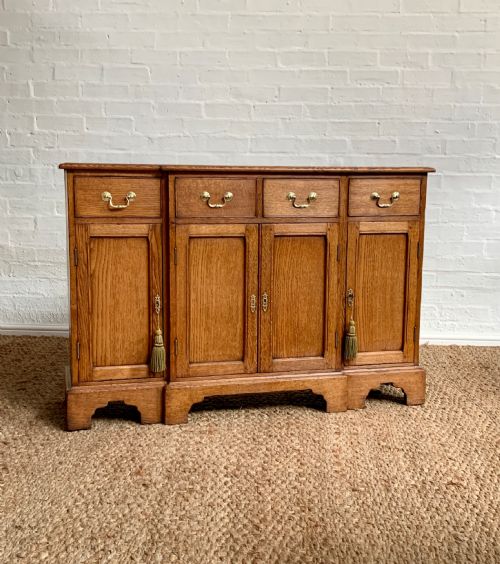
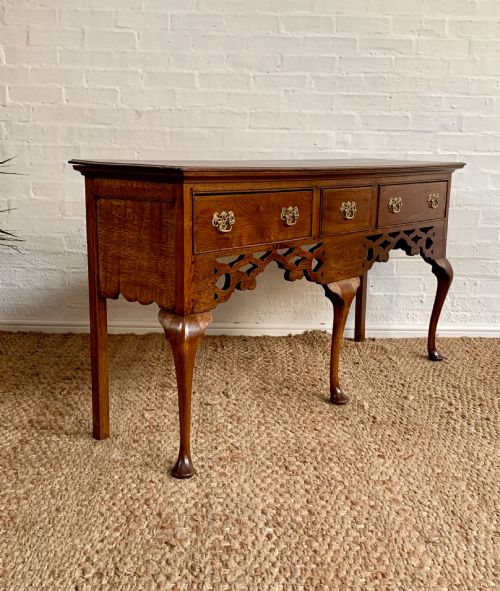
Traditional Oak Sideboard Base
A traditional oak sideboard base brings centuries of working practicality and honest construction into a modern room.
Traditional Oak Sideboard Base
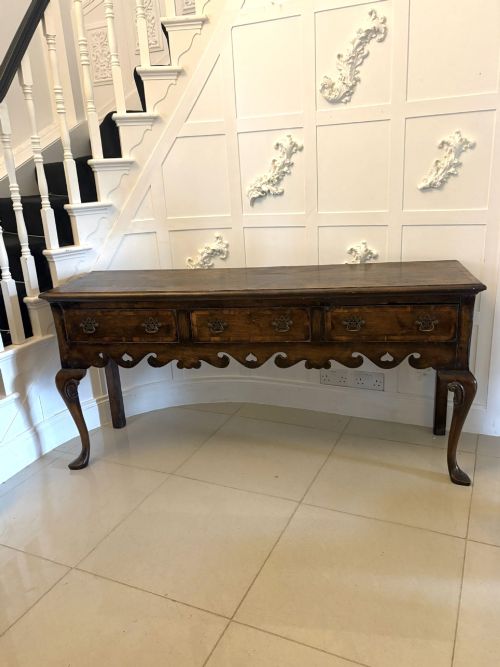
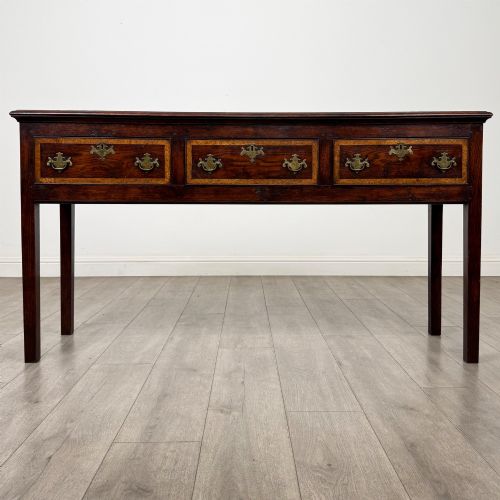
A traditional oak sideboard base provides a sturdy surface and low storage, rooted in centuries of domestic use. These low cabinets often omit the upper plate rack entirely, focusing instead on long timber surfaces and drawers.
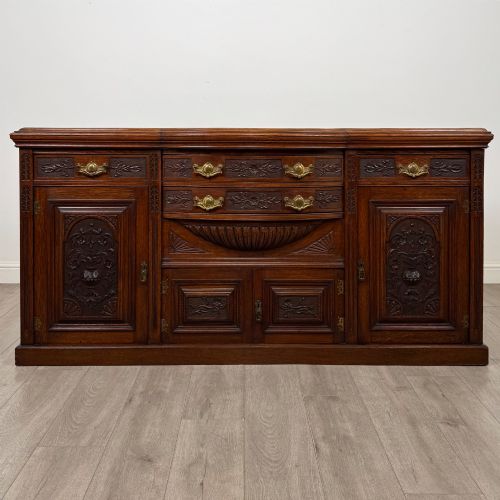
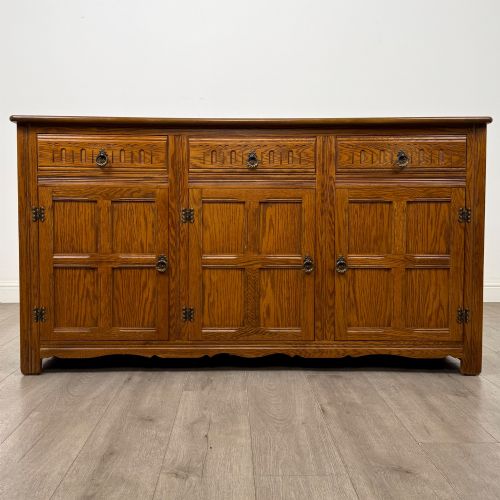
The versions most common here range from robust 18th century George III potboard examples to later Edwardian and Jacobean revival interpretations. They appear under various names including dresser bases, serving tables, and low sideboards.
Regional variations span English country workshops, Welsh vernacular pieces, and continental European examples. Each variant shares a solid timber chassis designed for daily service rather than delicate display.
Materials and construction methods
The primary material across these pieces is solid oak, frequently paired with secondary timbers like pine or elm for internal framing and drawer linings. Iron and brass hardware, from drop handles to key escutcheons, secures the structural joints and operational doors.
Joinery relies on traditional methods such as pegged mortise and tenon frames alongside hand-cut dovetails for drawer construction. Surfaces display the natural grain of the timber, sometimes enhanced with carved detailing or painted highlights.
Materials across the inventory combine structural oak with secondary timbers like pine and elm, complemented by brass and iron hardware.
Distinctions in construction and finish
Quality rests upon the integrity of the timber selection and the precision of the underlying joinery. Pieces with thick planked tops and stable potboards demonstrate superior structural ambition.
The depth of carving and the originality of the brass or iron hardware differentiate standard workshop production from finer cabinet work. Patina accumulated through generations of use dictates the visual depth of the oak surface.
The Traditional Oak Sideboard Base Glossary
- Potboard
- An open lower shelf built into the base of a dresser for storing heavy kitchen pottery. This practical platform elevates the main body while providing stable lower storage.
- Dresser base
- The lower section of a kitchen or dining dresser, functioning independently as a sideboard. It typically combines rows of drawers with cupboards or open shelves.
- Enfilade
- A long sideboard or cabinet with a series of doors along the front. This continental form offers extensive interior storage behind matching panels.
- Court cupboard
- A heavy enclosed wooden cabinet used for storing provisions and plate. These formal pieces feature recessed upper sections supported by carved posts.
- Elm
- A tough, interlocking timber frequently utilised for drawer bottoms and structural boards. Its resistance to splitting made it ideal for heavy internal use alongside oak.
Traditional Oak Sideboard Base: Frequently Asked Questions
How do I style a sideboard base?
A sideboard base works well in a dining room, hallway, or living space to anchor lamps, ceramics, and books. The long timber top provides a natural surface for everyday objects while the drawers conceal clutter.
Pairing the low timber cabinet with neutral walls allows the grain and patina of the oak to stand out. Tall items placed above help balance the horizontal proportions of the base.
Are these pieces strictly 18th century?
The selection includes genuine 18th century examples alongside later revival pieces from the Victorian, Edwardian, and 1920s periods. Craftsmanship styles often span multiple centuries as cabinetmakers replicated earlier Georgian and Jacobean forms.
Examining the internal timber, drawer construction, and wear patterns helps determine whether a piece dates to the original period or a later revival.
How do I maintain solid oak furniture?
Solid oak requires minimal intervention beyond dusting with a dry cloth and occasional application of natural wax to nourish the grain. Keeping the timber away from direct heat sources prevents the planks from splitting.
Allowing the surface to breathe preserves the historic patina accumulated over generations of use. Avoid modern silicone polishes that can build up and dull the natural texture of the wood.