

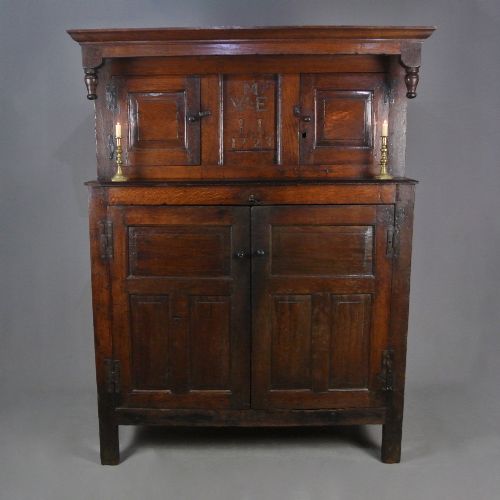
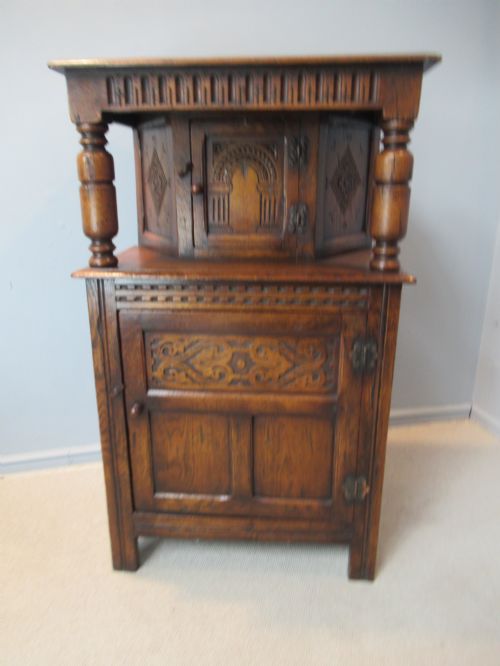
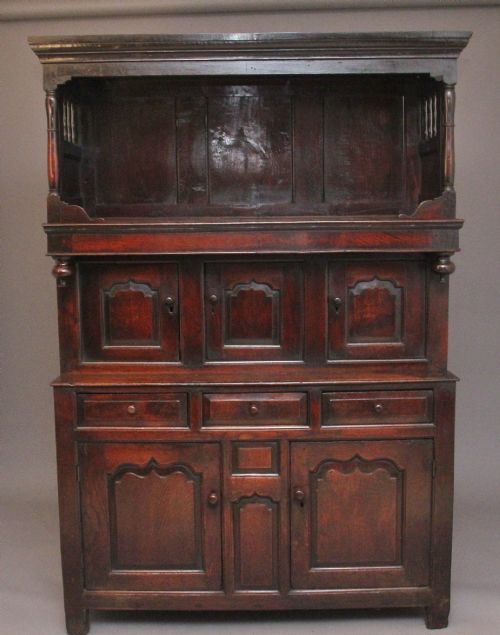


Traditional Oak Press Cabinet
A traditional oak press cabinet brings substantial storage and centuries of craftsmanship into a room.
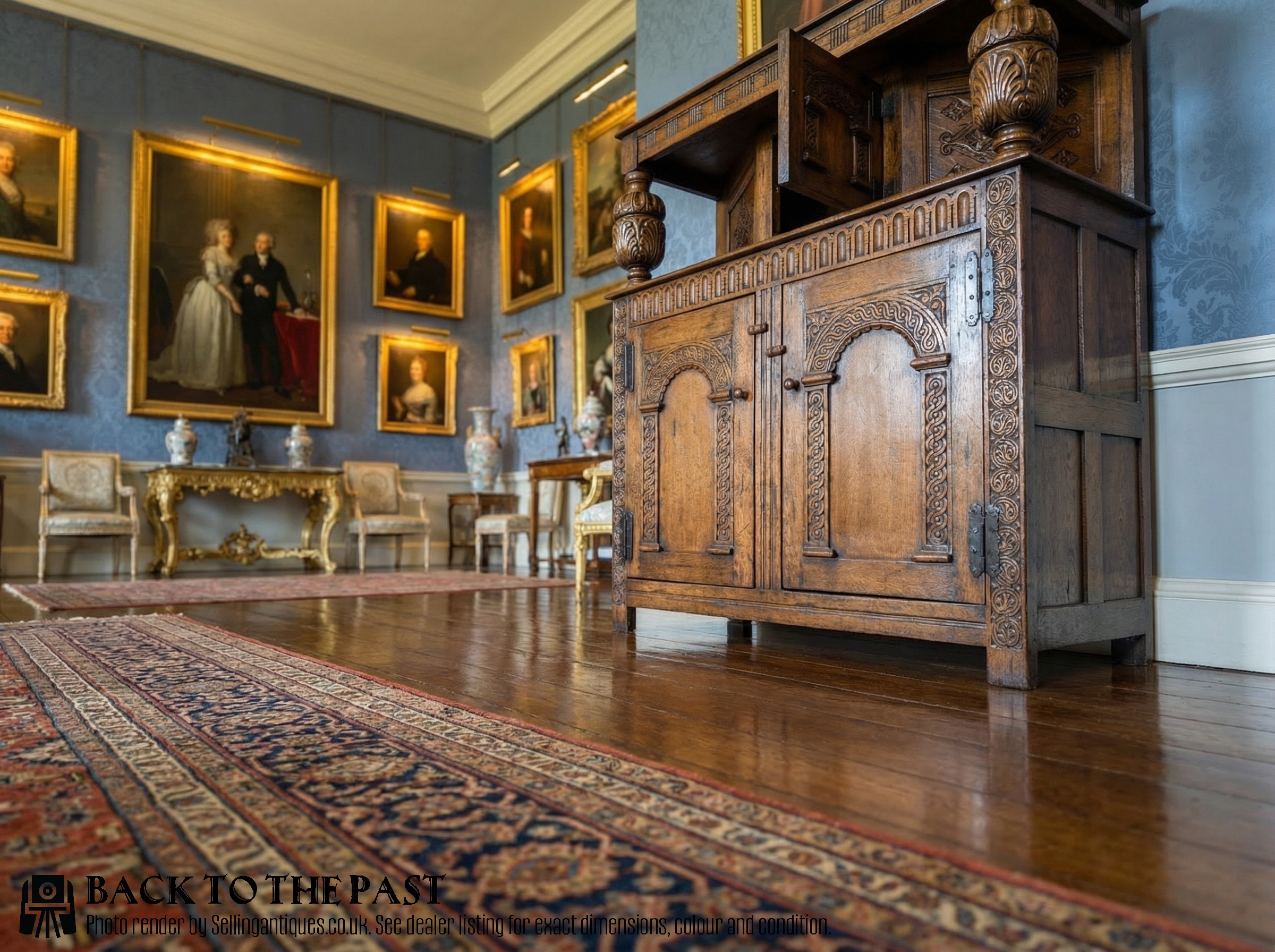
Traditional Oak Press Cabinet
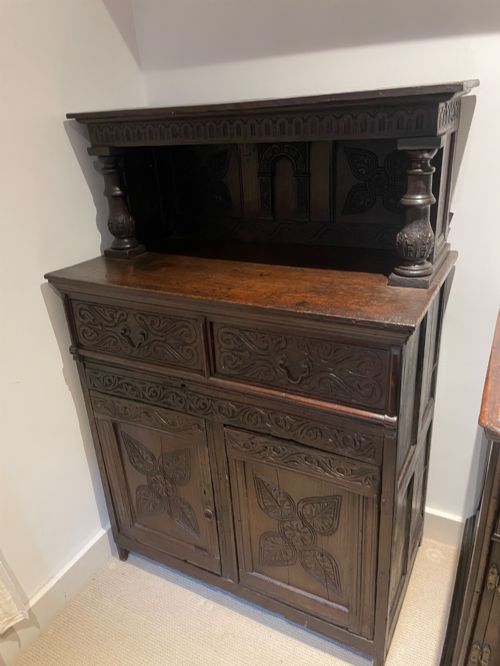
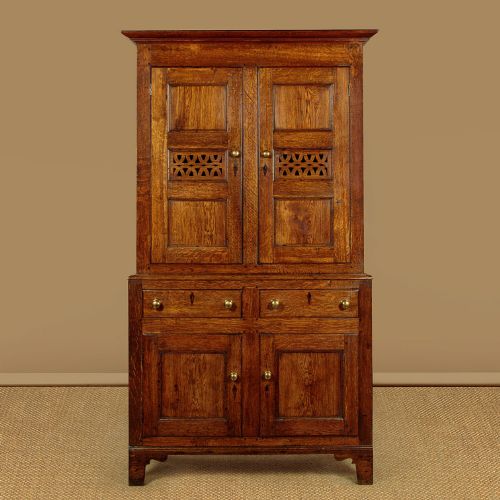
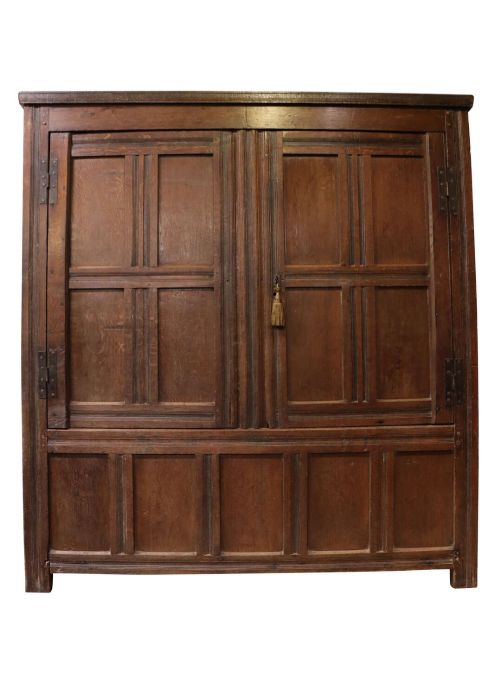
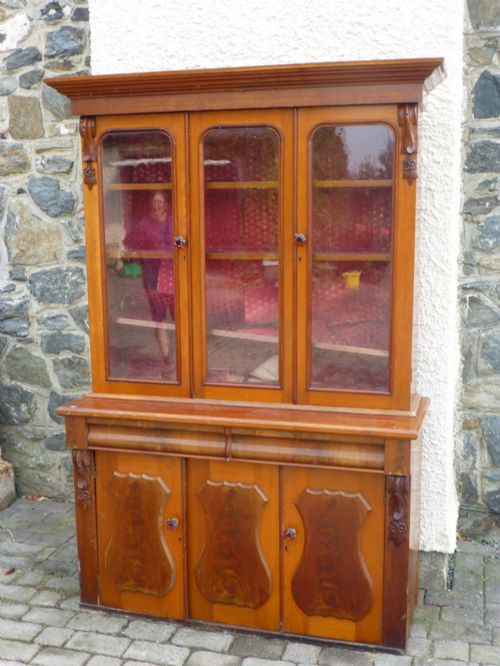
When you search for a traditional oak press cabinet, you encounter substantial storage furniture spanning the seventeenth century through to the twentieth century. The selections available here comprise court cupboards, linen presses, deuddarns, and housekeeper cupboards shaped by regional British vernacular traditions.
The most common form met on this page is the court cupboard or linen press originating from the eighteenth and nineteenth centuries. These pieces combine lower drawer sections with upper enclosed shelving, often reflecting Georgian proportions or earlier Jacobean revival styles.
Makers utilised heavy timber frames to construct storage solutions that served generations of households. Pieces range from primitive country workshops to grander estate furniture featuring carved panels and brass hardware.
How they were made
Joiners constructed these cabinets primarily using solid oak, frequently paired with mahogany details, walnut accents, and iron or brass hardware. Traditional framing relied on pegged mortise and tenon joints to build rigid, load-bearing carcass structures.
Blacksmiths forged utilitarian locks and hinges from iron to secure heavy doors, while craftsmen carved intricate geometric patterns and floral motifs directly into the timber panels. Surfaces received wax or oil finishes that deepened the grain over decades of handling.
Traditional Oak Press Cabinet Retail Price Guide 2026
Typical asking prices for traditional oak press cabinet among the pieces listed under this phrase on Sellingantiques today, from the lower quarter to the upper quarter. They describe what is for sale here now, not the wider market.
Styles represented across the inventory include Georgian, Jacobean Revival, French Provincial, and Welsh Vernacular.
What varies in quality
The standard of a traditional oak press cabinet depends heavily on the integrity of the original timber and the depth of hand-carved detail. Superior examples display tight grain matching across primary doors and drawer fronts without excessive modern timber replacement.
Hardware preservation distinguishes finer items, particularly where original blacksmith-made locks and brass drop handles remain intact. The sophistication of the joinery, from simple pegged frames to elaborate court cupboard tiers, dictates the hierarchy of craftsmanship.
The Traditional Oak Press Cabinet Glossary
- Court cupboard
- A traditional enclosed piece of furniture featuring multiple tiers, often with recessed upper sections supported by carved columns.
- Deuddarn
- A traditional Welsh two-section oak cupboard built with panelled doors and distinct upper and lower storage compartments.
- Tridarn
- A three-tier Welsh oak cupboard featuring an open middle section flanked by small balusters beneath a primary canopy.
- Linen press
- A tall cabinet designed with sliding trays or shelves in the upper section intended for storing folded textiles.
- Housekeeper's cupboard
- A large utilitarian storage cabinet traditionally used in country estates for provisions, linens, and household supplies.
Traditional Oak Press Cabinet: Frequently Asked Questions
What is a traditional oak press cabinet?
A traditional oak press cabinet is a robust storage unit designed for linens and household goods, constructed predominantly from solid oak during the seventeenth, eighteenth, and nineteenth centuries.
These cabinets take various regional forms, including Welsh deuddarns, court cupboards, and housekeeper cupboards, each featuring enclosed shelving and deep lower drawers or compartments.
How were these cabinets used historically?
Households utilised these large wooden pieces primarily to store household textiles, folded linen, garments, and dry goods away from dust and dampness.
The upper press sections and lower drawer compartments allowed families to organise domestic inventory efficiently across country houses, farmhouses, and estate properties.
How do I style a traditional oak press cabinet at home?
Living with these substantial oak pieces involves placing them in dining rooms, hallways, or living spaces where the deep timber grain warms the interior.
Keep surrounding decor simple to let the carved panels, brass hardware, and patinated oak surfaces act as the focal point of the room.
How do I tell an 18th-century piece from a later revival?
Examining the construction methods, tool marks, and timber shrinkage helps differentiate eighteenth-century originals from later nineteenth-century Jacobean revival pieces.
Original vernacular items display hand-split or hand-sawn boards and blacksmith-forged ironwork, whereas later revival work often incorporates machine-cut elements and more uniform timber conditioning.