
Traditional Oak Hall Console
Traditional oak hall console tables bring practical surface space and solid timber presence to an entrance passage.
Traditional Oak Hall Console
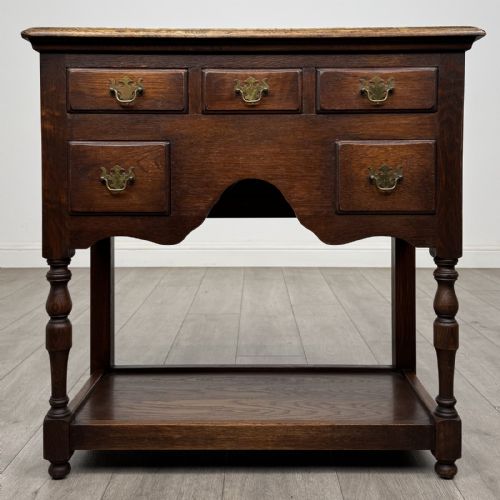
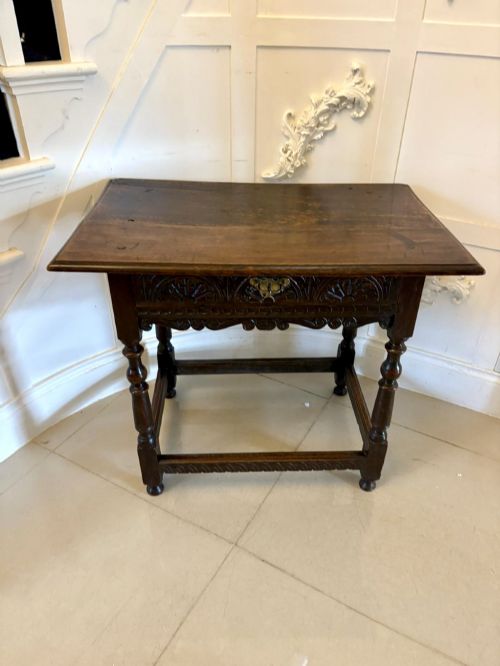
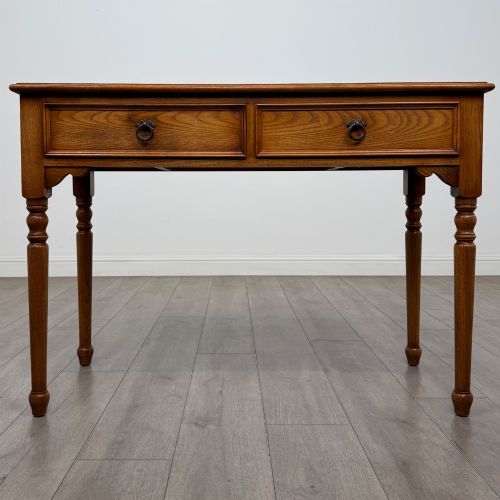
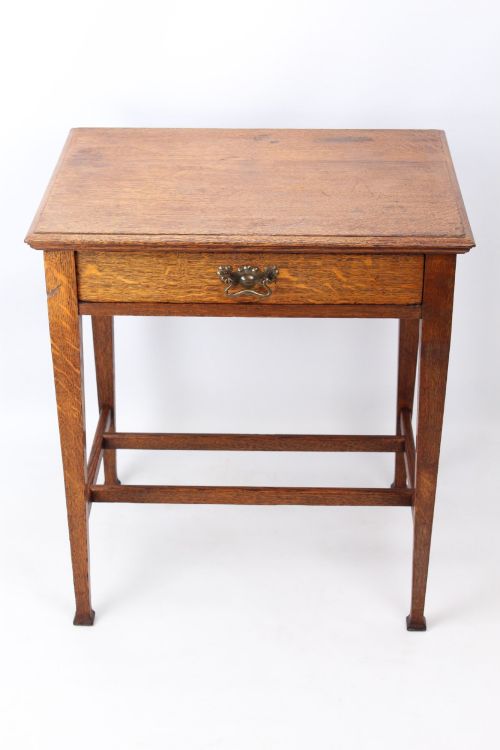
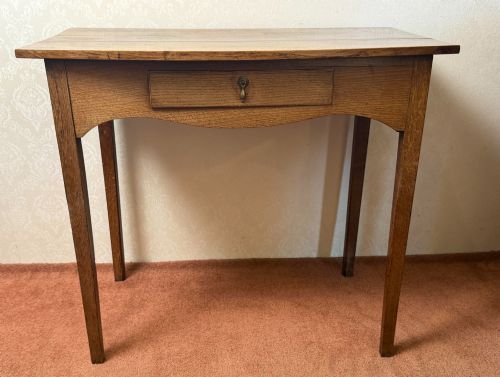
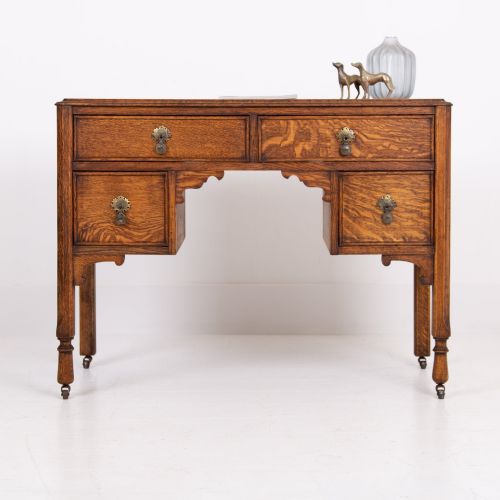
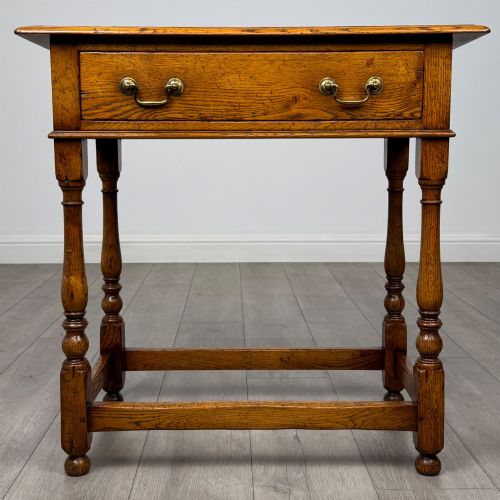
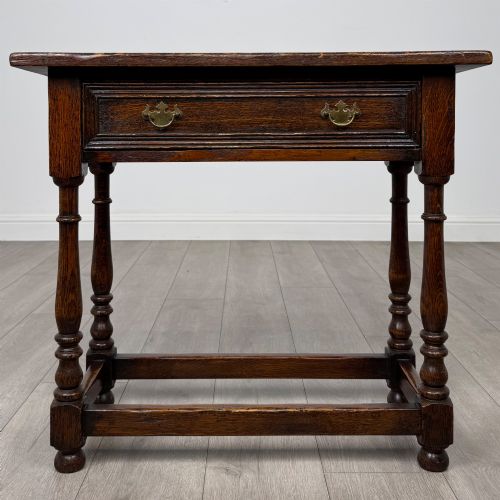
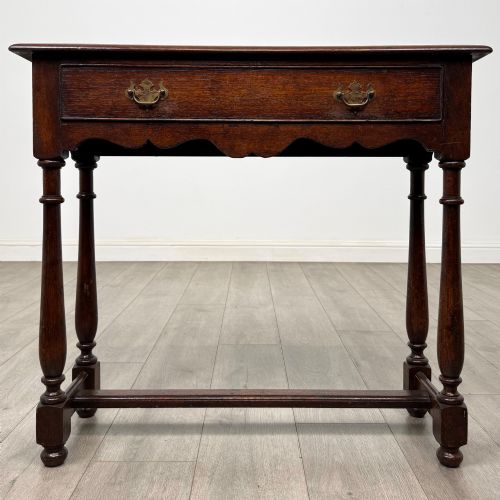
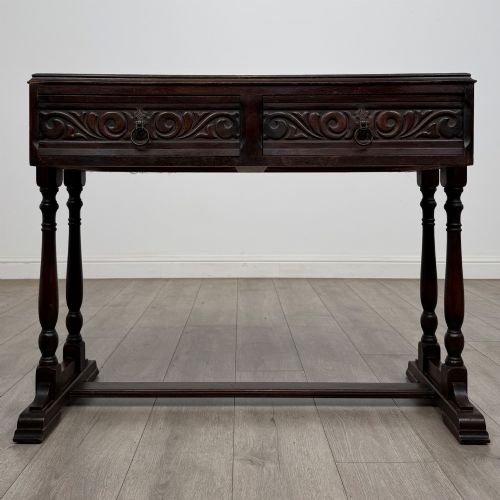
A traditional oak hall console encompasses a practical mix of side tables, console tables, lowboys, and narrow writing desks designed for placement in corridors and entranceways. These forms appear across multiple periods, ranging from early eighteenth-century examples to Edwardian adaptations and twentieth-century revivals.
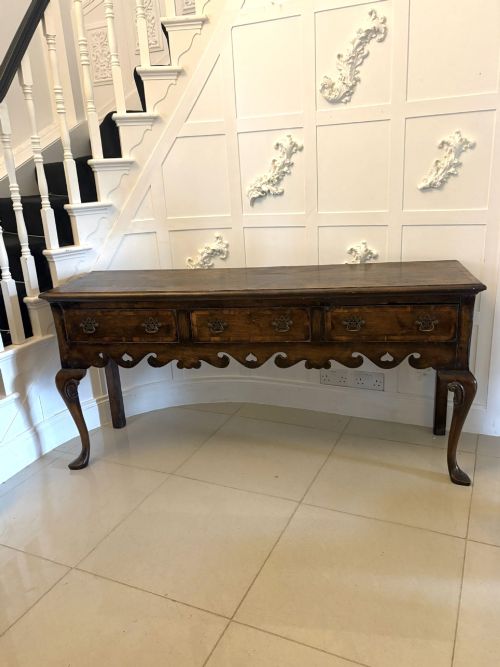
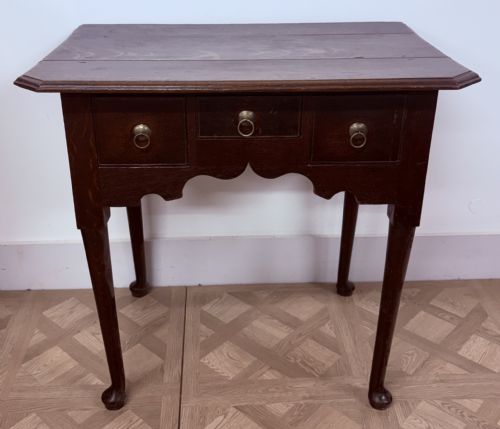
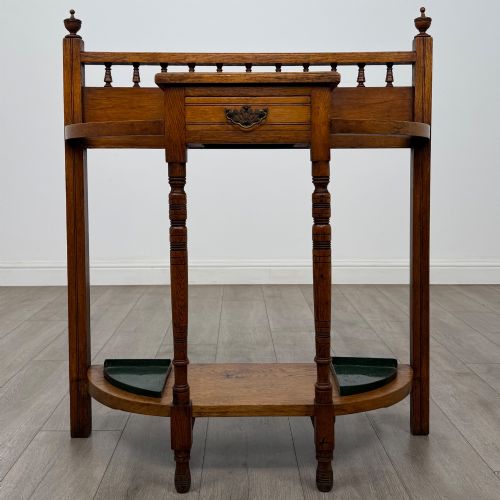
Buyers regularly encounter narrow side tables and lowboys fitted with drawers alongside longer dresser bases and hall stands. The selection spans English country vernacular pieces and formal Georgian styles, providing sturdy surfaces for narrow spaces.
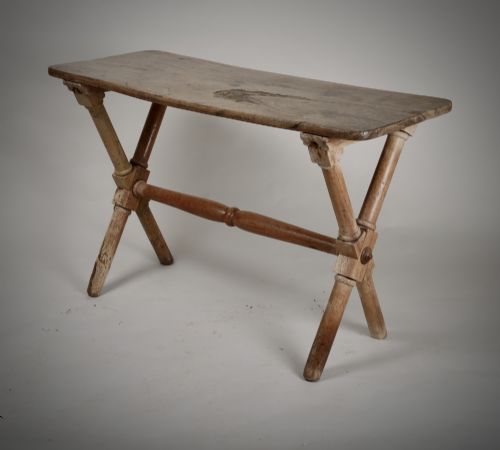
Origins stretch from Welsh and English workshops to continental interpretations, constructed primarily from solid oak alongside variants in bleached oak and painted wood. Each piece serves the dual purpose of surface utility and historical character in a hallway.
Materials and construction
Makers relied on solid oak as the primary structural timber, sometimes utilising bleached oak or incorporating pine and fruitwood elements for secondary parts. Brass and cast iron appear as hardware fittings, drawer handles, and umbrella hooks on hall stands.
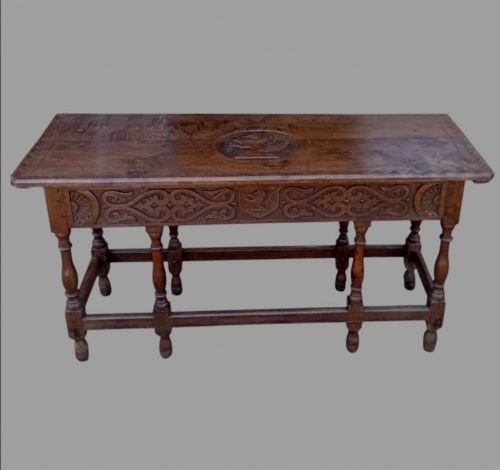
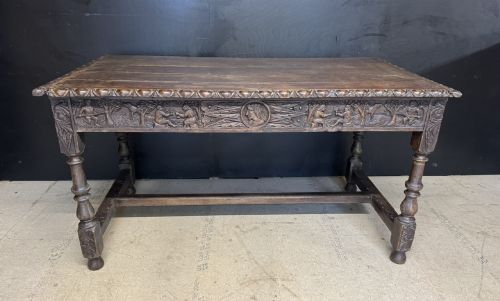
Construction techniques combine traditional joinery with surface ornamentation such as hand-carved panels, moulded drawer fronts, and potboard lower shelves. Surfaces often display a golden natural finish or retain the marks of hand planing from earlier centuries.
Listings feature oak alongside brass, cast iron, and fruitwood across periods from the eighteenth century to the 1930s.
Indicators of quality
The degree of hand-carving and the choice of timber figure distinguish standard production from superior pieces. Dense, well-figured golden oak displays a richer grain pattern that develops depth over centuries of handling.
Proportion remains vital, particularly in narrow side tables and console formats designed for restricted hallway spaces. Original brass hardware and sound structural integrity in the joints elevate an example above later alterations.
The Traditional Oak Hall Console Glossary
- Lowboy
- A small oak table with one or more drawers, originating in the eighteenth century and commonly used as a side table.
- Potboard
- An open lower shelf built into a dresser base or console table, originally intended for storing pots and serving dishes.
- Dresser base
- A heavy lower section featuring drawers and cupboards, serving as a substantial console or sideboard surface.
- Demi-lune
- A half-moon shape used for console tables designed to sit flat against a hallway wall.
- Refectory
- A long, narrow table style adapted from monastic dining furniture for use as a serving or console surface.
Traditional Oak Hall Console: Frequently Asked Questions
What is a traditional oak hall console?
A traditional oak hall console is a narrow surface piece, such as a side table, lowboy, or small dresser base, placed in an entranceway.
These items provide a practical drop-zone for daily items while adding period character to narrow circulation spaces.
How do I date an oak console table?
Dating relies on examining construction marks, timber grain, handle styles, and overall joinery techniques visible on the piece.
Earlier eighteenth-century models show hand-cut joints and distinct patina, whereas Edwardian revivals often utilise machine assistance and lighter framing.
Can I use a lowboy in a small hallway?
A lowboy functions effectively in restricted spaces due to its compact footprint and useful drawer storage.
Its shallow depth allows it to sit against a corridor wall without blocking movement.
What maintenance does solid oak require?
Solid oak benefits from occasional waxing to nourish the timber and protect the surface from moisture.
Avoiding direct heat sources and harsh chemical polishes preserves the natural grain and historic finish.