
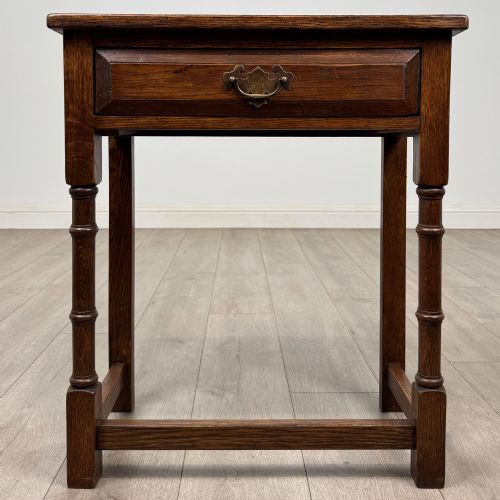
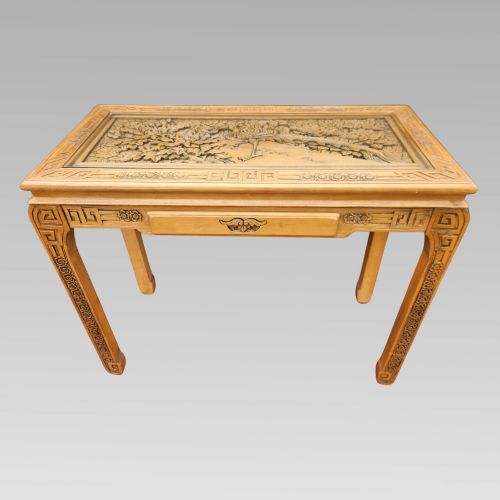


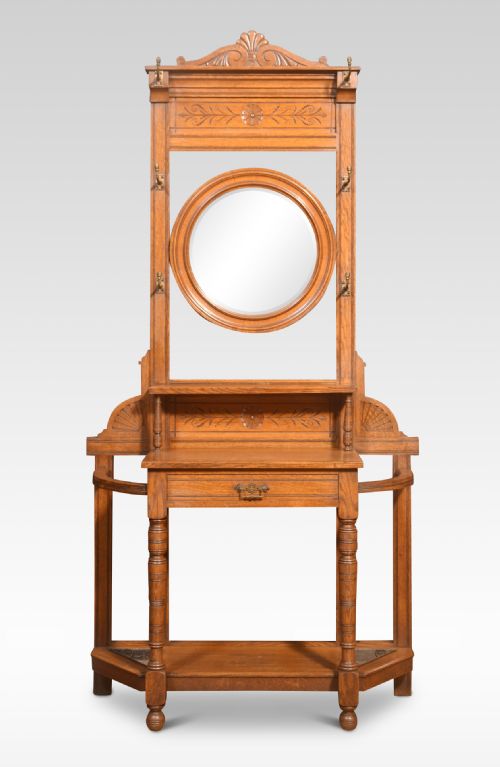


Traditional Oak Entry Table
These traditional oak entry table pieces offer sturdy timber construction and practical hallway storage, shaped by centuries of British and international cabinet-making.
Traditional Oak Entry Table
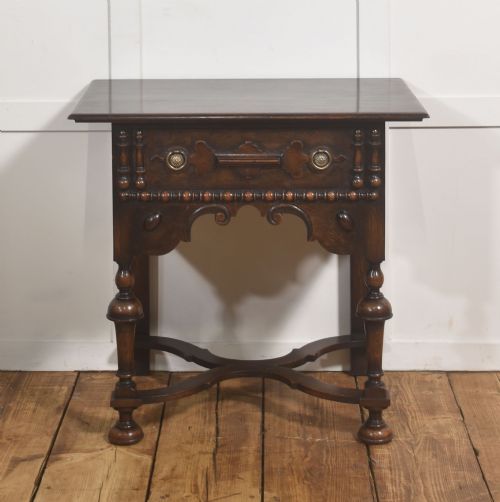
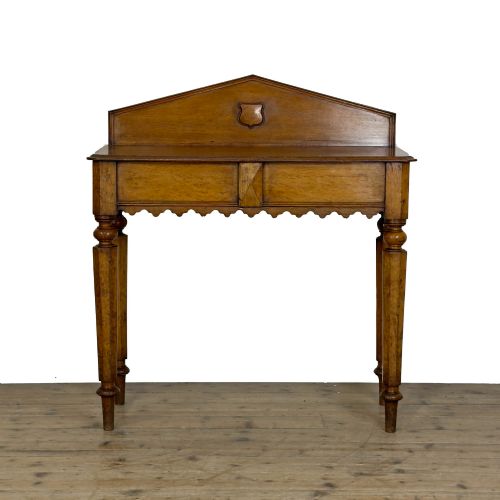
When you search for a traditional oak entry table, you are looking at hallway furniture built to handle daily coming and going while setting the tone of a home. The pieces found here span side tables, console tables, lowboys, hall stands, and monks benches.
You are most likely to meet Edwardian and early twentieth century examples on this page, alongside Georgian pieces and 18th century oak work. Styles stretch from Jacobean Revival and Queen Anne to Art Deco, Victorian, English Country, and Chinese Export designs.
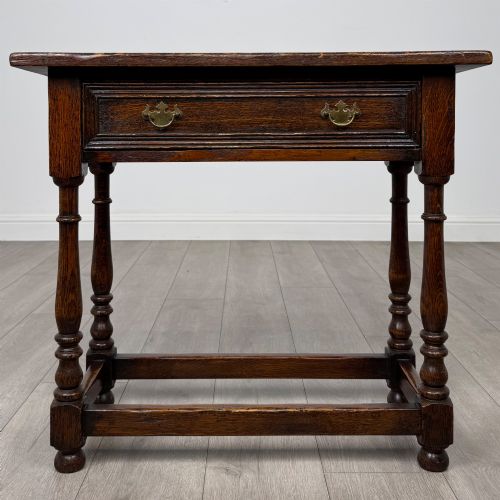
Forms range from simple single drawer side tables and narrow lamp tables to multi-functional seating like settles and monks benches. Oak is the constant material, often paired with brass fittings, glass, fabric, or camphorwood.
How they were made
Makers built these items primarily from solid oak, utilising traditional joinery methods suited to heavy everyday use in entrance halls and corridors. Selected pieces incorporate brass hardware for handles and hinges, glass surfaces, or internal camphorwood storage.
Carved ornamentation appears on specific regional and revival styles, such as Chinese export work featuring intricate oriental carving or Jacobean Revival turning and panelling. Surfaces receive polished or wax finishes that highlight the natural grain of the timber.
Listings feature oak combined with materials such as brass, glass, camphorwood, and fabric.
What varies in quality
Quality in these hall furnishings rests on the integrity of the timber selection and the precision of the joinery rather than surface ornamentation alone. Pieces originating from the 18th century or Georgian period demonstrate high standards of hand-craftsmanship in their structural framing and drawer construction.
Later revival items, including Edwardian and 1930s examples, vary according to whether makers adhered to traditional joinery or utilised simpler assembly methods. The presence of secondary materials like camphorwood or detailed carving elevates the distinction of individual items.
The Traditional Oak Entry Table Glossary
- Lowboy
- A small oak side table or dressing table typically featuring one or more rows of drawers beneath the surface. These low tables date back to the Georgian period and earlier.
- Monks Bench
- A convertible piece of furniture functioning as both a bench with a solid back and a table when the back tilts forward. This dual purpose design served historic hallways and entrance spaces.
- Jacobean Revival
- A nineteenth and twentieth century style mimicking the heavy, rectilinear furniture and geometric panel carving of the early seventeenth century. It utilises dark-finished oak.
- Console Table
- A table designed to be fixed against a wall, frequently supported by legs or brackets in an entrance hall. They often display shallow depths to fit narrow corridors.
- Refectory Table
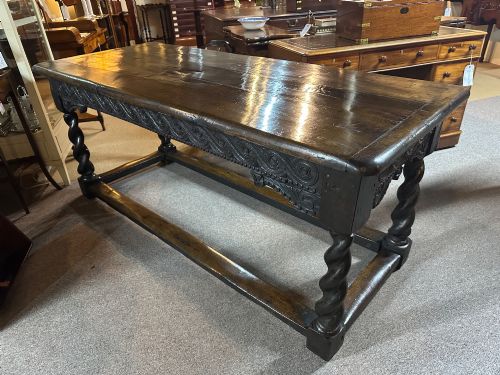
- A long, narrow dining or hall table traditionally used in communal eating spaces. Examples are constructed from heavy oak timber.
Traditional Oak Entry Table: Frequently Asked Questions
What is a traditional oak entry table?
A traditional oak entry table is a piece of wooden hallway furniture designed for practical use near an entrance. These items include side tables, console tables, and lowboys.
They provide surface space for everyday items and reflect historical periods ranging from the Georgian era to the early twentieth century.
How do I date an oak hall table?
Dating an oak hall table involves looking at construction methods, hardware, and stylistic details. Georgian and 18th century pieces show hand-cut joinery and specific period proportions.
Edwardian and 1930s items often reflect revival movements like Jacobean Revival or Art Deco, showing machine assistance and characteristic period turnings.
Where were monks benches used?
Monks benches were traditionally placed in hallways, entryways, and principal rooms as versatile seating. The pivoting back allowed the seat to transform into a table surface.
This dual function made them useful in homes where space conservation mattered.
What is an oak lowboy?
An oak lowboy is a small table with drawers, originating in the Georgian period and earlier eras. They served various household functions including side storage.
Their compact proportions suit modern entryways and hallways.