

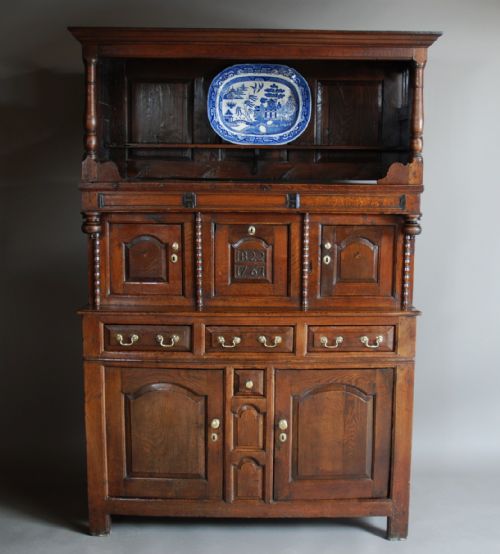
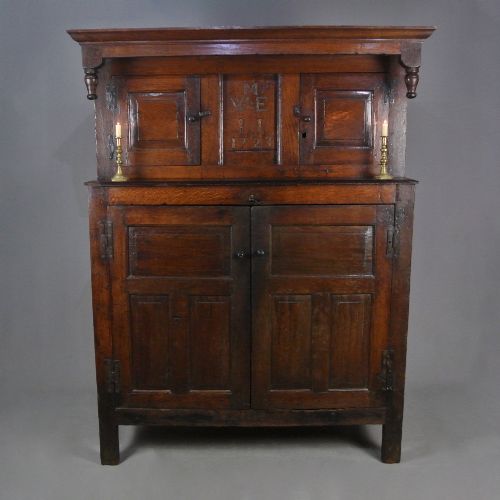
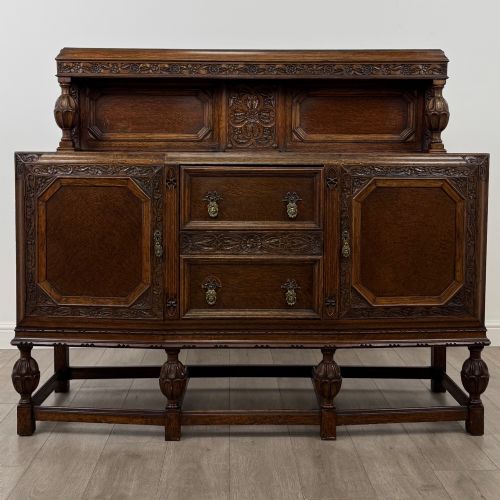
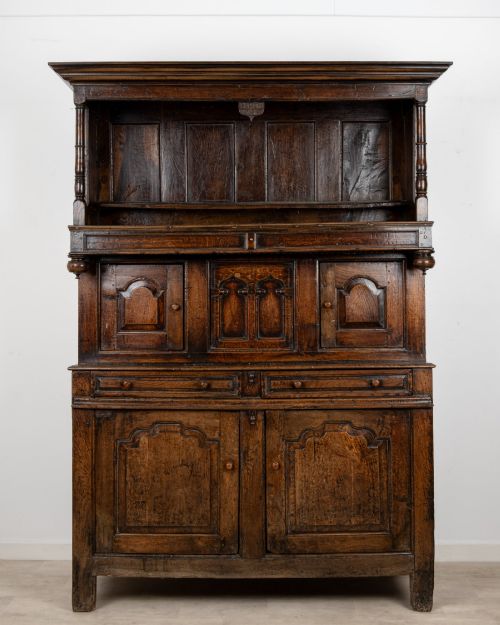



Traditional Oak Court Cupboard
A traditional oak court cupboard brings solid presence and historic joinery into a modern interior.
Traditional Oak Court Cupboard
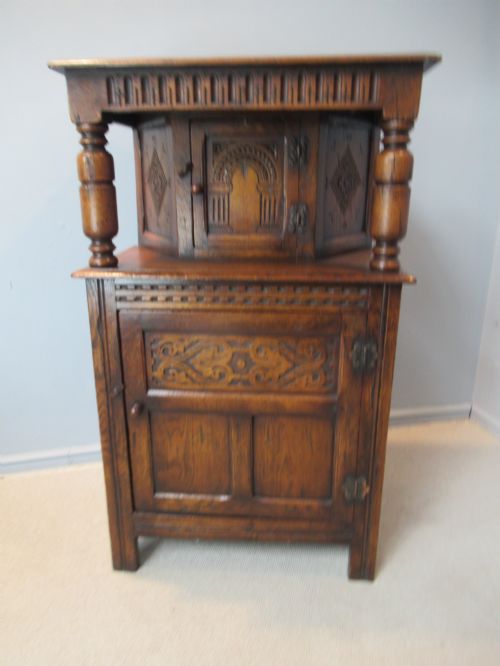
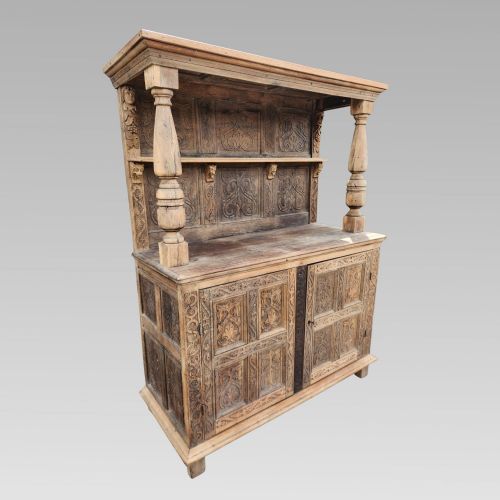
A traditional oak court cupboard is a substantial storage piece built primarily from sturdy timber, originating in early British domestic architecture. Buyers browsing this page encounter examples ranging from seventeenth-century joined pieces to later revival furniture created in the Edwardian era and the early twentieth century.
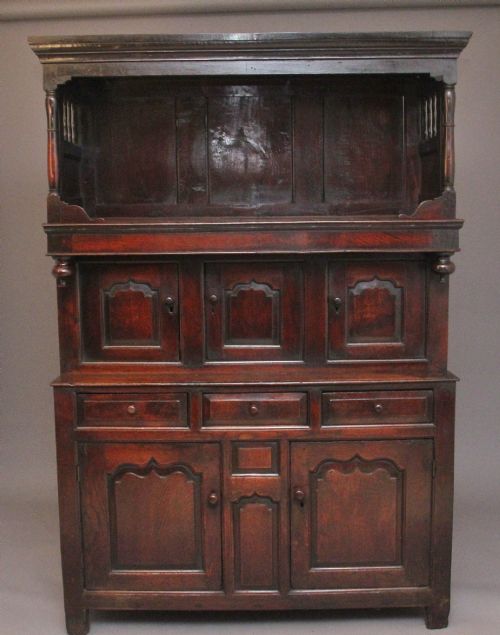
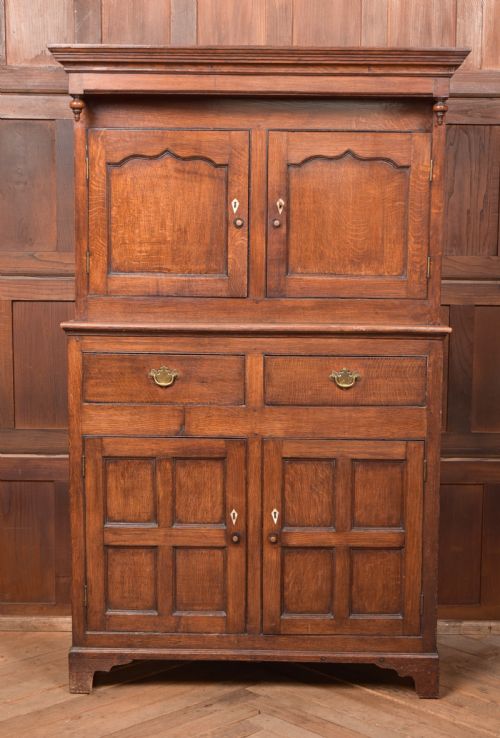
The selection here encompasses regional vernacular forms, particularly Welsh two-part and three-part cupboards known locally as deuddarn and tridarn, alongside English court and livery cupboards. Most pieces rely on heavy framing and panelled doors, offering deep enclosed shelves designed for storing household provisions and linen.
While early pieces display the hand-worked marks of seventeenth and eighteenth-century rural joiners, later twentieth-century iterations often adopt Jacobean Revival carving styles. These variations allow buyers to choose between authentic period patination and decorative revival craftsmanship.
Materials and construction methods
Traditional oak court cupboards are constructed using heavy oak timbers, sometimes supplemented with secondary woods such as elm for internal panels or structural elements. Joinery relies on traditional mortise and tenon joints secured with wooden pegs, creating a rigid frame that withstands centuries of use without modern metal fasteners.
Surface decoration on these pieces typically involves hand-carved geometric patterns, floral motifs, or linenfold panels executed directly into the solid timber. Metal hardware is largely restricted to wrought iron or brass hinges and latches, which secure heavy panelled doors and drawers.
Traditional Oak Court Cupboard Retail Price Guide 2026
Typical asking prices for traditional oak court cupboard among the pieces listed under this phrase on Sellingantiques today, from the lower quarter to the upper quarter. They describe what is for sale here now, not the wider market.
The listings here span from the seventeenth century through to the 1930s, combining authentic Georgian vernacular forms with Edwardian Jacobean Revival pieces.
Distinguishing quality in oak cupboards
The distinction between ordinary and superior pieces rests on the depth of the timber's natural patination and the crispness of the hand-carved ornamentation. Early pieces exhibiting untouched surfaces and deep, warm tones command greater attention than later revival versions with mechanically produced decoration.
Structural integrity also separates the range, with superior examples retaining their original joined frames, backboards, and period hardware without extensive timber replacement. The balance of proportions, particularly in regional Welsh tridarn and deuddarn forms, defines the visual harmony of the finished piece.
The Traditional Oak Court Cupboard Glossary
- Court cupboard
- A traditional enclosed piece of furniture featuring stacked tiers, commonly used for displaying plate and storing provisions in early homes. These structures form the core of this category.
- Deuddarn
- A traditional Welsh two-part oak cupboard featuring a recessed upper section above a larger base cabinet. This regional form appears frequently across eighteenth-century listings.
- Tridarn
- A three-tier Welsh cupboard incorporating an open middle section or canopy supported by turned posts above lower storage compartments. It represents a larger and more complex development of the regional vernacular.
- Livery cupboard
- An early storage cabinet designed for ventilating food and drink, typically constructed with pierced or turned spindle doors. These pieces date primarily from the seventeenth and eighteenth centuries.
- Linenfold
- A carved wooden panel motif resembling folded fabric, popular in revival and early period furniture. This technique adds texture to cupboard doors.
Traditional Oak Court Cupboard: Frequently Asked Questions
What is a traditional oak court cupboard?
A traditional oak court cupboard is a heavy storage piece featuring tiered shelving and enclosed cabinets, built to hold household goods and provisions.
These items range from seventeenth-century joined originals to later revival interpretations made in the twentieth century.
How do I tell an 18th-century cupboard from a revival piece?
Eighteenth-century examples display hand-cut joinery marks, worn timber surfaces, and natural patination developed through centuries of domestic use.
Revival pieces from the Edwardian period or the twentieth century often feature uniform machine-finished carving and lighter surface treatments.
Where were deuddarn cupboards made?
Deuddarn cupboards originate from Welsh rural workshops, where local joiners constructed them using native oak and elm timbers.
These regional pieces are distinguished by their specific two-part stacked construction and traditional local joinery techniques.
How should I care for an antique oak cupboard?
Antique oak benefits from stable indoor humidity and occasional application of traditional beeswax to nourish the dry timber.
Avoiding direct sunlight and heat sources preserves the natural patina and prevents the historic wood from splitting.