
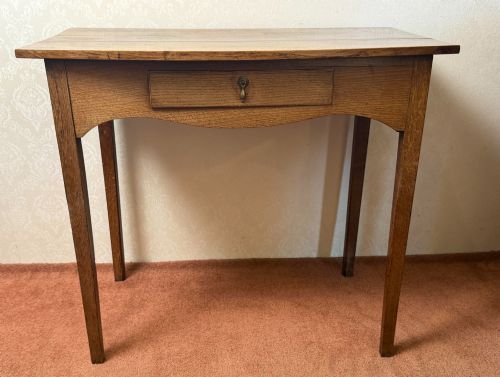
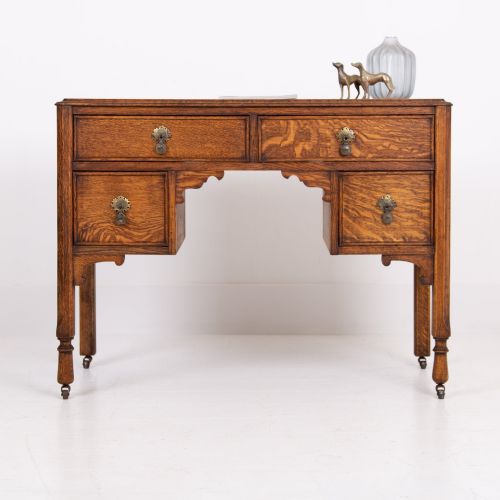
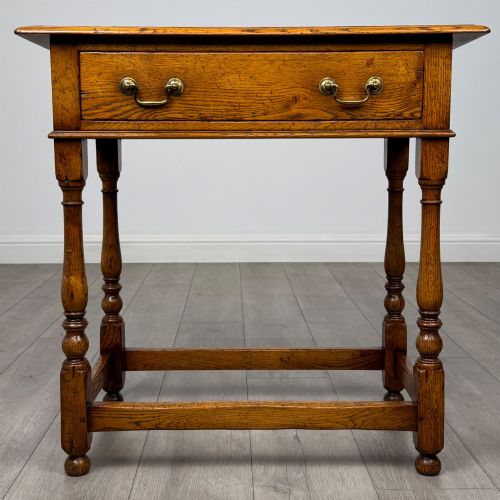
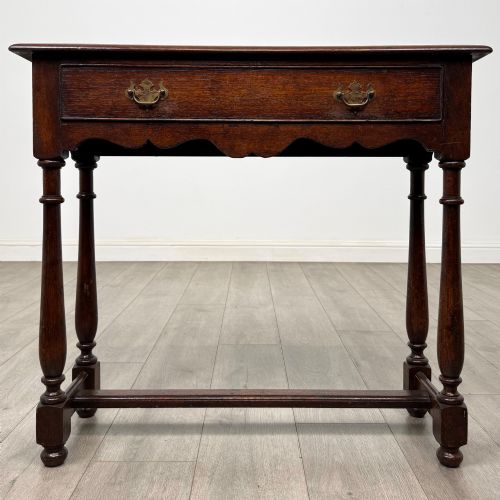

Traditional Oak Console Desk
A traditional oak console desk brings sturdy practicality and warm grain to a hallway or study, offering a surface for correspondence combined with domestic utility.
Traditional Oak Console Desk
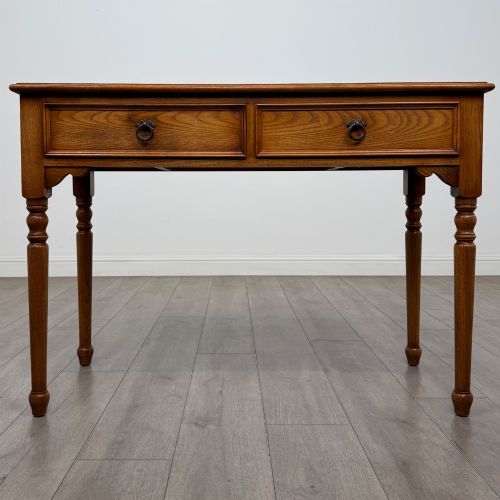
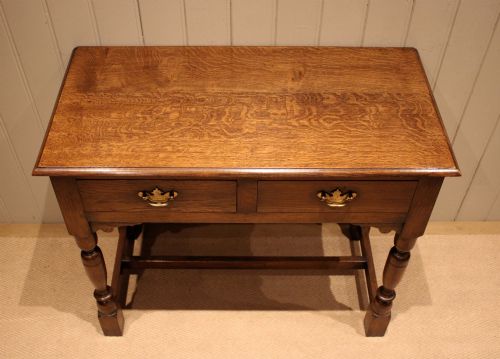
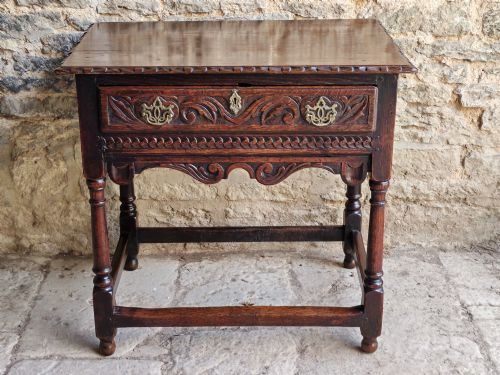
A traditional oak console desk serves as a compact workspace or hallway surface, combining the shallow footprint of a console with the functional drawers of a writing table. The pieces gathered under this search phrase span centuries of domestic furniture making, from the simple lines of eighteenth-century lowboys to later revival pieces from the Victorian and Edwardian eras.
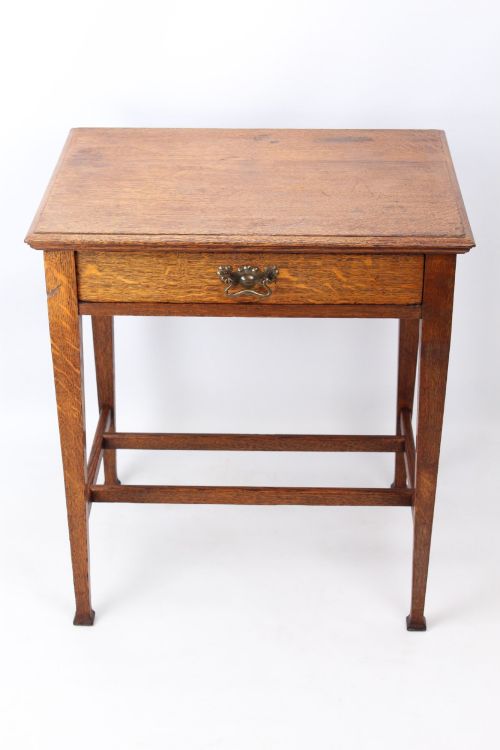
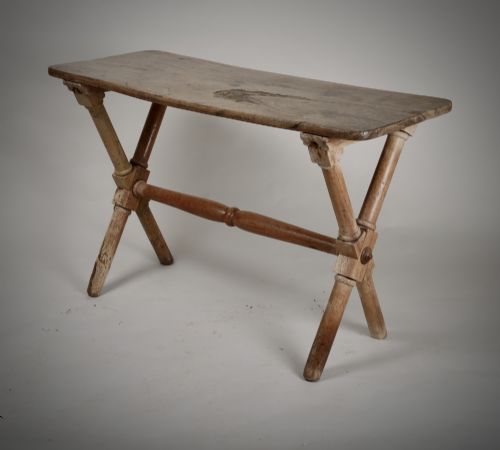
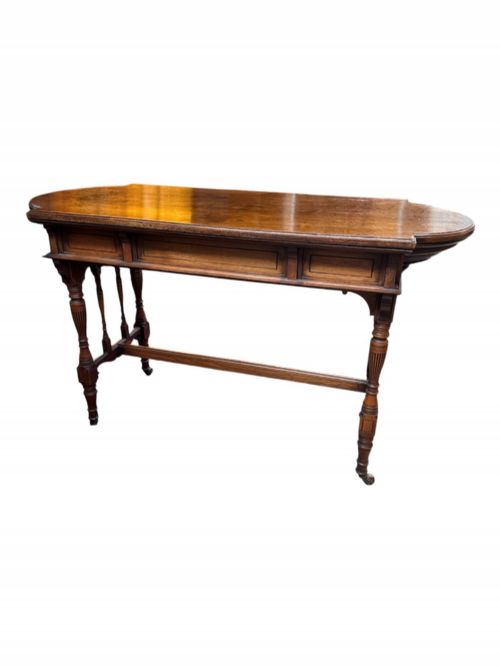
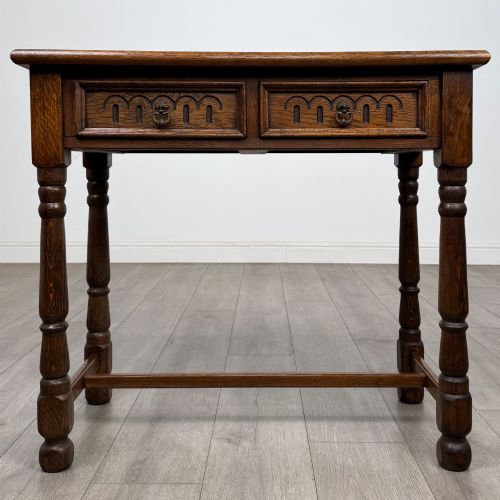
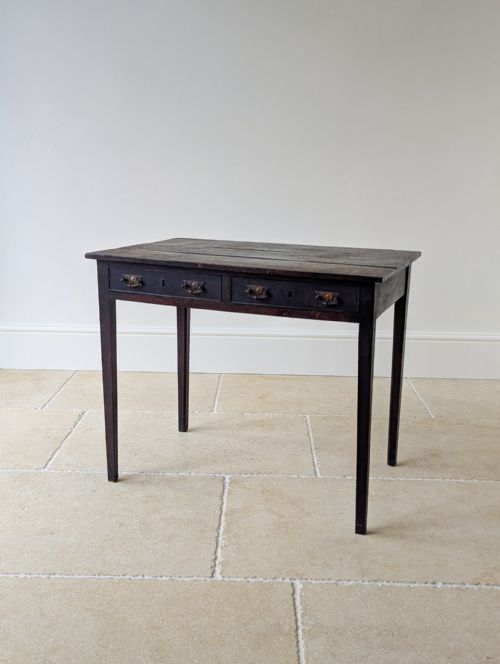
You are most likely to encounter Edwardian writing tables and nineteenth-century side tables adapted for writing, alongside earlier Georgian lowboys. These forms often feature fitted drawers, turned legs, or trestle supports, constructed primarily in solid oak with occasional secondary timbers.
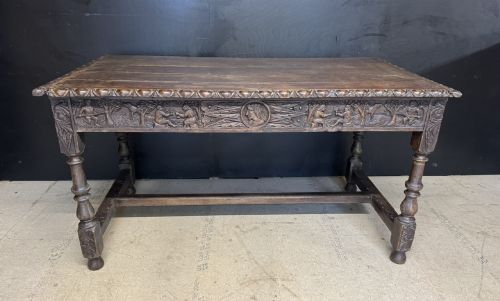
The aesthetic ranges from rustic farmhouse styles and English country designs to more formal Jacobean revival and Gothic influences. Each piece reflects the domestic requirements of its period, whether for country house libraries or modest halls.
What varies in quality
The grade of timber and the crispness of construction dictate the distinction between utilitarian workshop pieces and finer domestic furniture. Superior examples display carefully matched grain, robust drawer construction with hand-cut joints, and well-proportioned turnings or carved details that remain proportionate to the frame.
Proportion and originality of hardware also separate standard items from better examples. Alterations to tops, replacement handles, or mismatched timbers lower the integrity of a piece, whereas uncompromised surfaces retain their original character and structural cohesion.
Some nineteenth-century tavern tables bear the quiet ink stains of past ledgers, recording accounts long since settled.
The Traditional Oak Console Desk Glossary
- Lowboy
- A small oak or fruitwood table with one or more rows of drawers, commonly used as a dressing table or side table in the eighteenth century.
- Refectory table
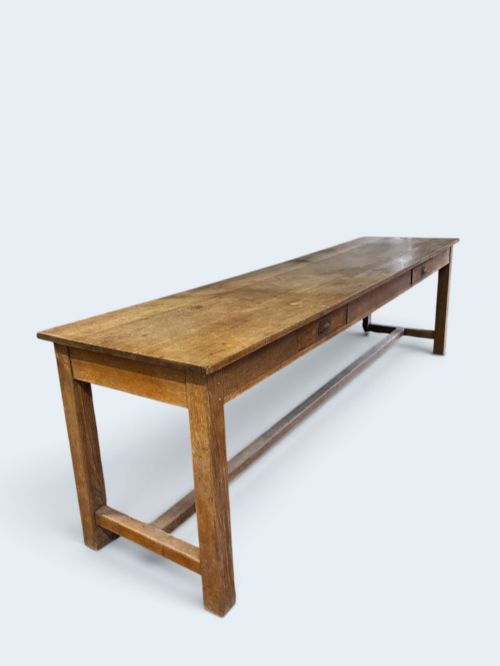
- A long dining or serving table traditionally used in communal halls, featuring stretcher bases for added stability.
- Trestle table
- A table consisting of two or more support frames connected by a horizontal beam, often seen in rustic and provincial furniture.
- Bleached oak
- Timber treated to lighten its natural colour, a finish found on certain twentieth-century pieces.
- Console table
- A table designed to stand against a wall, sometimes fixed in place, utilised for display or surface storage in hallways and reception rooms.
Traditional Oak Console Desk: Frequently Asked Questions
How do I use a console desk in a modern room?
A console desk fits well in narrow hallways, living rooms, or compact studies where a deep partner desk would overwhelm the space. Its shallow depth provides a convenient surface for correspondence or display without blocking walkways.
Pair the piece with a simple stool or chair that tucks neatly underneath when not in use. The natural grain of the timber works alongside both contemporary and traditional interior schemes.
What is the difference between a lowboy and a writing table?
A lowboy is typically a small, eighteenth-century table featuring one or more drawers positioned beneath the top, originally designed for domestic tasks like grooming or writing. These pieces tend to have elegant cabriole or straight legs and compact proportions.
Writing tables generally date from the nineteenth or twentieth centuries and offer a broader surface area intended specifically for paperwork. They frequently incorporate multiple drawers and sturdier frames suited to heavier daily use.
How can I tell an eighteenth-century table from a later revival piece?
Examination of the timber movement, joinery marks, and hardware fixings helps distinguish older furniture from later copies. Eighteenth-century pieces often exhibit hand-planed surfaces, pegged joints, and timber shrinkage consistent with age.
Revival pieces from the Victorian and Edwardian periods utilise machinery-sawn components and standardised fixings while mimicking earlier Jacobean or Georgian styles. Comparing the interior drawer construction usually reveals the true period of manufacture.
Does bleached oak mean the piece is modern?
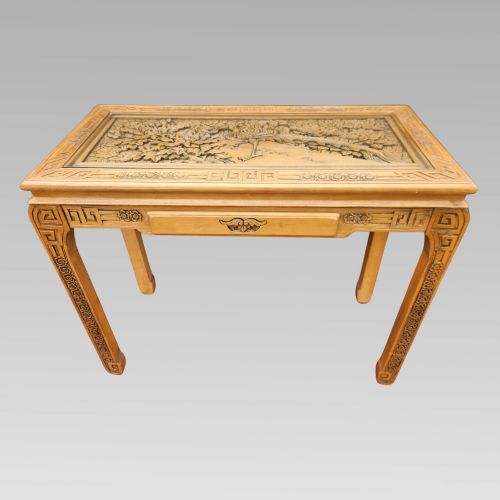
Bleaching or lightening oak surfaces became popular during the twentieth century, appearing on pieces from the 1920s alongside traditional dark finishes. This treatment alters the natural colour of the wood while retaining the underlying grain and structural age of the timber.
Checking the construction methods and overall form helps confirm whether a bleached table originates from the early twentieth century or a later workshop.