

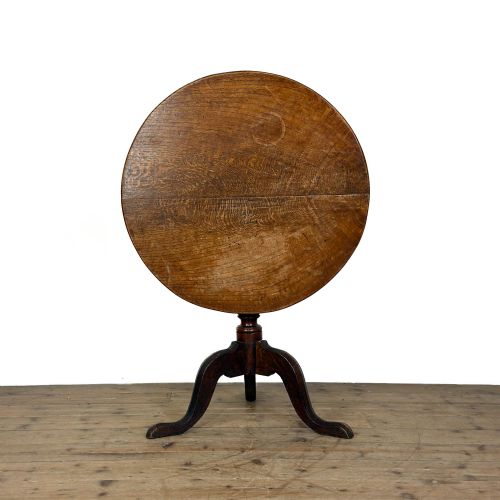


Traditional Oak Candle Stand
These traditional oak candle stand pieces bring genuine country character to a room, offering practical surfaces and warm timber tones for everyday use.
Traditional Oak Candle Stand
When you search for a traditional oak candle stand, you encounter a focused selection of turned wooden candlesticks and compact tripod tables designed to hold candles or small items of light. The pieces on this page span several distinct periods, reaching from the eighteenth century through the Georgian era and into the Edwardian years and the nineteen-twenties.
The forms divide neatly between vertical candlesticks and small occasional tables like wine tables and tilt-top tripod tables. Many examples show strong regional character, drawing on rustic farmhouse traditions, folk art carvings, and Jacobean revival styles.
Among candlesticks, buyers most frequently meet pairs featuring turned shafts, open barley twists, or carved figures. The tables tend to rely on sturdy tripod bases and solid timber tops suitable for domestic placement beside a chair or bed.
How they were made
The makers of these items relied heavily on solid timber, utilising hardwood and dark oak alongside brass fittings where extra strength or contrast was required. Woodturners shaped the vertical columns of the candlesticks on a lathe, producing crisp rings and flowing barley twists.
Cabinetmakers and rural artisans constructed the tripod tables using traditional joinery methods to secure the slender legs to central pillars and circular tops. Surface decoration often involved hand carving, particularly seen in folk art pieces depicting figures or natural motifs.
Traditional Oak Candle Stand Retail Price Guide 2026
Typical asking prices for traditional oak candle stand among the pieces listed under this phrase on Sellingantiques today, from the lower quarter to the upper quarter. They describe what is for sale here now, not the wider market.
One standout folk art pair takes the cheerful form of poachers carrying their game home.
What varies in quality
The distinction between ordinary and superior pieces rests on the depth of hand craftsmanship and the crispness of the turning. A well-executed barley twist or a deeply carved folk art detail displays a confident touch that elevates simple utility into art.
Proportion and material selection also dictate standing, with tightly grained timber and well-balanced tripod bases commanding greater admiration. Pieces that retain their original warm patination and structural integrity show a higher grade of preservation over time.
The Traditional Oak Candle Stand Glossary
- Tripod table
- A small freestanding table supported by three legs radiating from a central pillar. These tables often feature tilt mechanisms or circular tops designed for occasional domestic use.
- Barley twist
- A spiral turning resembling a twisted rope, carved into the vertical shaft of a candlestick or table leg. This decorative technique became popular during the seventeenth century and saw revivals in later periods.
- Folk art
- Objects created by self-taught or rural artisans outside the formal academic traditions of design. These pieces frequently incorporate charming figurative carvings or vernacular motifs.
- Tilt-top table
- An occasional table with a hinged top that pivots to a vertical position when not in use. This clever mechanism allowed tables to be stored flat against a wall to save floor space.
- Hardwood
- Timber derived from broad-leaved deciduous trees, including oak. Such material provides the density and durability necessary for long-lasting domestic furniture.
Traditional Oak Candle Stand: Frequently Asked Questions
What is a traditional oak candle stand used for?
These pieces served practical lighting and display purposes in historic homes, holding wax candles or small decorative items within easy reach of seating areas.
Today, they function well as compact occasional surfaces or decorative focal points in sitting rooms and hallways.
How do I date a traditional oak candle stand?
Dating relies on observing construction methods, turning styles, and material characteristics that align with specific eras like the Georgian period or the nineteen-twenties.
Revival styles from the early twentieth century often mimic earlier Jacobean forms, so examining tool marks and timber ageing helps clarify the true period.
Are these pieces made of solid oak?
The listings on this page feature solid timber, hardwood, and dark oak across the various candlesticks and small tripod tables.
Makers selected these robust materials to ensure stability, particularly for slender turned candlesticks and three-legged occasional tables.
How should I care for an antique oak candle stand?
Keep wooden pieces away from direct heat sources and sudden temperature shifts to prevent the timber from drying out or splitting.
Occasional treatment with a quality furniture wax helps maintain the natural sheen and protects the historic surface patination.