




Traditional Nature Wall Art
Traditional nature wall art brings pastoral rivers, shadowed woodlands and Scottish highlands indoors through period landscapes painted in oil and watercolour.
Traditional Nature Wall Art
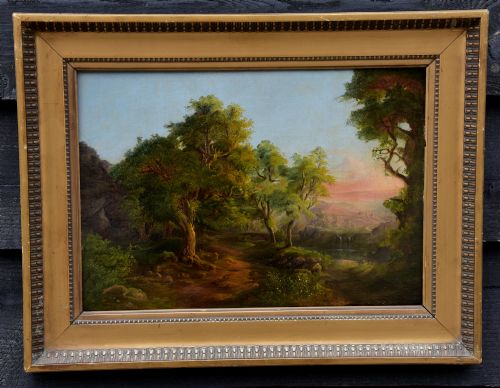
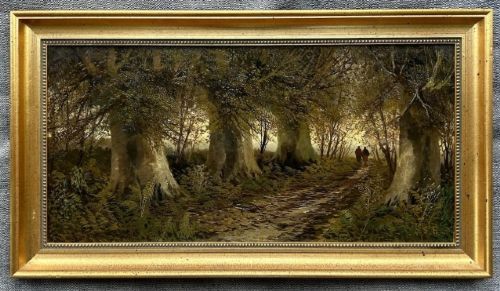
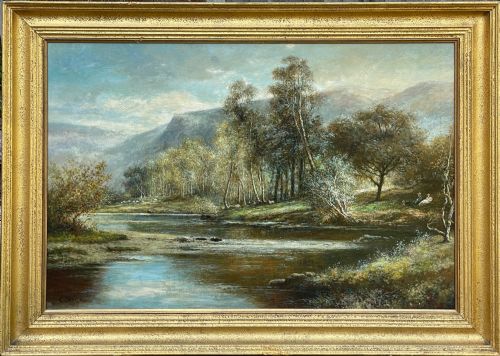
Traditional nature wall art encompasses framed paintings depicting rural landscapes, woodland scenes, river valleys and highland watercourses. Buyers searching for traditional nature wall art typically encounter framed oil paintings and watercolours from the nineteenth century and early twentieth century. These works capture British and Welsh countryside views, from country lanes to wooded riverbanks.
The dominant forms on this page are nineteenth century oil paintings on canvas and board, alongside watercolours and gouache works from later decades. Subjects focus heavily on natural topography, featuring rivers, lakes, trees and mountains rendered in Victorian and impressionist styles. Works range from intimate small-scale paintings to large framed landscape art.
Pieces span eras such as the Victorian period, Edwardian times and the mid twentieth century. Artists record specific locations including Cumberland, Wales, the Isle of Man and Scottish lochs. The selection centres firmly on historical depictions of the natural world rather than contemporary interpretations.
Materials and methods
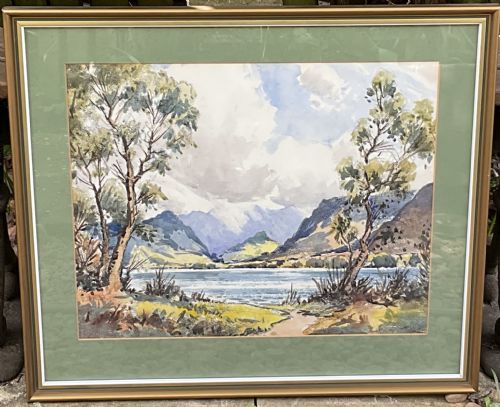
Artists painted these works primarily with oil paint on canvas or wooden board, utilising brushes to build up layered pigment and texture. Watercolour and gouache on paper appear frequently in the twentieth century examples, offering lighter washes and finer detail.
Makers housed these paintings in traditional wooden frames, sometimes incorporating gold leaf gilding to accentuate the artwork. Canvas supports were stretched over wooden frames or applied directly to sturdy boards before painting.
The combination of oil pigments, canvas, paper and timber supports accounts for the durability and appearance of these pieces over time. Conservation of the original framing and paint surface preserves the historic character of each artwork.
Listings feature works from the nineteenth and twentieth centuries, using oil paint, watercolour, gouache, canvas, paper and wood.
Judging quality and execution
Quality in these landscape paintings rests upon the confidence of the brushwork and the handling of light within the scene. Master painters control tone and atmosphere to create depth in woodland clearances and river glens, whereas lesser works rely on formulaic foliage and static compositions.
The preservation of the original paint layer without extensive overpainting maintains the integrity of the piece. Similarly, period wooden frames that complement the painting without later alteration contribute to the overall standard of the work.
Thomas W Lascelles·William Langley·William Mellor·John Hobson Nicholson·George F Wetherbee·Fred Merriman
The Traditional Nature Wall Art Glossary
- Oil on canvas
- A painting technique where oil-based pigments are applied to a woven fabric stretched across a wooden support. This medium allows for rich colour blending and textured brushwork.
- Gouache
- An opaque water-based paint medium that dries to a matte finish, often used on paper for detailed studies. It differs from transparent watercolour through its chalky density.
- Board support
- A rigid panel made from wood or compressed material used as a base for painting instead of stretched canvas. It provides a stable, flat surface for oils.
- Watercolour
- A painting method where water-soluble pigments are suspended in a water-based solution and applied to paper. This technique produces translucent washes and delicate effects.
- Victorian naturalism
- An artistic movement focused on the faithful, detailed depiction of the natural world without excessive romantic idealisation. It prioritises observed botanical and geological accuracy.
Traditional Nature Wall Art: Frequently Asked Questions
How do I date an old landscape painting?
Dating relies on stylistic clues, framing methods, and the type of canvas or paper support utilised. Artists signatures and biographical records also provide definitive markers for the decade of creation.
Changes in pigment chemistry and stretcher frame construction further help confirm the historical period of the artwork.
Where should I hang a landscape oil painting?
These works suit dining rooms, studies and hallways where traditional decor complements historical oil paintings. Avoid hanging them in direct sunlight or damp spaces to protect the pigment and canvas.
Pairing a landscape with period furniture enhances the traditional atmosphere of the interior space.
What is the difference between oil and watercolour?
Oil paint utilises a slow-drying oil binder, allowing rich textures and deep colour layering on canvas or board. Watercolour uses water-soluble pigments on paper, creating translucent and fluid effects.
Oils generally require sturdy wooden frames with protective glass optional, whereas watercolours require framing behind glass for paper preservation.
How do I care for antique painted artwork?
Keep paintings away from direct heat sources and extreme humidity fluctuations to prevent canvas slackening or wood cracking. Dust surfaces gently with a soft, dry brush without applying cleaning liquids.
Consult a professional conservator if the paint surface requires cleaning or stabilization.