
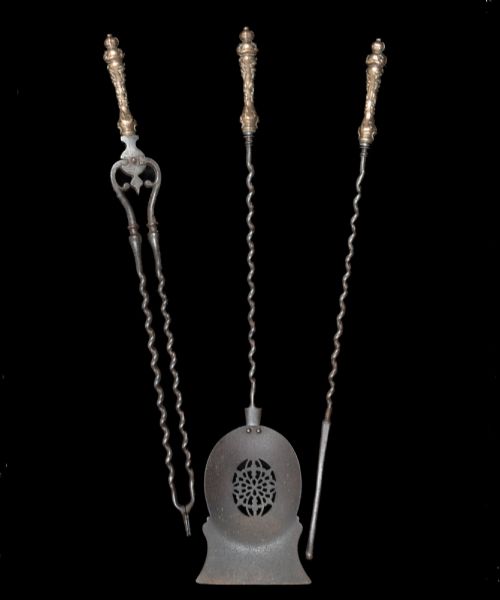


Traditional Metal Hearth Set
A traditional metal hearth set brings warmth and genuine period utility to your fireplace, combining functional ironwork with handsome brass and steel.
Traditional Metal Hearth Set
A traditional metal hearth set comprises matching fireplace tools, companion sets, fire irons, and associated accessories designed to tend an open fire. When you search for a traditional metal hearth set, you encounter collections spanning the nineteenth century, including Victorian, Gothic Revival, Georgian, and English Country House styles.
The pieces listed on this page range from early nineteenth-century burnished steel tools to heavy brass saucepans, fire dogs, and companion sets with fire screens. You are most likely to meet sets fashioned from polished steel, wrought iron, or brass, reflecting the robust manufacturing methods of the 1800s, 1860, 1880, and 1920.
How they were made
Blacksmiths and metalworkers shaped these sets using durable metals like iron, wrought iron, steel, and gunmetal, often pairing them with bright brass and copper accents. Techniques included hand-forging wrought iron and polishing steel surfaces to a high finish, creating implements built to withstand daily use near a hot coal or wood fire.
Makers utilised distinct surface treatments such as burnishing steel and polishing gunmetal to provide both visual contrast and protection against corrosion in damp chimney environments. Heavy brass components were cast or beaten to form fenders, saucepans, and fire dogs that complemented the working iron tools.
Materials seen across these listings include brass, steel, wrought iron, gunmetal, burnished steel, and copper.
What varies in quality
Quality in a traditional metal hearth set lies in the substantive weight of the metal and the integrity of the forging. Heavier gauges of steel, iron, and brass indicate superior craftsmanship and long durability, whereas thinner pieces often suffer from warping or excessive wear.
The Traditional Metal Hearth Set Glossary
- Fire irons
- Implements used for tending a fireplace, typically including pokers, tongs, and shovels. They are often suspended from a stand or resting on fire dogs.
- Burnished steel
- Steel that has been polished by rubbing to produce a bright, lustrous surface. This finish enhances the reflective quality of the metal against hearth flames.
- Fire dogs
- Andirons used to support logs in an open fireplace, frequently made of brass or iron. They often accompany companion sets to complete the hearth arrangement.
- Wrought iron
- Iron that has been heated and worked with tools by a blacksmith, showing distinctive texture. It provides exceptional strength for heavy fire tools.
- Gothic Revival
- An architectural and decorative style popular during the Victorian era. It influences the pointed arches and ornate detailing found on certain hearth sets.
Traditional Metal Hearth Set: Frequently Asked Questions
What does a traditional metal hearth set include?
These sets generally comprise matching pokers, tongs, and shovels designed for managing coal or wood fires. Additional components often feature fire irons, companion sets, fenders, and fire dogs.
They serve both practical maintenance duties around the hearth and decorative functions within period rooms.
How do I date a metal hearth set?
Dating relies on identifying the prevailing metal finishes, such as burnished steel, gunmetal, or wrought iron, alongside stylistic clues like Gothic Revival motifs. Nineteenth-century pieces frequently display distinct hand-forging techniques and heavier brass castings.
Comparing the object types and material combinations with documented period examples helps narrow down the decade.
Are these tools suitable for everyday use?
Most pieces are forged from durable materials like steel, iron, and brass built specifically for heavy hearth duties. Their robust construction handles regular heat and manual use.
Care should be taken with antique polished steel or burnished surfaces to prevent moisture damage and rust over time.
How do steel and brass sets differ?
Steel and wrought iron focus on dark, industrial strength with polished or burnished finishes designed for heavy fire management. Brass and copper introduce brighter metallic tones and are frequently utilised for fenders, saucepans, and decorative fire dogs.
Combining both metals in a set provided functional strength alongside a decorative aesthetic for nineteenth-century reception rooms.