
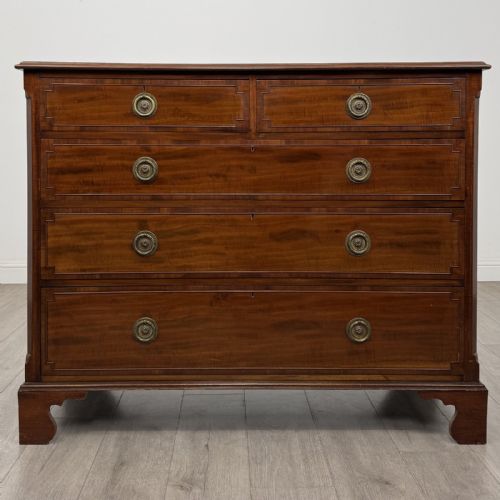
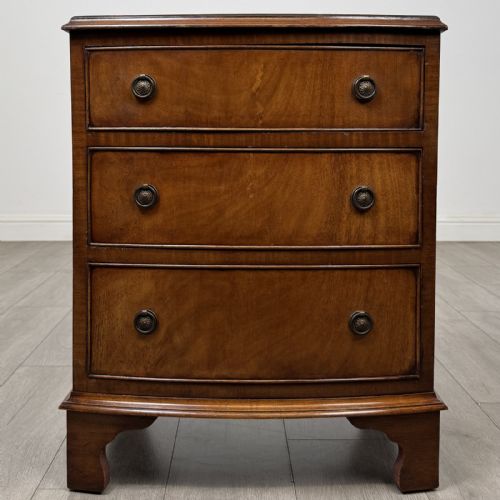
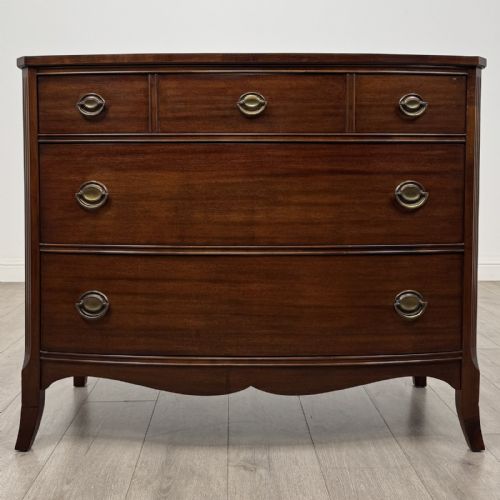
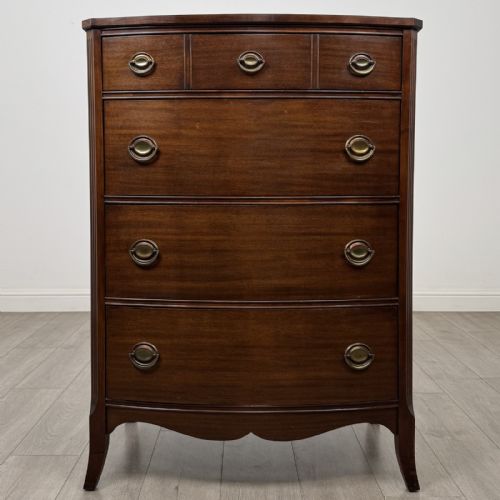
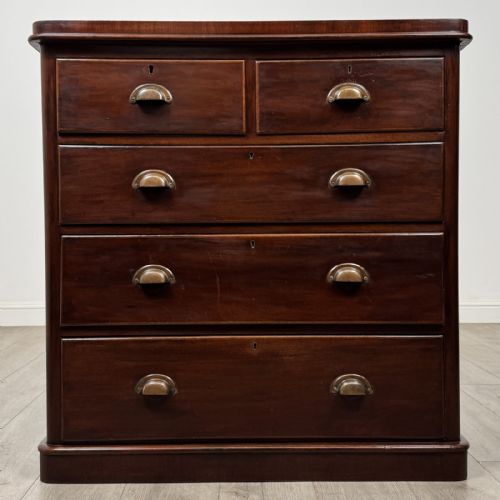
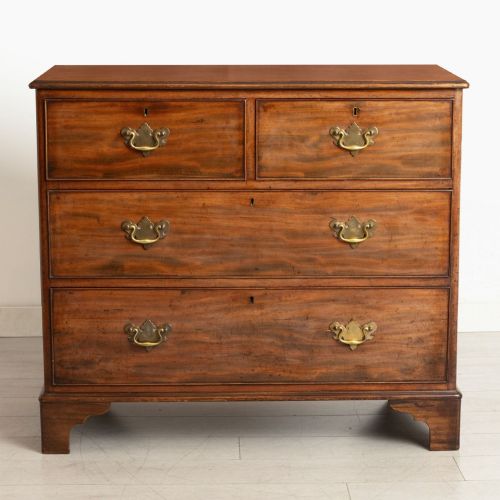
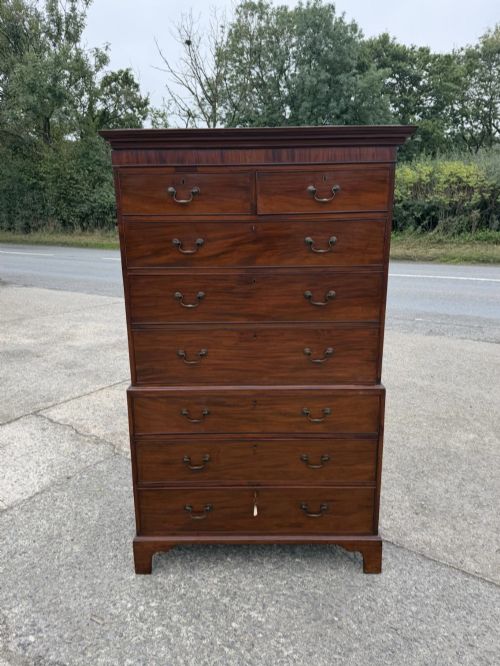
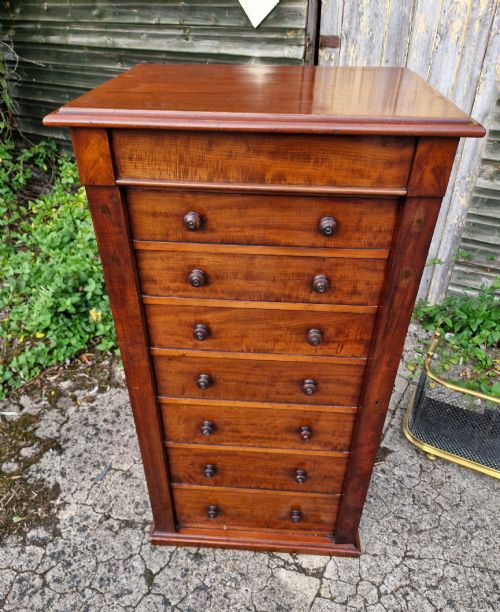
Traditional Mahogany Tallboy Chest
A traditional mahogany tallboy chest offers towering presence and deep storage, bringing structured elegance and rich grain to a room.
Traditional Mahogany Tallboy Chest
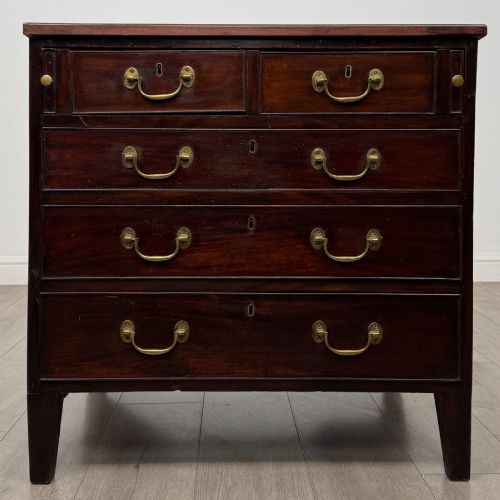
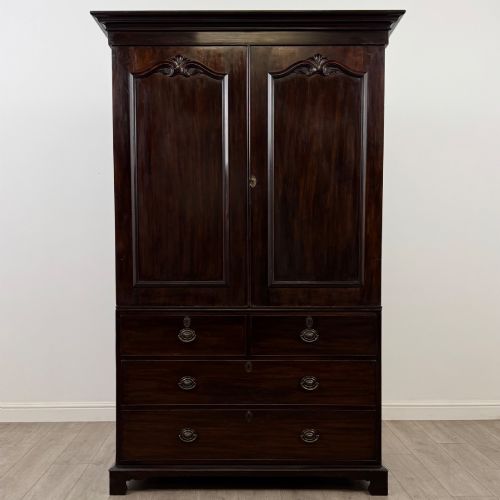
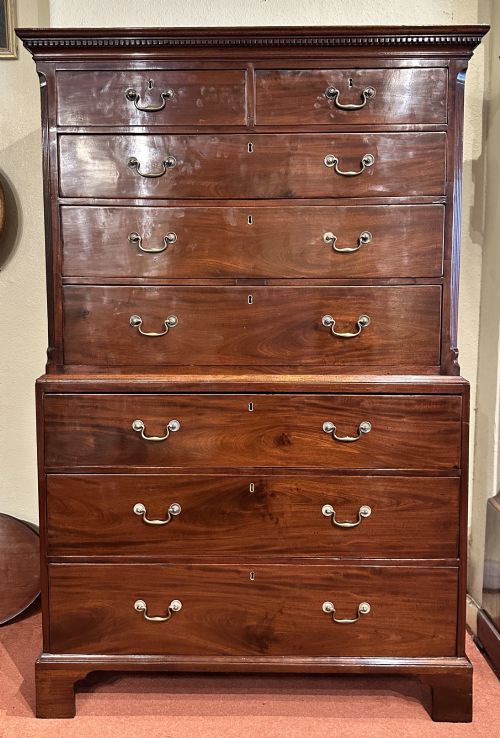
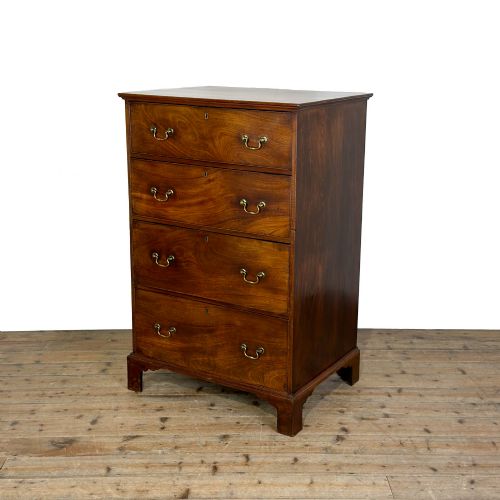
A traditional mahogany tallboy chest stands as a vertical statement of historical cabinetry, designed to maximise storage without claiming excessive floor space. These pieces typically combine multiple graduating drawers arranged vertically, sometimes constructed as a chest on chest where a smaller upper carcase sits atop a larger lower base.
The selections available span several distinct historical eras, ranging from authentic 18th-century Georgian and George III origins through the Regency, William IV, and Victorian periods, up to later Edwardian revivals and 1920s interpretations. Buyers encountering this phrase will also discover related tall and narrow drawer configurations alongside classic double-body tallboys.
Makers and workshops across these periods utilised substantial timber forms, often pairing solid primary carcases with secondary woods like pine inside the drawer linings. Regional variations such as Channel Islands pieces appear alongside standard English output, demonstrating how local cabinet-makers adapted the tall vertical format to contemporary tastes.
Assessing Quality and Execution
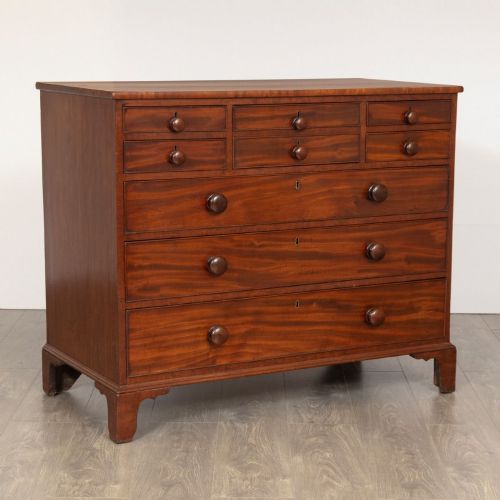
Quality separates pieces through the precision of the cabinet-making and the selection of the mahogany veneers rather than surface finish alone. Superior examples display tightly matched grain across successive drawer fronts and hand-cut joinery that maintains structural alignment across tall vertical carcases.
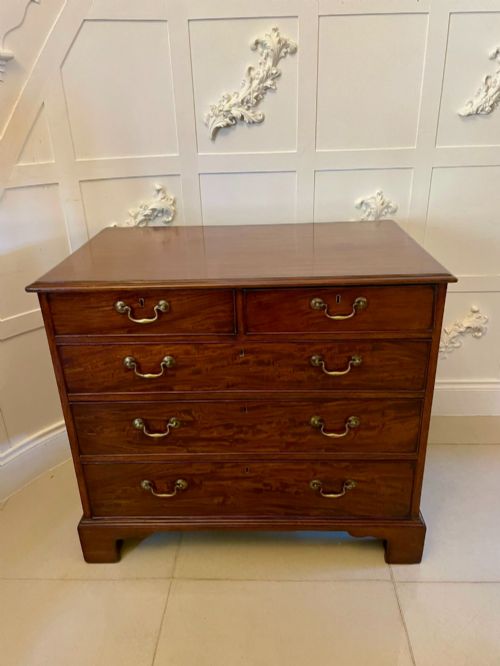
The refinement of original brass hardware, the smoothness of drawer operation within their housings, and the crispness of moulded cornices distinguish high-status Georgian and Victorian commissions from later mass-produced revival pieces. Proportion and timber depth remain key indicators of period authenticity.
Listings span periods from the 18th century through to the 1920s, featuring mahogany, flame mahogany veneer, brass, and pine.
Warings Liverpool
The Traditional Mahogany Tallboy Chest Glossary
- Tallboy
- A tall chest of drawers, often constructed as a chest on chest where one cabinet is stacked directly upon another to create vertical capacity.
- Flame mahogany veneer
- A thin slice of timber cut from wood where the branch meets the trunk, producing a flickering, flame-like grain pattern prized for drawer fronts.
- George III
- The period of British design spanning the mid to late 18th and early 19th centuries, characterised by balanced proportions and refined classical details.
- Bow front
- A convex, curved front profile to a chest of drawers that softens the rectangular geometry of traditional case furniture.
- Escutcheon
- A protective brass plate surrounding a keyhole, designed to prevent the surrounding wood from wearing down through repeated use.
Traditional Mahogany Tallboy Chest: Frequently Asked Questions
What is a tallboy chest?
A tallboy chest is a vertically stacked set of drawers designed to provide substantial storage within a compact floor footprint. These pieces often feature five or more heights of drawers, sometimes split into a smaller top section resting on a wider base.
The vertical format made them popular bedrooms staples in Georgian and Victorian homes, allowing owners to store large quantities of linens and garments without dominating the room layout.
How do I date a mahogany chest?
Dating a mahogany chest involves examining the construction methods of the drawer linings, the style of the brass hardware, and the overall proportions of the carcase. Georgian pieces generally show hand-cut dovetails in secondary woods like pine, whereas later Victorian examples exhibit machine assistance and heavier mouldings.
Changes in stylistic preferences, such as the shift from straight-fronted George III designs to bow fronts and later Edwardian revivals, provide clear chronological markers for attribution.
Where should I place a tallboy?
Tallboys suit bedrooms, dressing rooms, and spacious hallways where vertical wall space is available and floor area is restricted. Their height draws the eye upward, making them effective balancing elements against high ceilings.
Due to their height and weight, securing these chests to the wall using discreet fixings ensures stability in daily use, particularly in homes with children or pets.
How do I care for mahogany furniture?
Mahogany furniture requires stable indoor humidity and protection from direct sunlight to prevent the timber and veneers from drying out or fading. Dusting regularly with a soft, dry cloth maintains the surface sheen without the need for heavy silicone polishes.
Applying a traditional beeswax occasionally nourishes the wood and preserves the depth of the grain over decades of continuous domestic use.