

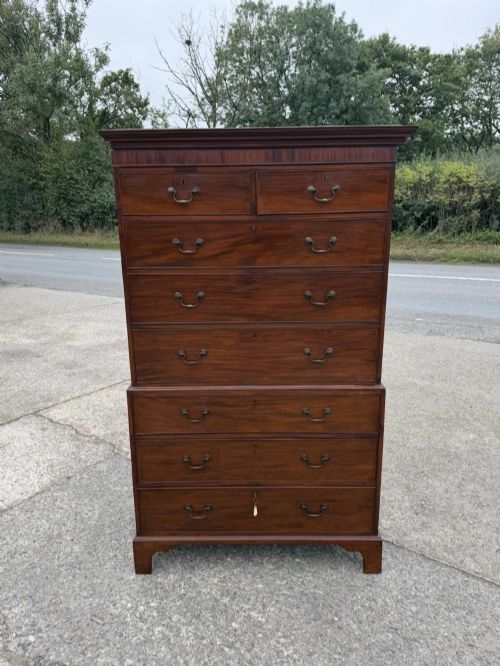
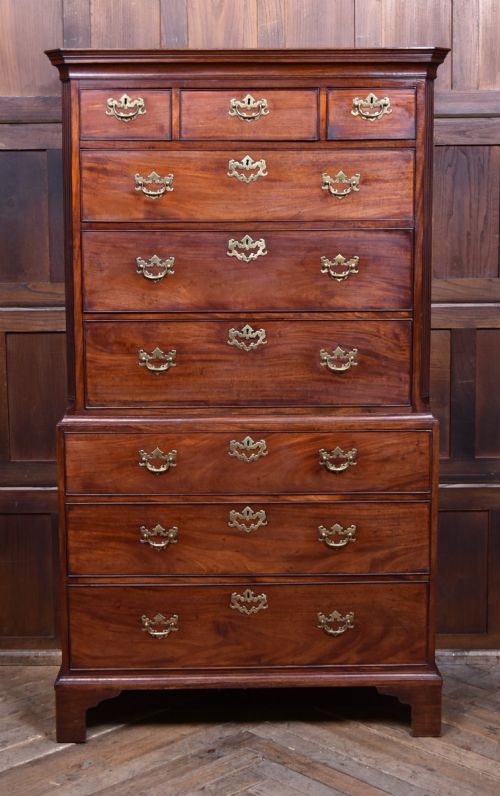
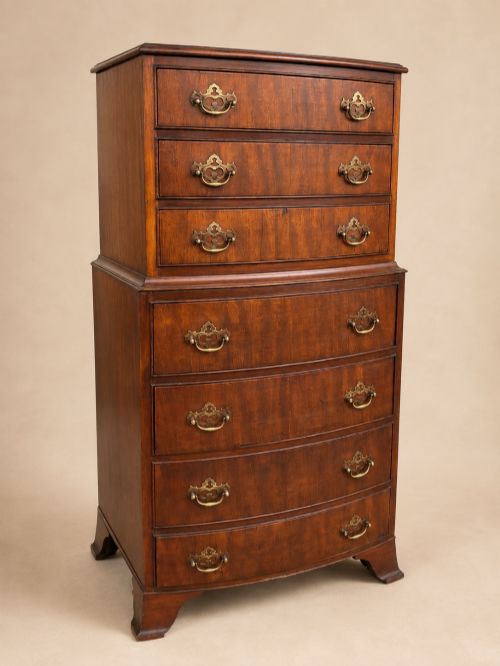
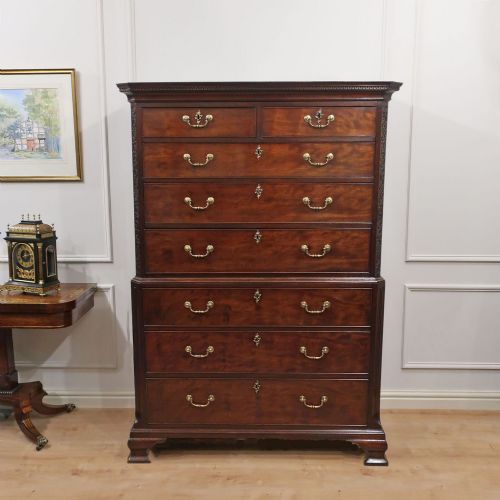



Traditional Mahogany Double Chest
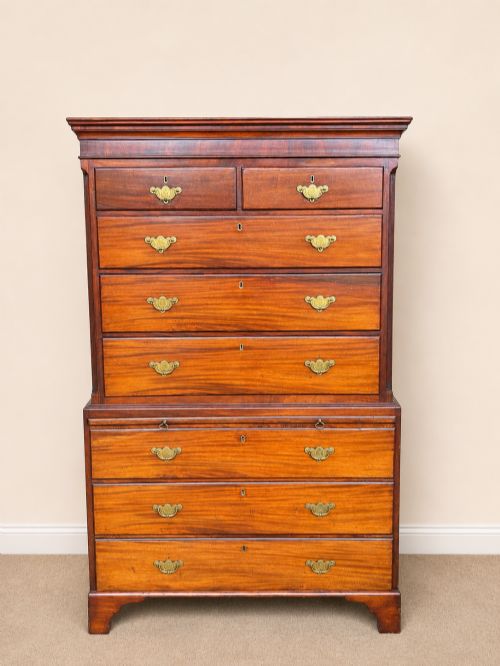
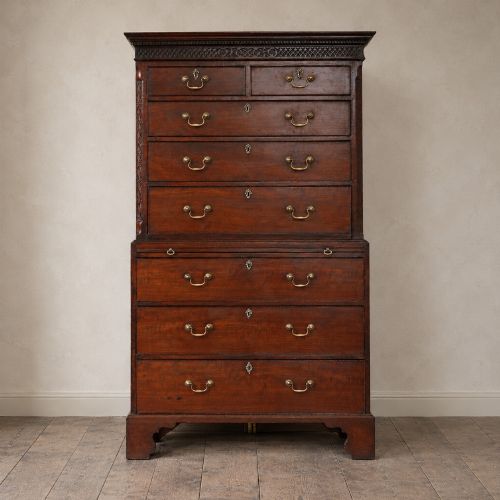
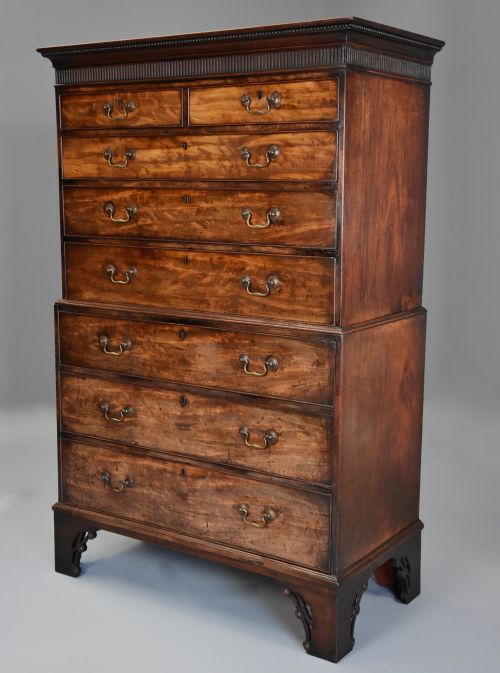
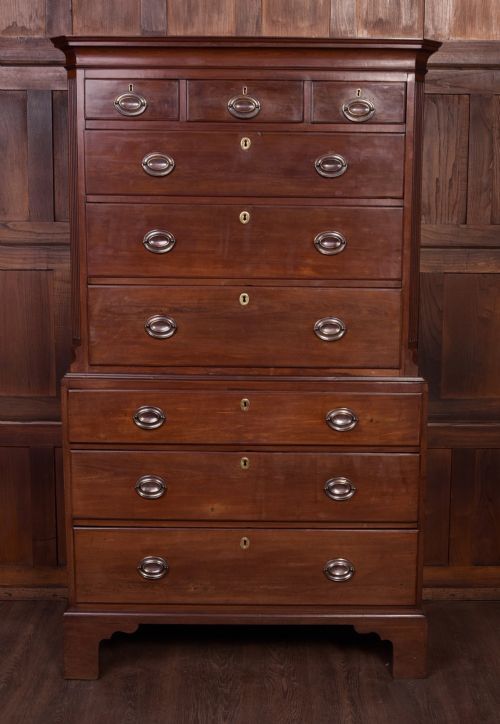
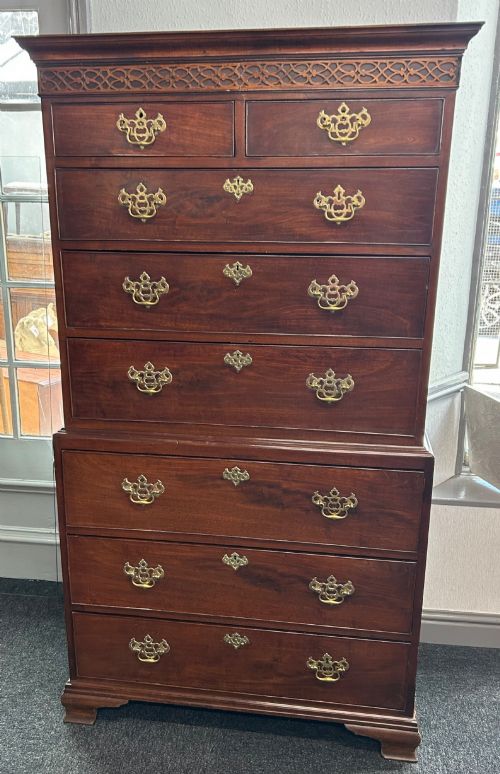
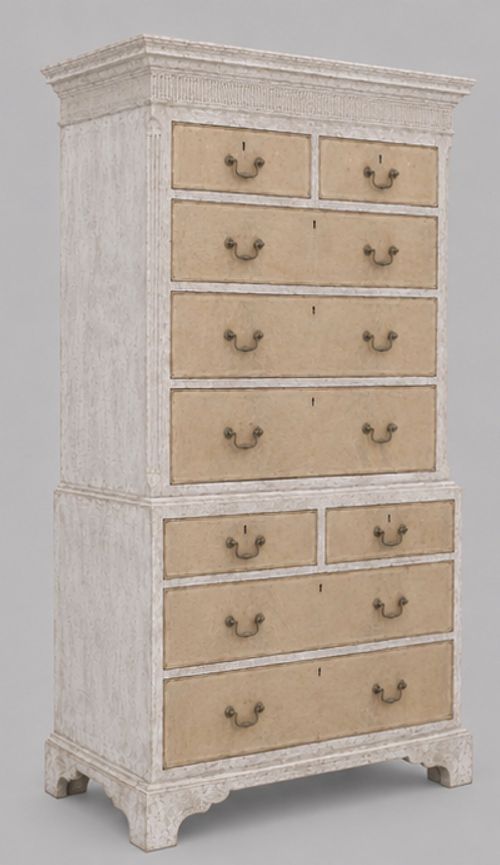
A traditional mahogany double chest is a commanding stacked storage piece built to hold linen and garments with immense presence.
Traditional Mahogany Double Chest
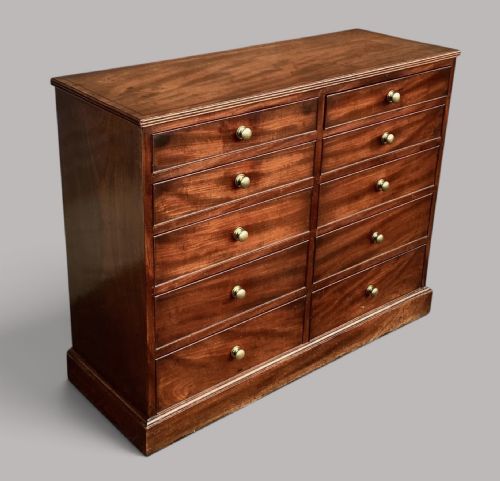
When you search for a traditional mahogany double chest, you encounter stately two-part case furniture comprising a lower section of wide drawers beneath a matching upper section. Most examples on this page date from the Georgian and George III periods, though later Victorian and 1920s revivals also appear.
The form spans tallboys and chests on chests, alongside related linen presses that conceal sliding trays behind upper doors. These pieces combine deep mahogany carcases with secondary timbers such as oak and pine, offering substantial vertical storage capacity.
What varies in quality
The distinction between ordinary and superior pieces rests in the figured grain of the mahogany, the crispness of any carved mouldings, and the integrity of the original timber patination. Refined proportions and untouched brassware elevate an example above standard utility versions.
Internal construction details, such as secondary oak timbers in the drawer linings and smooth running drawers with functioning locks, determine the standard of craftsmanship.
Traditional Mahogany Double Chest Retail Price Guide 2026
Typical asking prices for traditional mahogany double chest among the pieces listed under this phrase on Sellingantiques today, from the lower quarter to the upper quarter. They describe what is for sale here now, not the wider market.
Several chests preserve their original iron and brass keys, ready to lock away secrets kept for centuries.
The Traditional Mahogany Double Chest Glossary
- Chest on chest
- A tall storage unit formed by stacking one case of drawers directly on top of a larger lower section. This configuration maximises vertical capacity.
- Tallboy
- An alternative term for a chest on chest or a high chest of drawers. The design lifts storage high off the floor.
- Brushing slide
- A pull-out shelf integrated into the waist of the chest, historically used for folding clothes or writing. It slides flush into the cabinet frame when not in use.
- Linen press
- A cabinet featuring upper doors enclosing sliding trays or shelves above lower drawers. They were designed specifically for storing folded textiles.
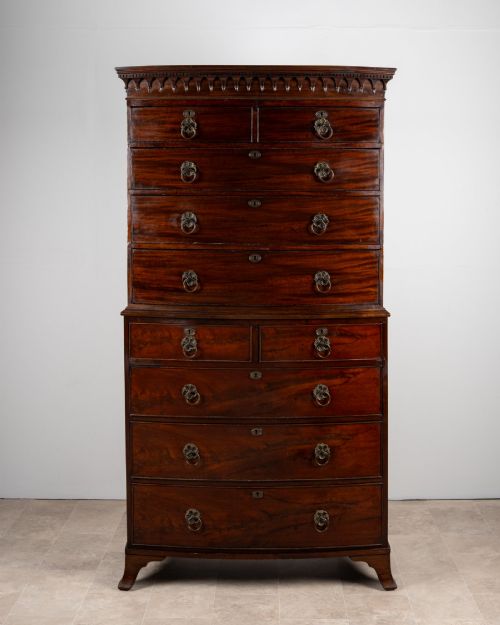
- Bow front
- A convex curved cabinet front that projects outward in an arc. This shaping softens the heavy rectangular silhouette of large case pieces.
Traditional Mahogany Double Chest: Frequently Asked Questions
How do I style a double chest in a bedroom?
Place the tall chest against a solid wall where its height can anchor the room without obstructing pathways. Ensure adequate clearance around the piece so the drawers and pull-out slides operate freely.
Keep the top surface uncluttered to emphasise the wood grain and proportions of the cornice moulding. Pair it with lower furniture to balance the vertical scale within the space.
What is the difference between a tallboy and a chest on chest?
In British cabinet making terminology, both terms frequently describe the same two-section stacked form. Historically, tallboy can occasionally refer to a single tall chest on a low stand, though most listed examples are true chests on chests.
Both types divide into an upper and lower cabinet to ease transport and placement in homes with low ceilings. The primary distinction lies in whether the upper section contains standard drawers or enclosed linen slides.
How do I care for mahogany furniture?
Dust the mahogany surfaces regularly with a soft, dry cloth to prevent particulate accumulation. Keep the timber away from direct heat sources and strong sunlight to protect the polish and prevent wood splitting.
Apply occasional professional wax polish to nourish the grain and maintain the natural lustre of the finish. Avoid silicone-based sprays that can penetrate the historic finish and damage the wood over time.
Can these chests be separated into two pieces?
Yes, traditional double chests are explicitly engineered to separate into an upper and lower carcase. This modular construction was essential for moving the heavy furniture through tight stairwells and narrow hallways.
The two halves simply lift apart at the waist moulding, held securely in place by their own substantial weight and gravity.