



Traditional Mahogany Bedside Pedestals
Traditional mahogany bedside pedestals bring warmth and practical storage to a bedroom, offering sturdy surfaces and enclosed spaces for nighttime essentials.

Traditional Mahogany Bedside Pedestals
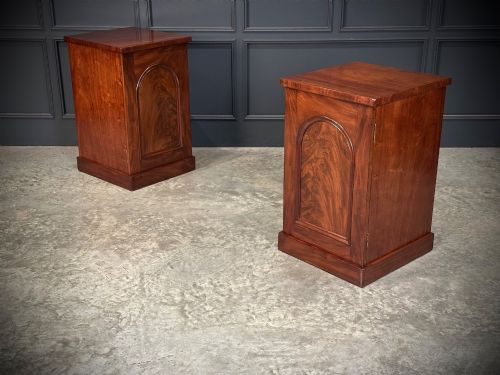
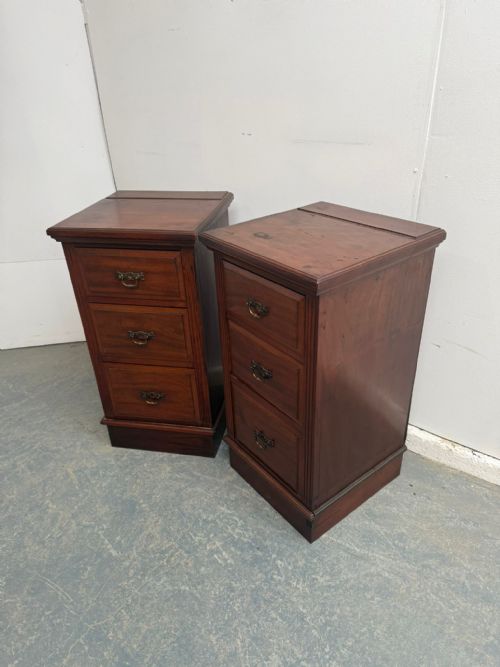
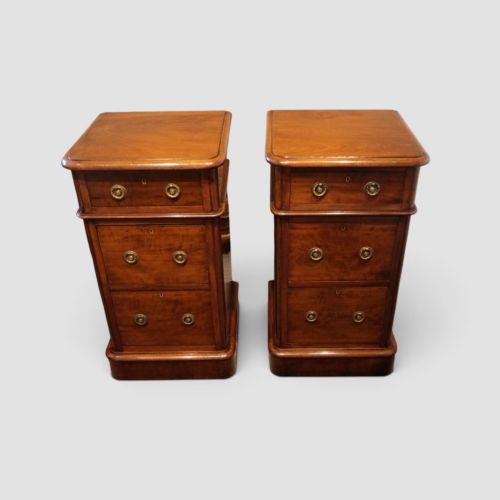
Traditional mahogany bedside pedestals comprise a range of compact wooden cabinets, chests, and stands designed to sit beside a bed. The selection includes single pieces and matched pairs spanning several decades of British craftsmanship.
Buyers will most frequently encounter Victorian and Edwardian examples on this page, alongside earlier Georgian forms and later twentieth-century pieces. These items appear as small drawer chests, enclosed cupboards, and occasional lamp cabinets.
Forms vary from simple drop-flap designs and wig stands to substantial three-drawer nightstands and large flame mahogany cabinets. Their primary function remains holding a bedside light and concealing personal items.
How they were made
Cabinet makers utilised solid mahogany and flame mahogany veneers over secondary timbers to construct these pieces, often selecting boards with rich grain patterns. Drawer linings and structural components relied on traditional joinery methods that ensured long-term stability.
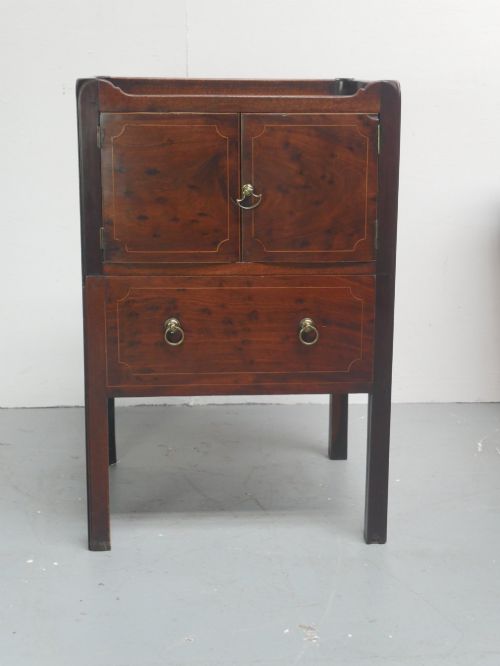
Surface decoration frequently incorporated boxwood inlay for subtle contrast around edges and panels. Hardware typically consisted of brass handles, knobs, or drop pulls chosen to complement the deep reddish-brown tones of the polished wood.
Traditional Mahogany Bedside Pedestals Retail Price Guide 2026
Typical asking prices for traditional mahogany bedside pedestals among the pieces listed under this phrase on Sellingantiques today, from the lower quarter to the upper quarter. They describe what is for sale here now, not the wider market.
Some nineteenth-century bedside cabinets concealed pull-out commode drawers, serving a very different nocturnal purpose before modern plumbing arrived.
What varies in quality
The choice of timber creates a distinct difference across the range, with figured flame veneers and dense solid mahogany marking out finer examples. More refined pieces display careful grain matching across drawer fronts and cabinet doors.
Execution of decorative details such as boxwood stringing and the quality of brass hardware distinguish standard workshop production from superior cabinet making. Structural integrity, including smooth drawer action and the condition of original polish, determines the standing of each piece.
Edwards & Roberts
The Traditional Mahogany Bedside Pedestals Glossary
- Flame mahogany
- A veneer cut from the fork of the mahogany tree, producing a distinctive flickering flame-like pattern across the surface. This timber was favoured by cabinet makers for prominent drawer fronts and door panels.
- Boxwood inlay
- Narrow strips of pale yellowish boxwood inserted into grooves cut into the darker mahogany surface to create geometric borders or lines. It provides a crisp visual contrast.
- Drop-flap
- A hinged panel or leaf that folds down to extend a surface or provide access to an interior compartment. Such mechanisms offer flexibility in compact bedroom furniture.
- Wig stand
- A specialised small pedestal or stand originally intended to hold a gentleman's wig when not in use. These tall, slender forms often feature small drawers or basins.
Traditional Mahogany Bedside Pedestals: Frequently Asked Questions
Are these pedestals sold as matched pairs?
Many listings on this page present matching pairs of cabinets or chests, which suits placing matching units on either side of a bed. Single pieces also appear regularly for tighter spaces.
Pairs usually share identical dimensions, timber selection, and hardware styles from the same period.
How do I care for mahogany bedside furniture?
Mahogany requires dusting with a soft, dry cloth and occasional treatment with appropriate beeswax or traditional polish to maintain the finish. Avoiding direct sunlight and extreme humidity prevents the timber and veneer from drying out.
Careful placement away from direct heat sources preserves both the polish and the underlying joinery.
How can I tell a Victorian pedestal from a Georgian one?
Georgian pieces generally display simpler, cleaner architectural lines with heavier proportions and darker patination developed over longer periods. Victorian examples often incorporate more elaborate veneers, boxwood stringing, or turned details reflecting changing taste.
Hardware styles and construction techniques inside the drawers also offer clues to the specific decade of manufacture.