



Traditional Library Sofa
These traditional library sofa options bring solid nineteenth-century comfort and timeless wood framing into a quiet room.
Traditional Library Sofa
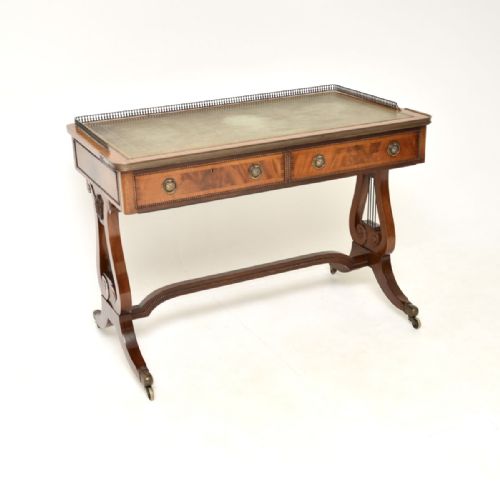
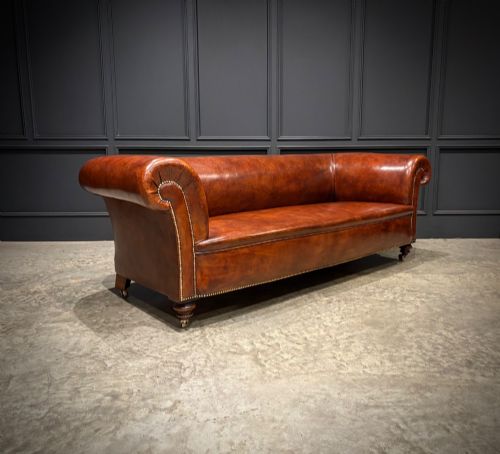
A traditional library sofa brings substantial seating and writing surfaces into a study or reading room, drawing on nineteenth-century design. These pieces often merge comfortable upholstered seating with sturdy timber frames, creating a focal point for domestic interiors.
Buyers browsing this selection will frequently encounter Victorian and Regency pieces alongside country house variations. Mahogany and rosewood form the backbone of these offerings, often paired with leather upholstery or mahogany writing surfaces.
The assortment spans from early nineteenth-century examples to later twentieth-century interpretations built in older styles. Each item reflects the domestic requirements of period libraries and studies, where reading and writing were central pursuits.
Materials and construction
Makers utilised dense timbers such as mahogany, rosewood, oak, and walnut to build robust frames that would endure heavy daily use. Hand carving frequently appeared on structural elements like legs and feet, showing careful attention to detail by period craftsmen.
Upholstery typically involved durable brown leather fastened securely to supportive padding within timber frameworks. Brass fittings and hardware added functional strength and subtle contrast against the dark polished woods.
Traditional Library Sofa Retail Price Guide 2026
Typical asking prices for traditional library sofa among the pieces listed under this phrase on Sellingantiques today, from the lower quarter to the upper quarter. They describe what is for sale here now, not the wider market.
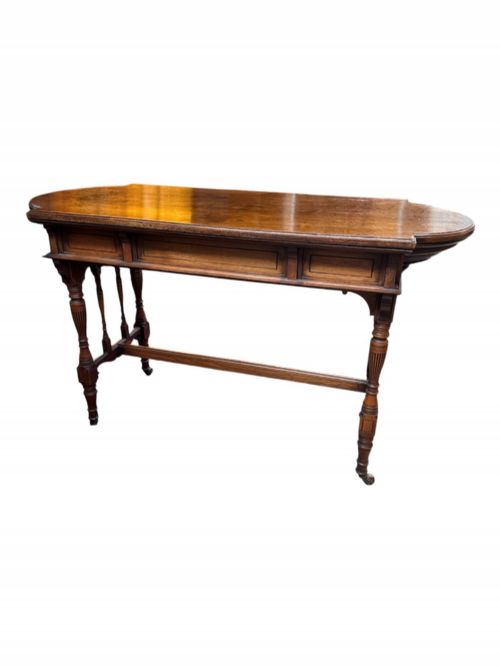
The selection includes various formats such as writing tables, console tables, and study sofas with carved wooden feet.
Assessing quality
Quality rests upon the selection of timber and the precision of hand-carved elements like hawk claw and ball feet. Heavier, denser woods indicate a higher grade of manufacture intended for affluent domestic settings.
The integrity of the leather upholstery and the crispness of any woodwork details separate standard pieces from exceptional examples. Finer items exhibit balanced proportions and harmonious integration between the upholstered seating and the wooden structure.
Gillows of Lancaster·Gillingtons of Dublin
The Traditional Library Sofa Glossary
- Regency
- A style period spanning the early nineteenth century defined by classical restraint and elegance. It draws inspiration from ancient Greek and Roman designs.
- Victorian
- Spanning the reign of Queen Victoria, this period encompasses diverse stylistic revivals from gothic to rococo. Furniture from this era often prioritises solid construction and ornate detail.
- Rosewood
- A heavy, durable timber prized for its dark grain and reddish-brown colour. Makers utilised it extensively for high-status nineteenth-century tables and desks.
- Mahogany
- A strong hardwood valued for its rich reddish hue and smooth finish. It served as the primary material for much of the cabinetry and library furniture in this collection.
Traditional Library Sofa: Frequently Asked Questions
What is a traditional library sofa?
A traditional library sofa is a period seating option designed for studies and reading rooms during the nineteenth century. These items combine upholstered comfort with robust timber frames.
They frequently incorporate storage or writing surfaces, reflecting the scholarly activities that took place in period rooms. Buyers choose them to anchor a traditional study or reading space.
How do I date a library sofa?
Dating relies on examining the timber species, construction methods, and stylistic markers present in the design. Victorian and Regency pieces exhibit distinct profiles and carving styles.
Comparing the woodwork and upholstery techniques to known nineteenth-century examples helps establish the correct period. Maker attributions can also narrow down the timeframe.
Where should I place it?
These pieces suit studies, home offices, and reading rooms where period character is desired. They pair well with writing desks and large bookcases.
Placing the furniture away from direct sunlight protects the timber and leather from fading over time. Sufficient clearance allows the carved details to remain visible.
How do I care for the leather?
Leather upholstery requires gentle cleaning with appropriate conditioning products to maintain its flexibility. Avoid harsh chemical cleaners that can strip the natural finish.
Keeping the material away from excessive heat sources prevents the leather from drying out and cracking. Regular dusting keeps the surface in good condition.