
Traditional Leather Desk
A traditional leather desk anchors a study with timber and hide, offering a sturdy surface for daily correspondence.
Traditional Leather Desk
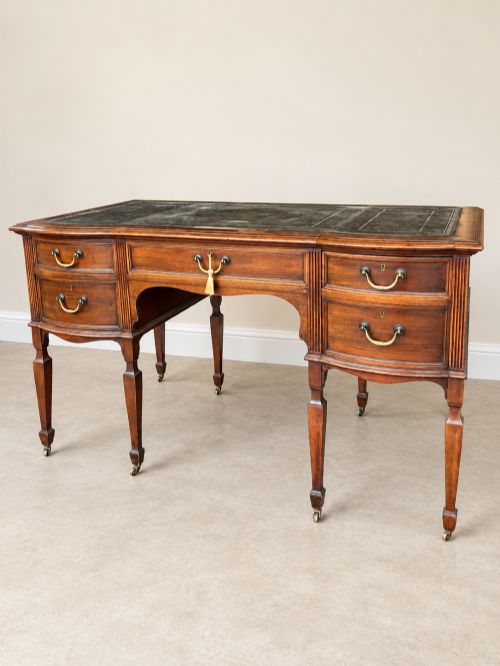
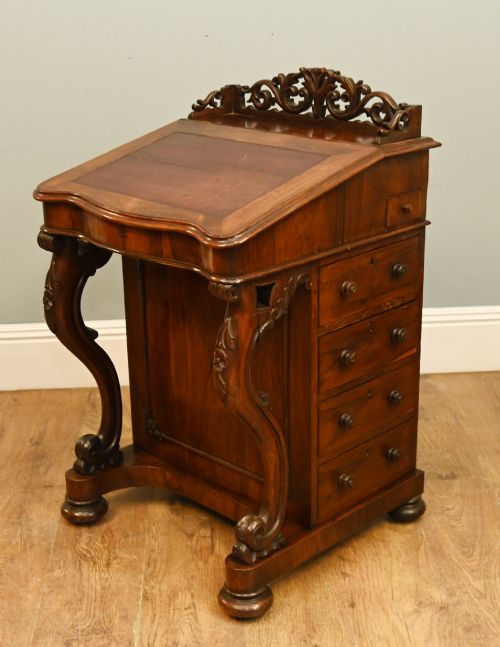
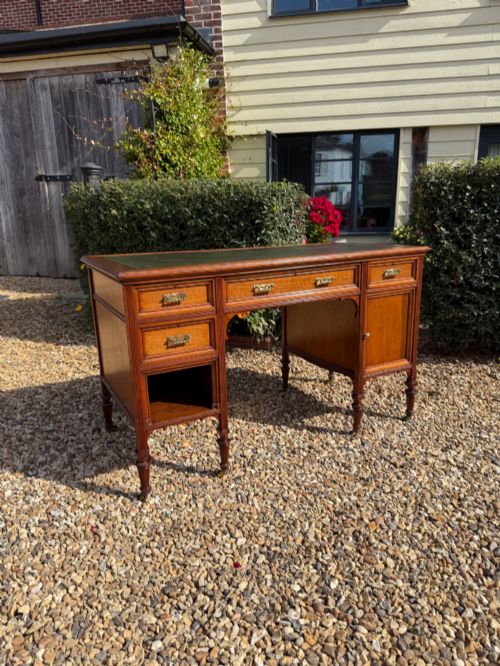
A traditional leather desk encompasses pedestal forms, writing tables, partners desks, and bureaus built from the Georgian period through the Edwardian era and into the early twentieth century.
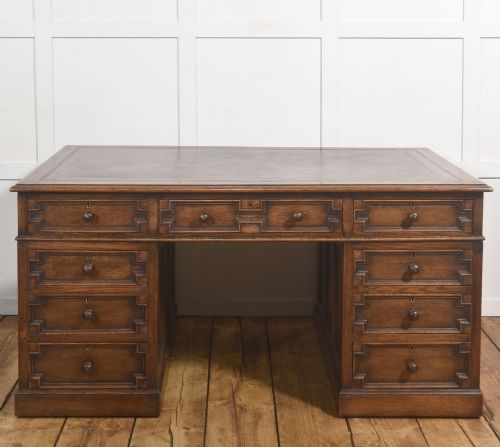
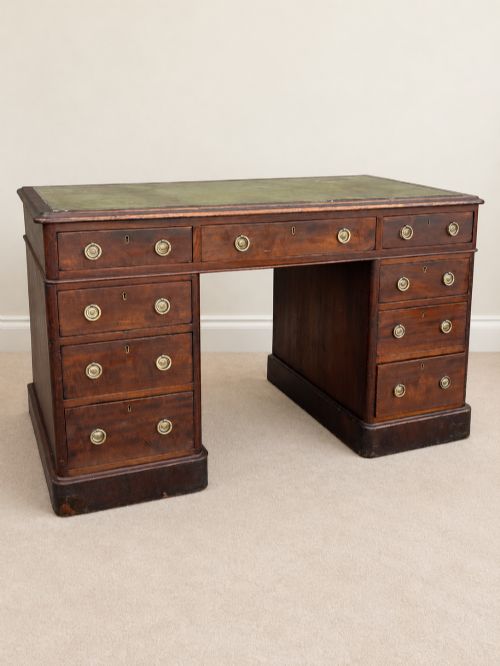
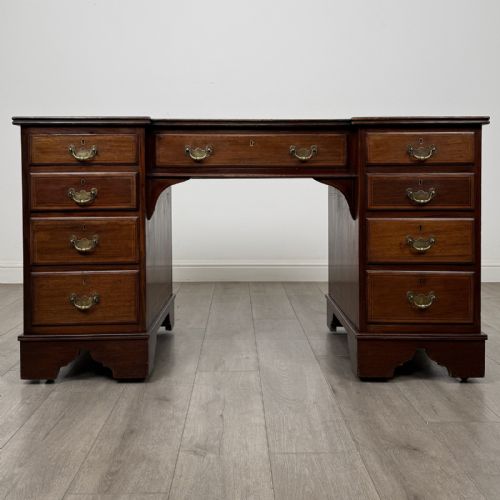
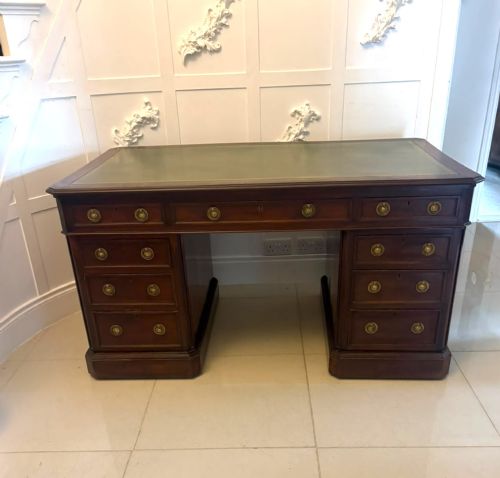
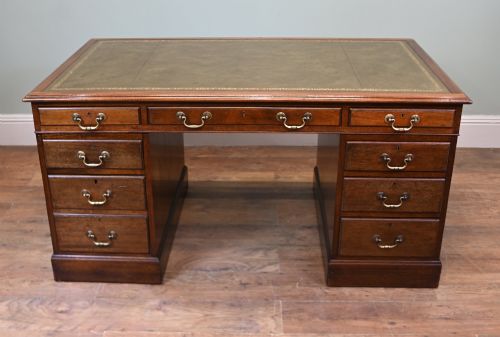
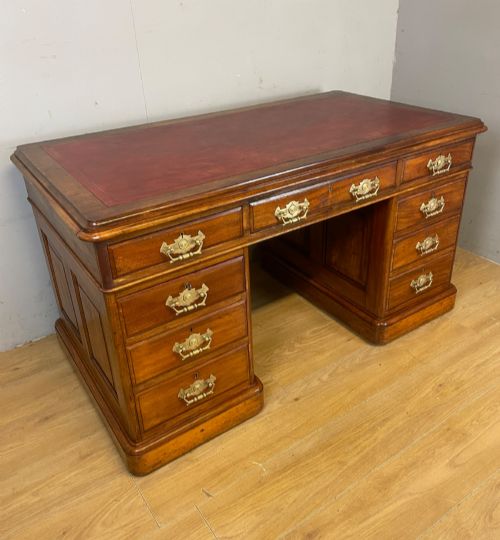
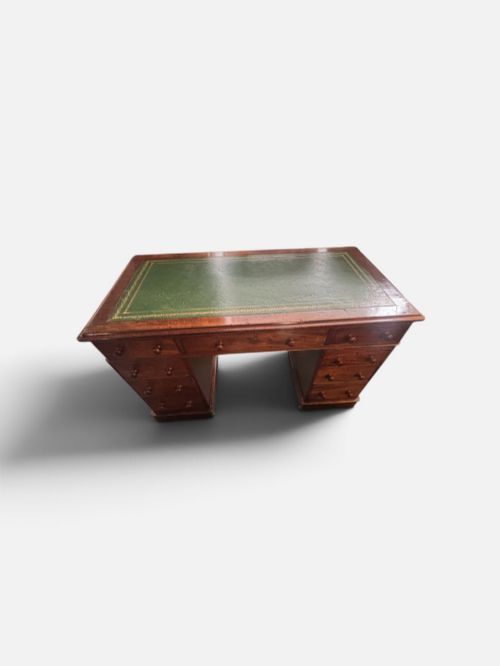
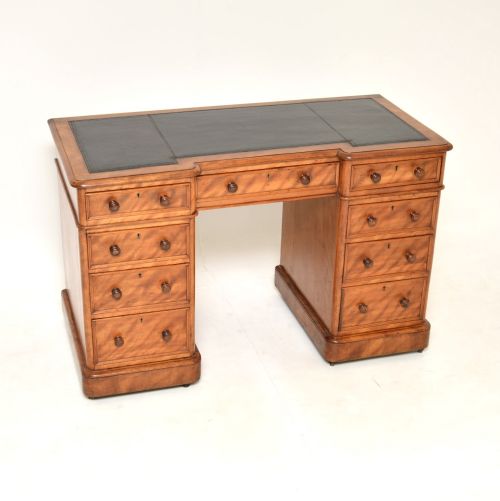
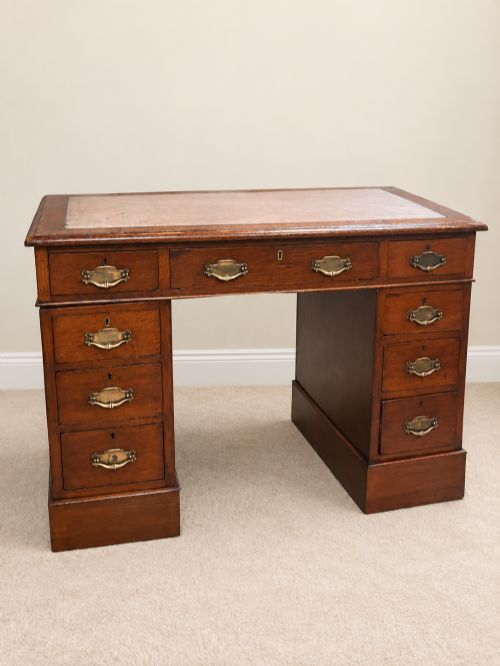
The version most commonly met on this page is the pedestal desk in mahogany or oak, featuring banks of drawers flanking a central kneehole.
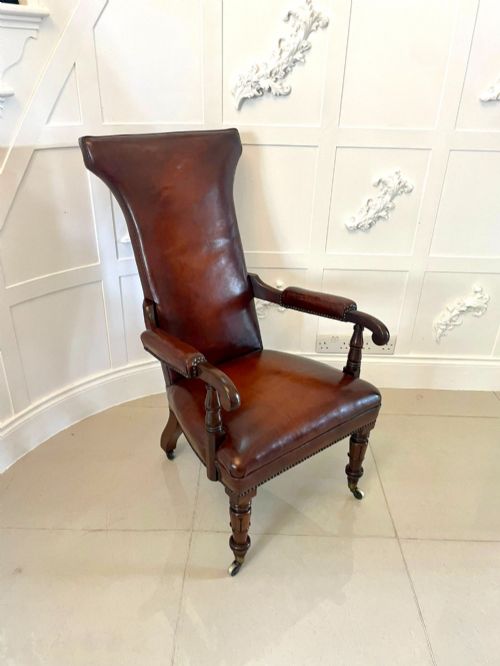
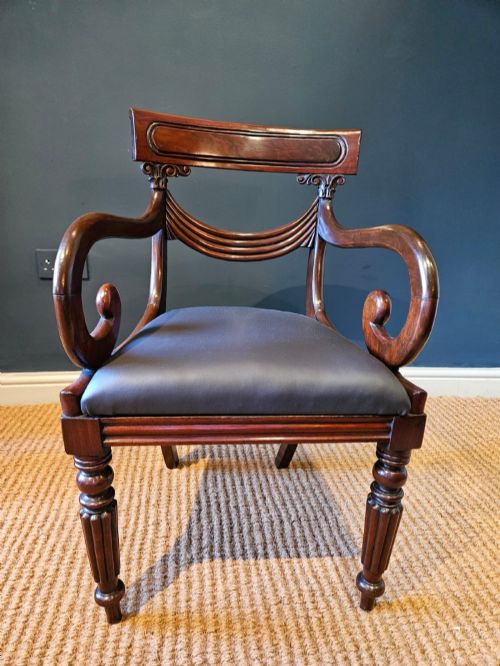
Partners desks and writing tables appear frequently, alongside revolving desk chairs and armchairs upholstered in leather.
Materials and construction
Construction relies on dense hardwoods such as mahogany, oak, walnut, and burr walnut, selected for structural stability and figured grain.
Writing surfaces employ inset leather hides, frequently tooled with gold leaf borders, paired with brass handles and castors.
Joinery methods include dovetailed drawers and panelled carcases built to withstand heavy daily office use.
Wages desks appear among the listings, built specifically to guard factory payrolls.
Proportion and finish
Quality rests in the crispness of timber carving, the depth of figuring in veneers like burr walnut, and the balance of overall proportions.
Superior examples feature secondary timbers of equal grade, original brass hardware, and secondary fitted stationery compartments inside drawers.
Trollope and sons·Wylie and Lochhead Glasgow
The Traditional Leather Desk Glossary
- Pedestal desk
- A heavy office or library desk consisting of two independent drawer modules supporting a top with a central writing surface. This form allows storage on both sides.
- Partners desk
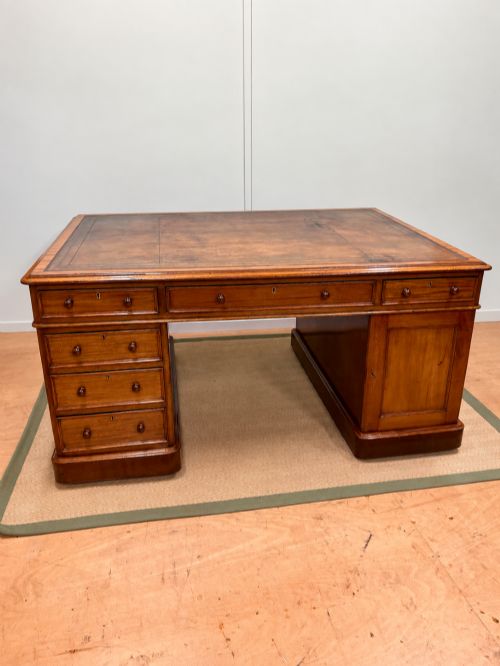
- A large double-sided desk designed for two people to work opposite one another, featuring drawers and cupboards on both faces. These often date from the Georgian and Victorian periods.
- Kneehole desk
- A compact desk with a central recess for the sitter's legs, flanked by single or double banks of drawers. Smaller versions were popular in domestic bedrooms and private studies.
- Partners writing table
- A large library table without pedestal cupboards, fitted with frieze drawers beneath the top. They allow clearance for seating around the perimeter.
- Writing surface
- The inset panel of leather or hide set into the timber top of the desk. These are often decorated with blind or gilt tooling.
Traditional Leather Desk: Frequently Asked Questions
How do I identify a Victorian desk?
Victorian desks are typically built from heavy mahogany or oak with deep reddish-brown tones. They often feature robust drawer construction and brass handles.
Many examples include turned wooden knobs or brass drop handles alongside inset leather surfaces.
Are these desks suitable for daily use?
These desks are constructed from solid hardwoods and robust veneers intended for practical writing and administrative tasks. Their sturdy carcases handle modern office equipment comfortably.
Leather surfaces provide a durable writing plane that responds well to routine maintenance.
What is the difference between a writing table and a pedestal desk?
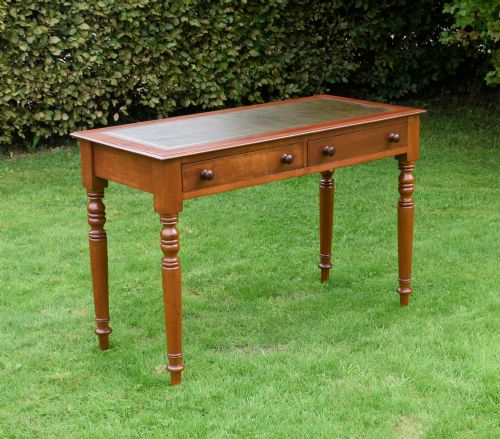
A writing table stands on four legs with frieze drawers directly beneath the top, leaving the space underneath open. A pedestal desk replaces the legs with two solid stacks of drawers.
Pedestal desks offer substantially more enclosed storage space.