

Traditional Horse Canvas
Traditional horse canvas works capture equine subjects across centuries, bringing detailed portraits and sporting scenes directly to collectors.
Traditional Horse Canvas
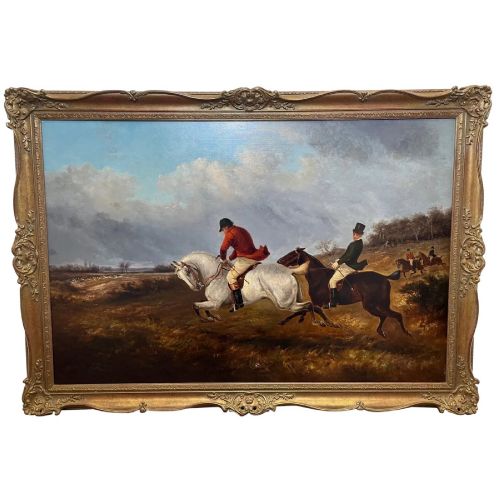
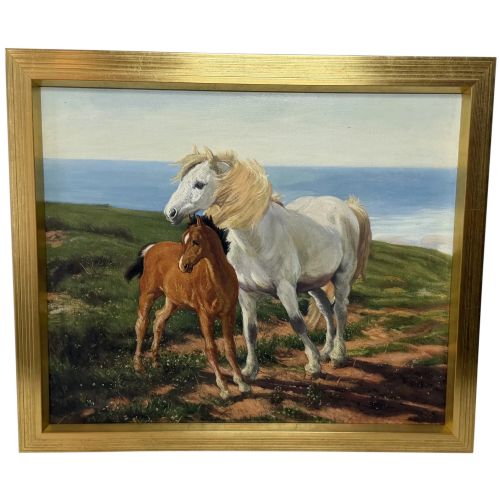
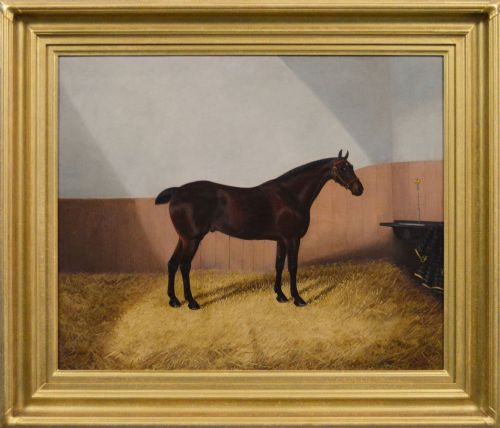
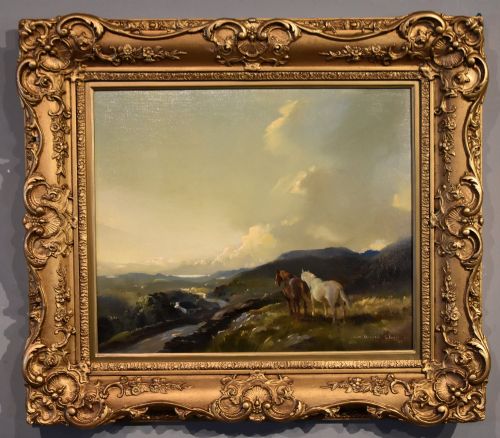
Traditional horse canvas pieces encompass a broad range of equestrian art, capturing everything from individual racehorse portraits to bustling rural scenes with hay wagons and coaching stages. Buyers seek these out to display historical animal subjects rendered in oil paint on canvas, spanning periods from the Georgian era through the Victorian period and into the twentieth century.
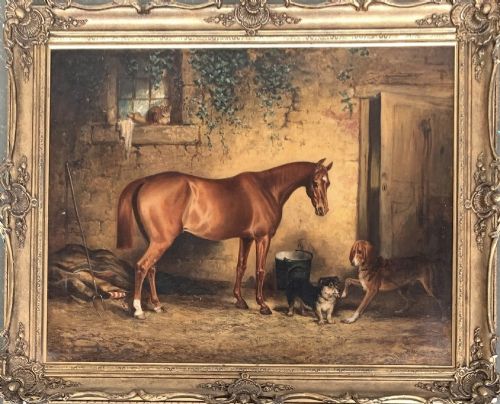
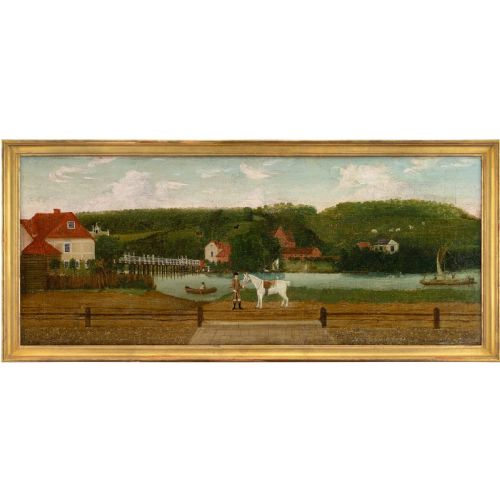
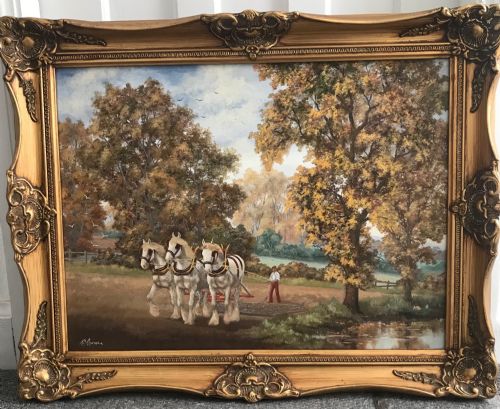
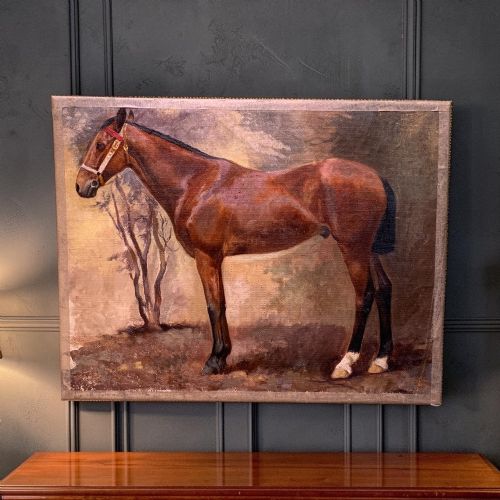
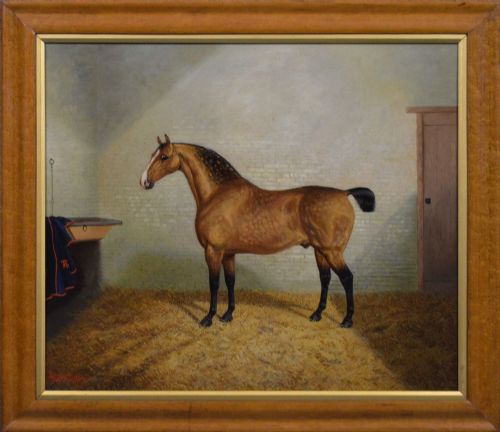
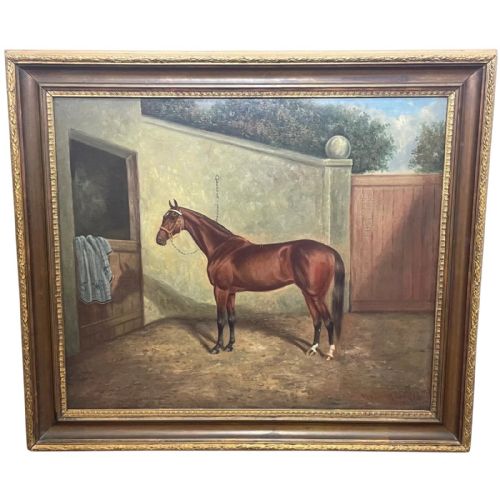
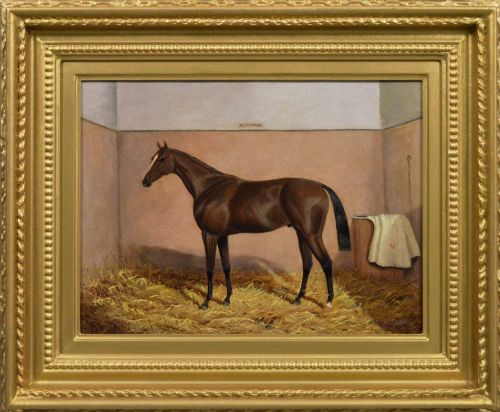
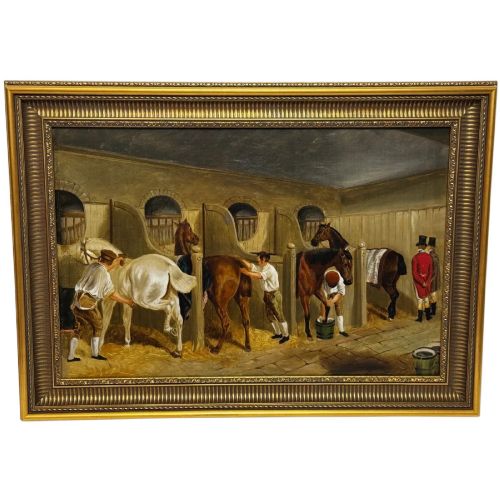
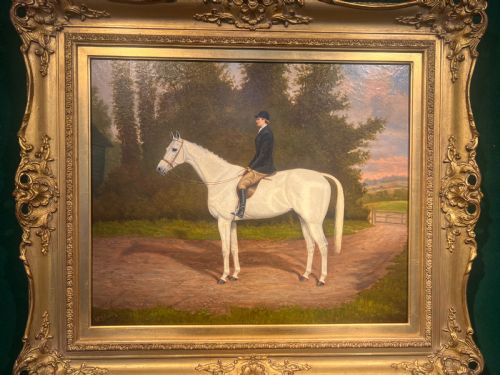
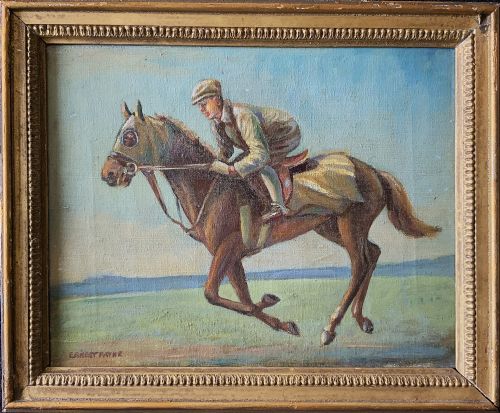
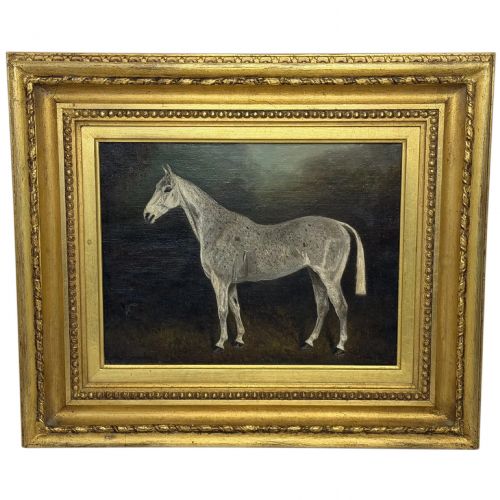
The most common examples on this page are oil paintings on canvas depicting bay hunters, grey mares, and famous racehorses alongside stable hands, jockeys, or country estates. These works reflect British sporting art, British impressionism, and realism, offering a direct window into historical rural and equine life.
Materials and construction
These works are painted primarily in oil paint on stretched canvas supports, utilising the rich medium to build depth in horse coats, stable interiors, and countryside landscapes. Many examples are housed in wood frames, including giltwood and gilt wood mouldings that complement the traditional subject matter.
Artists applied oil paint in varying brushwork styles, ranging from the tight, precise portraiture of named racehorses to looser impressions of ponies in Devon landscapes or rural coaching scenes. The combination of canvas, oil pigment, and timber framing forms the standard physical structure across the selection.
Listings feature oil on canvas works spanning from the Georgian and Victorian eras into the twentieth century.
Assessing quality
Quality in these canvases rests primarily on the anatomical accuracy of the horse, the expressiveness of the brushwork, and the skill demonstrated in capturing light across the animal's coat or the surrounding landscape. Works by identified artists often display superior handling of musculature, posture, and environmental context compared to anonymous school pieces.
The integration of the subject with its background, such as a riverside estate or a stable interior, separates finer compositions from simpler portrait studies. Furthermore, the preservation of the original oil paint layer and the quality of the accompanying giltwood frame influence the overall visual standing of the piece.
Henry Barraud·Thomas Smythe·Albert Clark·John Alfred Wheeler·George Wright
The Traditional Horse Canvas Glossary
- Giltwood
- Timber carved and coated with gold leaf or a gold-coloured finish. This material appears frequently in the decorative frames enclosing these paintings.
- Equestrian art
- Depictions of horses and riders spanning portraiture, racing, hunting, and rural work. It forms the core category for these canvas works.
- Oil paint
- Pigment suspended in a drying oil binder that allows for rich colour blending and fine detail. It serves as the primary medium for all paintings listed here.
- Sporting art
- A genre dedicated to field sports, horse racing, hunting, and coaching scenes. These paintings document the prominent role of horses in British country life.
Traditional Horse Canvas: Frequently Asked Questions
What periods do these paintings date from?
The selection spans multiple centuries, incorporating early nineteenth-century works alongside Victorian, Edwardian, and mid-twentieth-century examples.
Dates range from Georgian pieces through to works created in the nineteen-sixties, reflecting changing artistic styles over time.
How were these canvas works framed originally?
Many of these oil paintings retain period frames constructed from wood, frequently featuring giltwood or gilt wood finishes.
These decorative surrounds were designed to complement the equine subject matter and enhance the overall presentation on a wall.
What subjects feature in traditional horse canvas art?
Subjects include individual portraits of named racehorses and hunters, as well as broader scenes involving coaching, fox hunting, and farm work.
Artists frequently placed the animals within specific contexts like stables, rural landscapes, or estate grounds.
How do I care for an antique oil painting?
Antique canvases require stable environmental conditions away from direct sunlight, excessive heat, and high humidity to prevent paint cracking.
Dusting should be done gently with a soft, dry brush without applying moisture or cleaning solutions to the painted surface.