





Traditional Highland Scene Artwork
Traditional highland scene artwork captures the rugged expanse of northern glens, bringing atmospheric cattle and loch views directly into your room.
Traditional Highland Scene Artwork
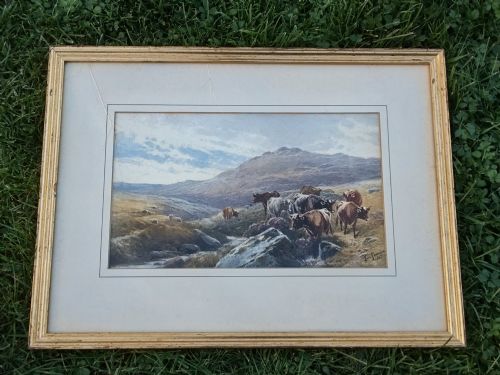
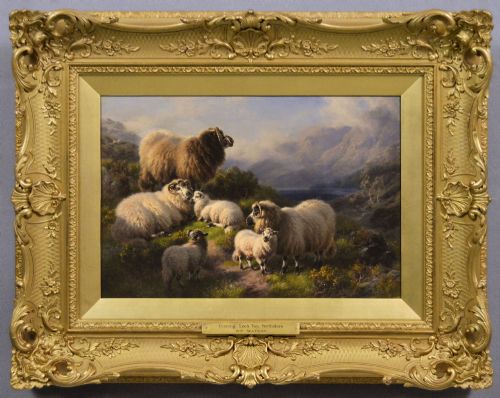
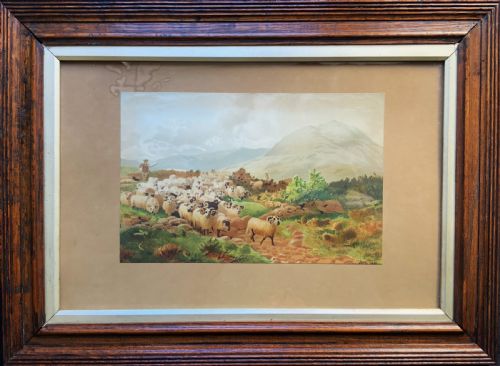
Traditional highland scene artwork encompasses oil paintings, watercolours, and gouache depictions of mountainous northern landscapes. These pieces frequently feature native fauna, cattle, and sheep set against expansive lochs and misty peaks. You will regularly encounter Victorian interpretations alongside Edwardian and early twentieth-century examples on this page.
The dominant formats focus on canvas and framed paper works executed by regional and landscape specialists. Painters from the nineteenth century onward utilised oil paint to capture changing weather patterns over high moorland. Common visual subjects involve domestic livestock, shepherds, sporting scenes, and solitary crofts situated in remote terrain.
Materials and Construction
Painters applied oil paint to stretched canvas or oil paint to wood panels to achieve rich textures and deep tones. Many works utilise traditional paper mounted under glass, particularly for delicate watercolours and gouache compositions. These materials allow for layered brushwork that depicts atmospheric morning mist and rugged highland topography.
Framing typically involves gilt wood or substantial timber mouldings designed to complement the heavy pastoral aesthetic. The physical construction relies on period stretchers and traditional joinery methods appropriate to the nineteenth and early twentieth centuries. Surviving works retain their original mounting formats, preserving the structural integrity of the painted surface.
Traditional Highland Scene Artwork Retail Price Guide 2026
Typical asking prices for traditional highland scene artwork among the pieces listed under this phrase on Sellingantiques today, from the lower quarter to the upper quarter. They describe what is for sale here now, not the wider market.
The primary artistic styles represented include Victorian pastoral, Scottish impressionism, and nineteenth-century British landscape.
Factors of Quality
Quality rests primarily on the artist's ability to handle atmospheric light, scale, and natural topography with conviction. Superior compositions demonstrate confident brushwork in rendering shifting weather, water reflections, and anatomical accuracy in animals. Lesser examples often rely on formulaic repetition without capturing the specific atmospheric weight of the northern terrain.
The integration of the original frame also influences the overall integrity of the piece. Masterworks from recognised Scottish and Victorian landscape painters exhibit superior pigment retention and stable canvas tension over time. The depth of the colour palette and the sophistication of the pastoral narrative distinguish finer works from standard decorative pieces.
William Beattie-Brown RSA·William Watson Jnr·Archibald Kay RSA RSW·Alfred de Breanski Sr·Benjamin Williams Leader
The Traditional Highland Scene Artwork Glossary
- Gouache
- An opaque watercolour paint that dries to a matte finish, allowing for dense colour application. Artists utilise this medium to achieve rich highlights in works on paper.
- Stretcher
- The wooden frame behind a canvas that keeps the painted surface taut and secure. Period stretchers show age-appropriate oxidation and construction methods.
- Gilt wood
- Wood coated with a thin layer of gold leaf or metallic paint, common in traditional Victorian framing. This finish enhances the visual weight of large landscape paintings.
- Moorland scene
- A depiction of elevated, uncultivated terrain dominated by heather and rugged vegetation. These settings form the backdrop for cattle and sporting artwork.
Traditional Highland Scene Artwork: Frequently Asked Questions
How do I date a highland painting?
Dating relies on stylistic markers, framing methods, and the recorded lifespan of the artist noted on the canvas or reverse. Victorian pieces often employ heavier gilt wood frames and darker, more dramatic palettes.
Later Edwardian and early twentieth-century works may show looser brushwork associated with post-impressionist influences while maintaining traditional pastoral subjects.
Where should I hang a large oil painting?
Large oil paintings require stable wall spaces away from direct sunlight and excessive moisture fluctuations to protect the canvas and paint layers. Placing them in principal living areas or hallways allows adequate viewing distance for expansive compositions.
Ensure the wall structure can support the weight of heavy timber and gilt wood frames safely.
What is the difference between gouache and watercolour?
Watercolour is transparent, relying on the white of the underlying paper to reflect light through the pigment layers. Gouache includes a white pigment additive that makes the paint opaque, producing solid areas of colour.
Both water-based mediums appear on paper within this category, often protected by glass.
Are these paintings exclusively Scottish?
While the vast majority depict distinct highland locations such as Skye, Loch Tay, and the Grampians, artists from various regions painted these landscapes. British landscape specialists frequently travelled north to capture the dramatic topography and pastoral scenes.
The subject matter defines the genre rather than the birthplace of every individual artist.