

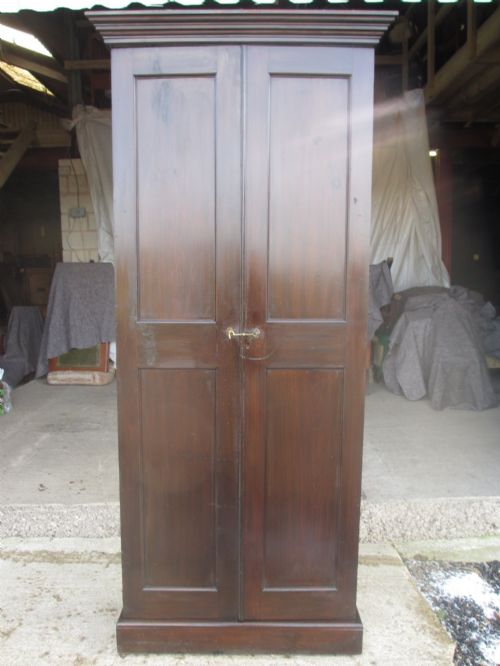
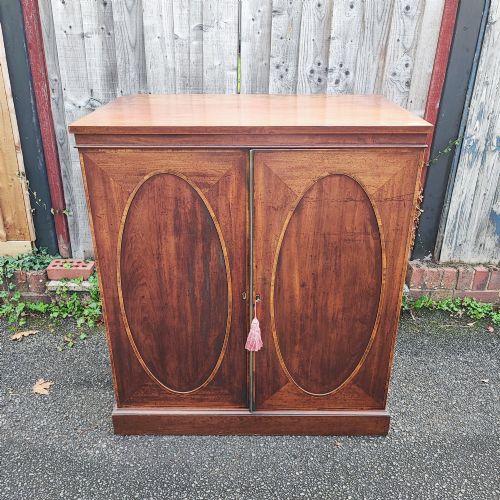
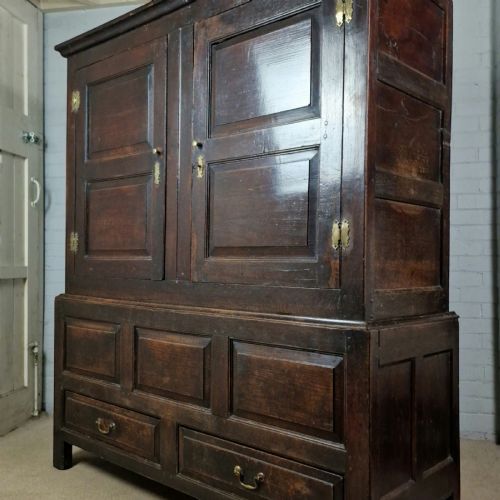
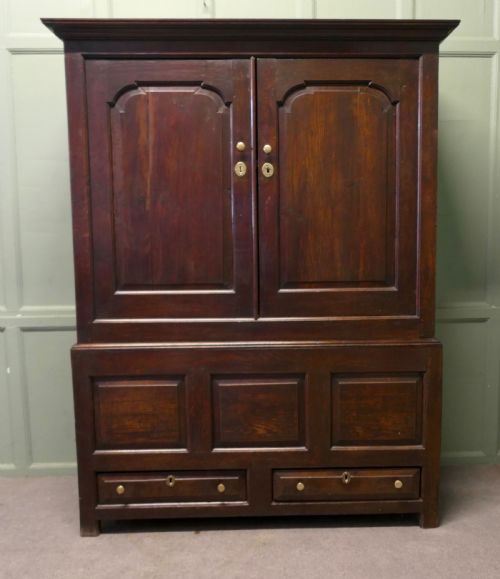

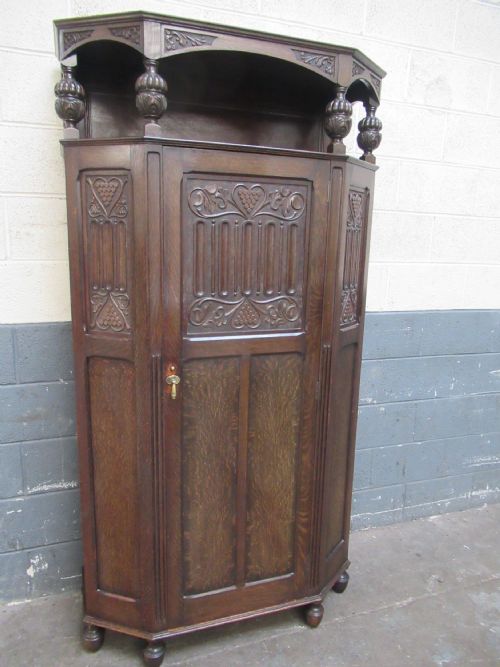
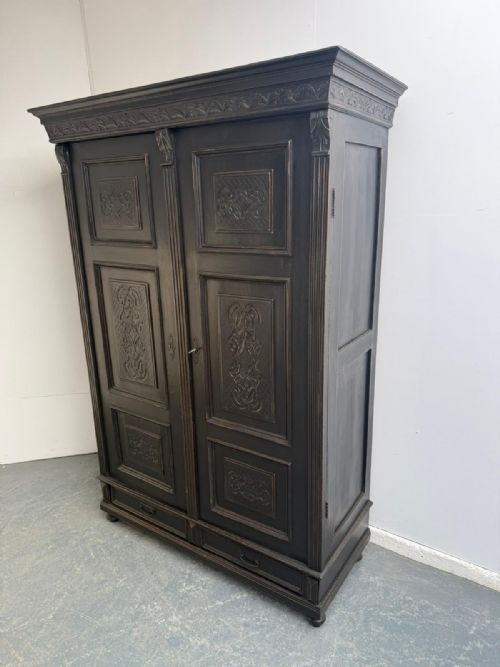
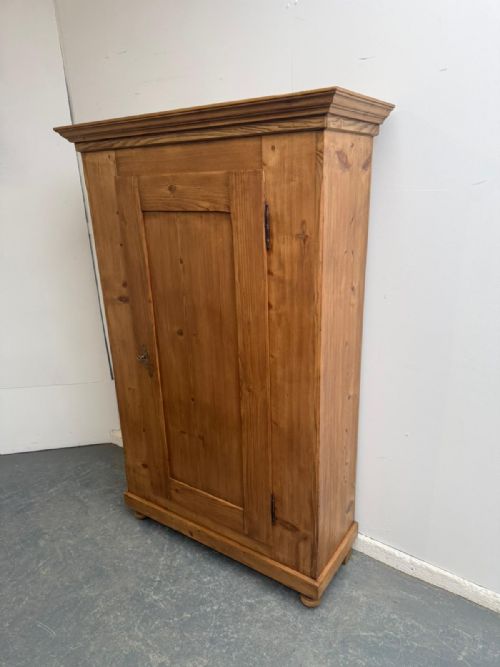
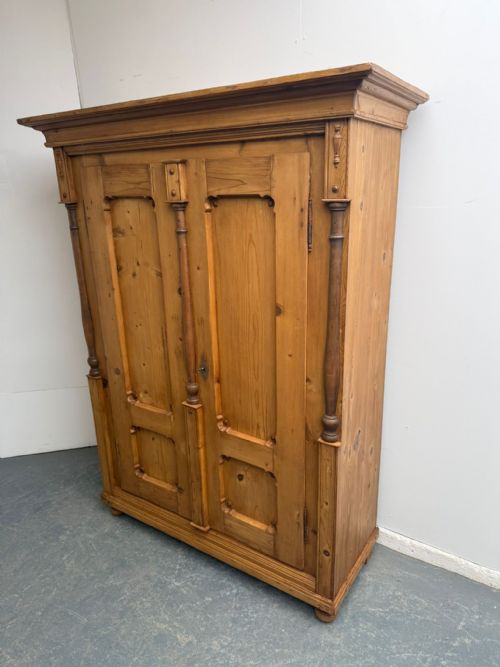


Traditional Hall Wardrobe
These traditional hall wardrobe pieces offer practical entry storage in pine, oak, and mahogany across Georgian and Victorian periods.
Traditional Hall Wardrobe
A traditional hall wardrobe serves as a functional storage piece for entranceways, using compact depths designed for passages and cloakrooms. The examples found here span Georgian and 19th-century periods, alongside Victorian and early 20th-century items.
Most entries on this page consist of pine, oak, and mahogany cupboards, alongside specialised forms such as press cupboards, linen cupboards, and hall seats. These items originate from British, German, Hungarian, and Swedish workshops.
Buyers will frequently encounter shallow pine hall wardrobes alongside larger oak housekeepers cupboards and two-door mahogany cabinets. Painted surfaces in black, green, and light grey appear alongside waxed natural timber.
How they were made
Construction relies heavily on solid pine, oak, and mahogany, utilising timber thickness appropriate for heavy daily domestic use. Joinery techniques connect panels to withstand the humidity shifts common in unheated entrance areas.
Hardware consists of iron and brass fittings, providing functional hinges and door closures. Surface treatments range from clear wax applications on pine and oak to painted finishes in European folk traditions.
Decorative elements include boxwood inlay and carved details, particularly on Georgian and Jacobean Revival examples. Regional European workshops applied local painting methods, leaving waxed or pigmented protective layers.
Traditional Hall Wardrobe Retail Price Guide 2026
Typical asking prices for traditional hall wardrobe among the pieces listed under this phrase on Sellingantiques today, from the lower quarter to the upper quarter. They describe what is for sale here now, not the wider market.
Materials span native oak and mahogany alongside utilitarian pine, supplemented by functional iron and brass hardware.
What varies in quality
Timber selection marks the primary distinction between standard utility cupboards and finer pieces, with choice cuts of figured mahogany or seasoned oak standing apart from basic pine. The integrity of original boards and structural timber directly affects the longevity of the piece.
Hardware originality and retention of period brass or iron fixtures influence the character of each cabinet. Surface treatments, whether original painted folk finishes or carefully maintained waxed patination, determine the visual depth of the timber or pigment.
The Traditional Hall Wardrobe Glossary
- Hall wardrobe
- A tall, shallow cupboard intended for entranceways to store outerwear and garments. These pieces use reduced depths to fit narrow passages without obstructing movement.
- Livery cupboard
- An early form of storage furniture traditionally used for provisions or garments. These sturdy wooden cupboards frequently display period panel construction.
- Press cupboard
- A two-tier storage unit featuring enclosed shelving above or below. These substantial pieces provide deep internal space for linen and clothing.
- Boxwood inlay
- Contrasting light wood inserted into darker timber surfaces to create decorative geometric patterns. This technique appears on select cabinetry across the Georgian period.
- Waxed finish
- A protective coating applied to bare timber to nourish the wood and create a soft sheen. This traditional treatment preserves the natural grain of pine, oak, and mahogany.
Traditional Hall Wardrobe: Frequently Asked Questions
What is a traditional hall wardrobe used for?
These cabinets provide dedicated storage for coats, shoes, and everyday outerwear within entrance passages and cloakrooms. Their internal layout organises garments while keeping hallways clear of clutter.
Larger variations accommodate household linens and seasonal clothing, serving a dual purpose as utility cupboards in older homes.
How deep are these hall wardrobes?
Traditional hall wardrobe pieces are built with shallower depths than standard bedroom wardrobes to fit comfortably into narrow hallways and corridors. This specific proportion allows doors to open fully without blocking passage.
Buyers should measure their entry clearance carefully to match the shallow profiles common in these antique pine and oak cabinets.
How do I identify a Georgian hall wardrobe?
Georgian examples are identified by timber choices such as oak and mahogany, often featuring clean lines, panelled doors, and occasional boxwood inlay. Many pieces from this era utilise straightforward structural proportions.
Construction methods on these items reflect 18th-century cabinet-making standards, utilising hand-cut joints and period iron or brass hardware.
Are these wardrobes made of solid wood?
The listings on this page consist of solid timber construction, primarily utilising pine, oak, and mahogany. These natural materials provide structural strength for daily domestic use.
Surfaces are finished in traditional ways, ranging from clear wax on natural grain to painted folk art treatments in green, grey, and black.
How do I care for a waxed pine or oak wardrobe?
Waxed pine and oak surfaces require periodic application of traditional furniture wax to maintain moisture balance in the timber. Avoid placing these cabinets near direct heat sources to prevent wood splitting.
Regular dusting with a soft, dry cloth preserves the natural patina accumulated over centuries of domestic service.