






Traditional Gothic Chairs
Traditional gothic chairs bring heavy timber and pointed arches into a room, offering robust construction and striking architectural silhouettes.
Traditional Gothic Chairs
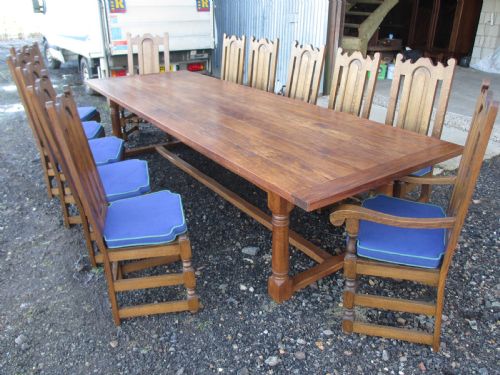
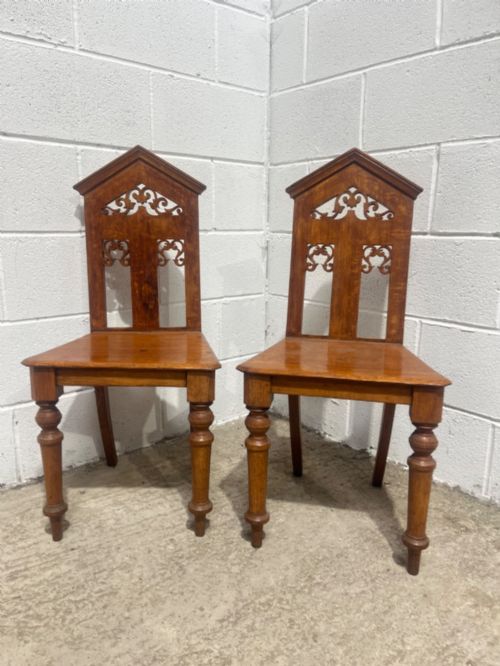
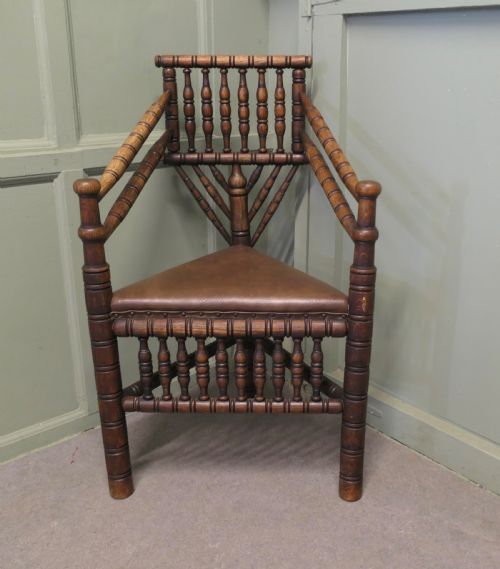
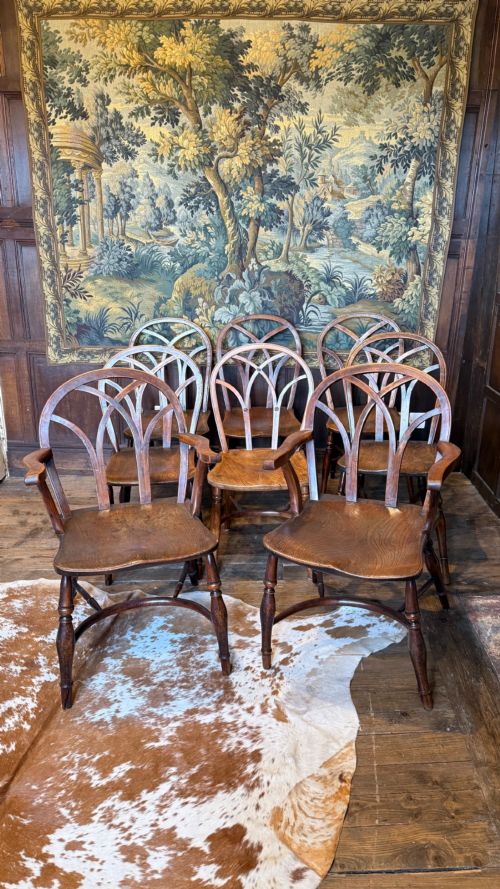
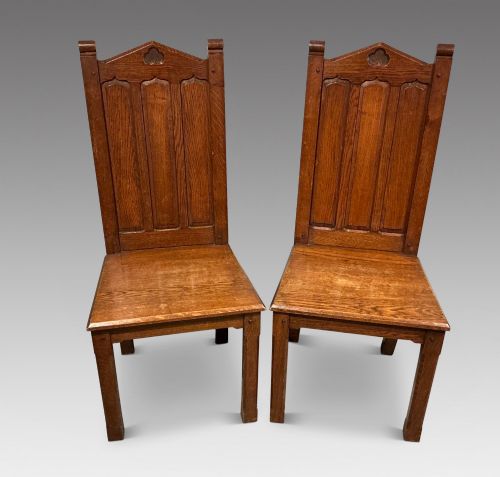
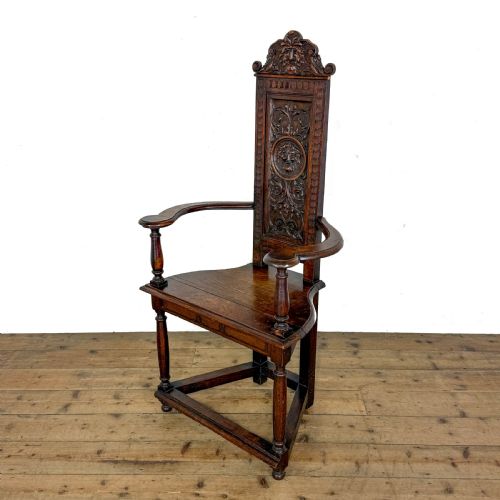
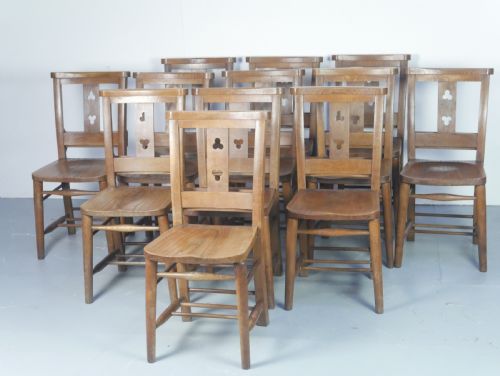
The form spans various domestic and institutional functions, from sets of dining chairs and pairs of hall seats to individual turner's chairs and monks benches. Regional variations incorporate elements of Jacobean, Tudor, and Saxon revivals, often displaying panelled backs and deep relief carving.
Proportions tend to be substantial, utilising sturdy turnings and wide rails to support upright postures. These pieces suit period interiors, libraries, and entrance halls where the dark wood finish and structural gravity provide a distinct focal point.
Materials and Construction
Makers relied primarily on solid oak, supplemented by mahogany, yew, elm, and rosewood for specific regional forms or later revival interpretations. Joinery involved traditional mortise and tenon joints secured with wooden pegs, ensuring rigidity across heavy frames subjected to daily domestic use.
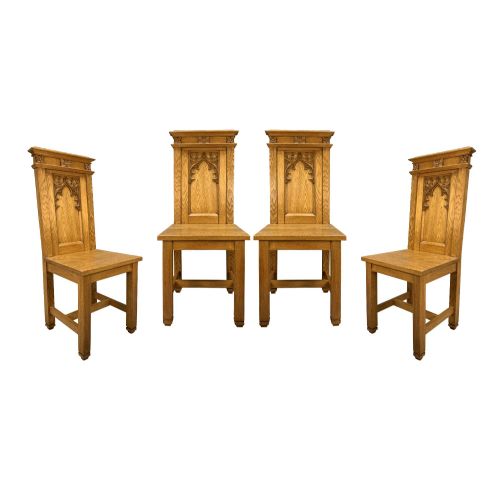
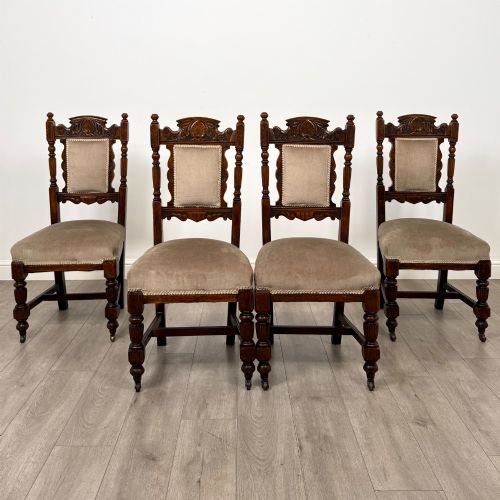
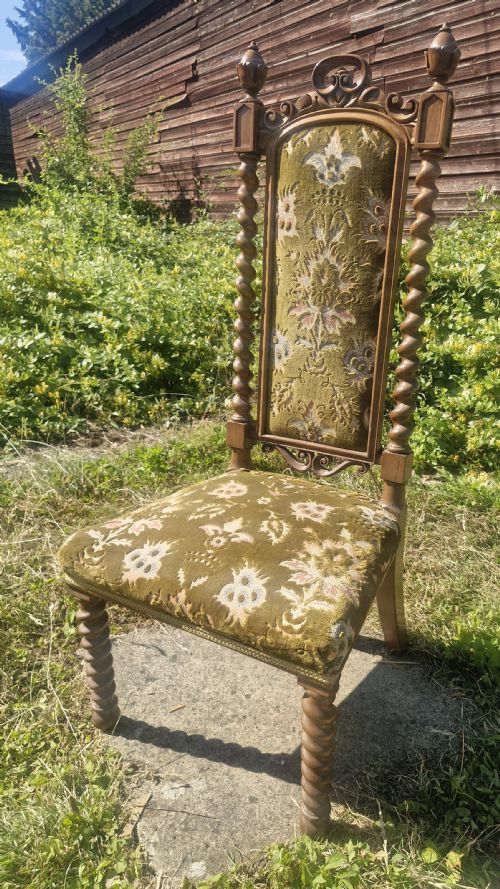
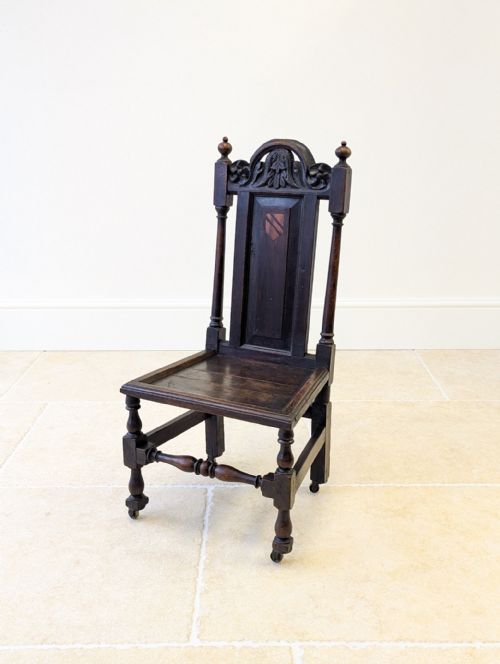
Surface ornamentation depended on hand carving, utilising gouges and chisels to render linenfold panels, tracery, and strapwork directly into the timber. Upholstered variants integrated padded leather or woven fabric seats held with brass studs, fastened securely to the underlying wooden framework.
Traditional Gothic Chairs Retail Price Guide 2026
Typical asking prices for traditional gothic chairs among the pieces listed under this phrase on Sellingantiques today, from the lower quarter to the upper quarter. They describe what is for sale here now, not the wider market.
Several examples include spinning chairs and gossip chairs, built low for fireside needlework and whispered conversation.
Assessing Craftsmanship
Quality rests upon the depth and precision of the hand carving, where crisp lines and well-defined relief separate ambitious workshop output from simpler commercial production. The choice of timber grain and the uniformity of the timber selection across matched sets dictate the visual harmony of the grouping.
Structural integrity depends on tight joinery and minimal replacement timber, preserving the original relationship between the uprights, stretchers, and seat panels. Pieces retaining patinated original surfaces show greater fidelity to their period origins than heavily restored equivalents.
Ben Gilling·Allsop Worksop
The Traditional Gothic Chairs Glossary
- Tracery
- Architectural stonework detailing translated into woodwork, forming geometric patterns in the upper backs of chairs. This ornamental feature mimics cathedral window designs.
- Wainscot chair
- An early wooden armchair characterised by a solid panelled back and heavy armrests. These pieces evolved from storage chests into dedicated seating.
- Turner's chair
- A chair constructed entirely from turned wooden spindles and rails assembled in geometric patterns. The design relies on lathe-turned members rather than flat panels.
- Monks bench
- A multifunctional piece featuring a hinged back that folds down to create a flat table surface. The base frequently doubles as a box seat for storage.
- Linenfold
- A style of wood carving that imitates folded parchment or linen textiles. Cabinetmakers used this motif to decorate the flat panels of chair backs.
Traditional Gothic Chairs: Frequently Asked Questions
What distinguishes a hall chair?
Hall chairs served as formal seating in entrance spaces, typically featuring solid wooden seats and heavily carved high backs without upholstery.
They prioritized architectural presence and heraldic motifs over comfort, as guests used them only briefly.
How do I care for antique oak?
Maintain antique oak by applying quality bees-wax periodically to nourish the dry timber and preserve the natural sheen.
Keep pieces away from direct heat sources and strong sunlight to prevent the wood from splitting or warping.
Are these chairs comfortable for daily use?
Most traditional gothic designs feature upright wooden seats and rigid backs that encourage an upright posture rather than relaxed lounging.
Upholstered variants or models with padded leather inserts offer softer seating suited for longer dining periods.
How do I identify a revival piece?
Revival pieces display machine-assisted elements or standardised joinery methods that differ from earlier hand-tooled construction techniques.
Examine the tool marks, timber shrinkage patterns, and overall wear to determine whether the piece dates to the Victorian era or the original medieval period.