


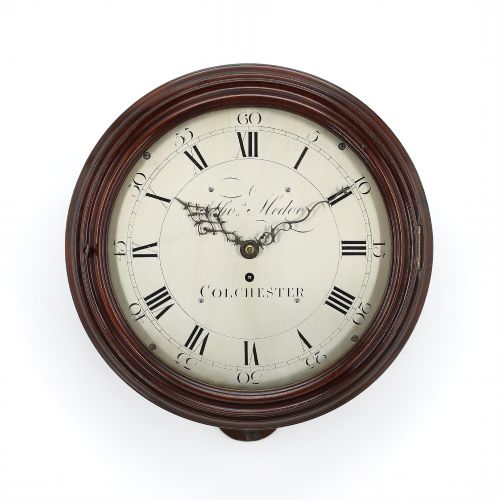


Traditional Fusee Dial Clock
Traditional fusee dial clock designs combine steady timekeeping with clean lines, making them a practical focal point for any room.

Traditional Fusee Dial Clock
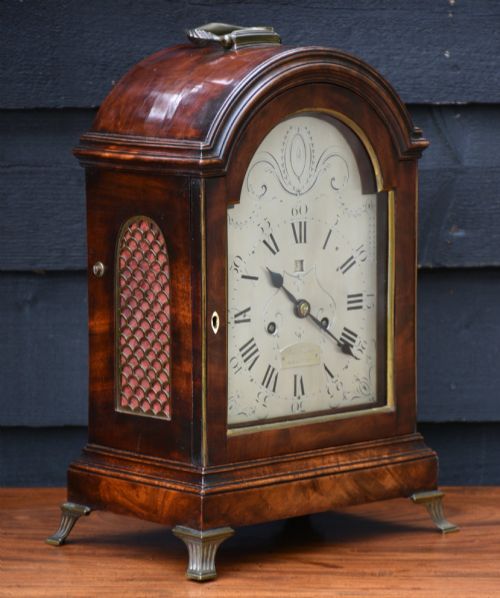
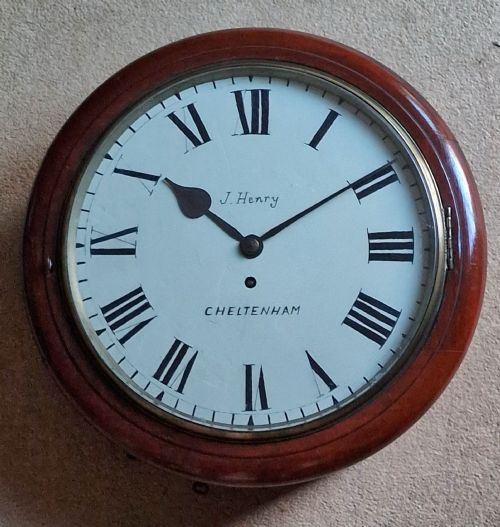
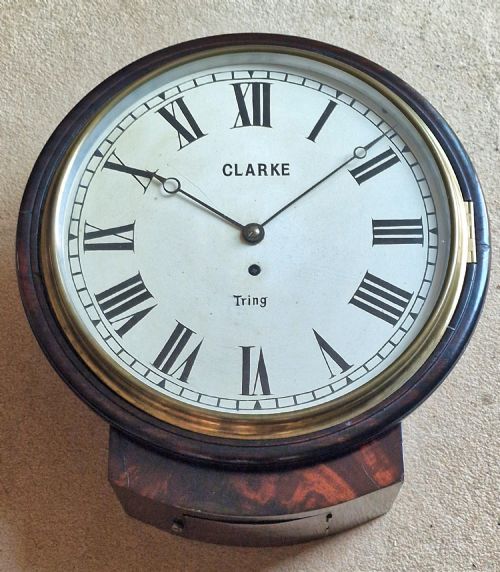
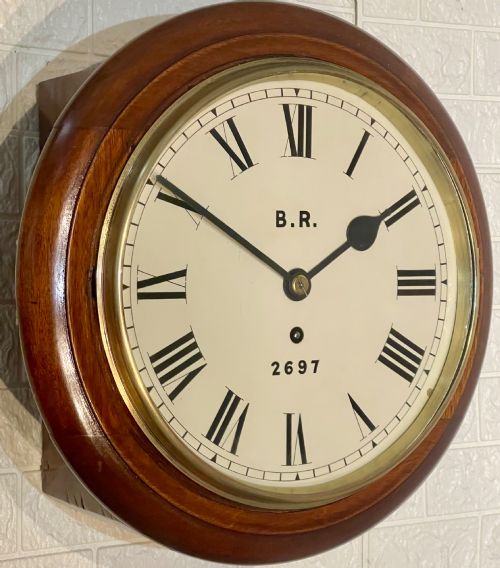
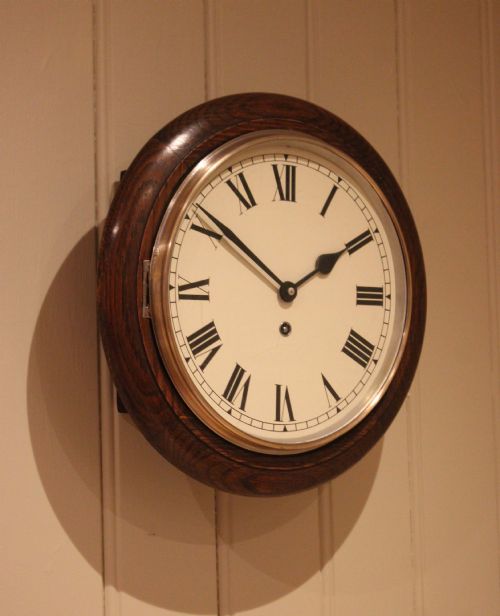
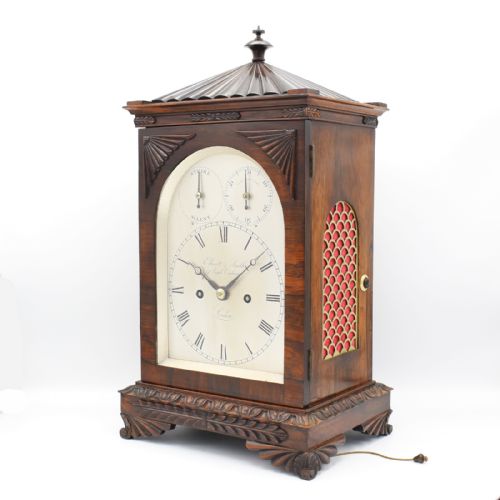
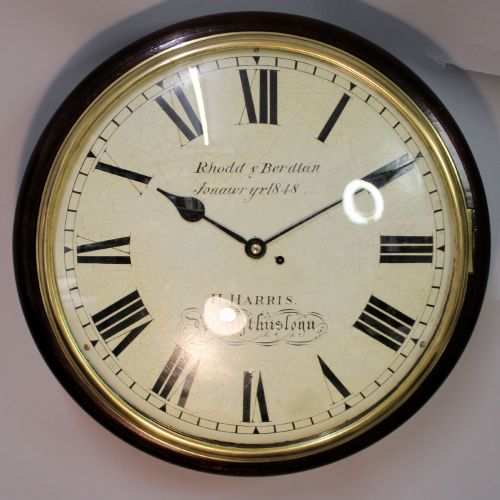
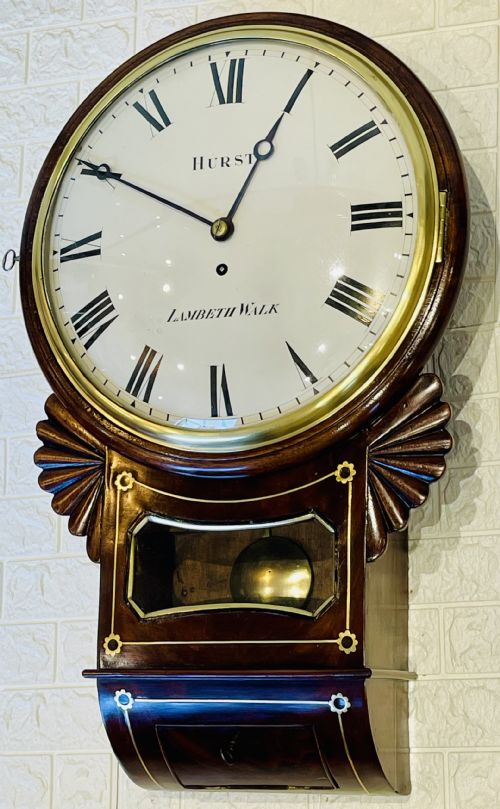
A traditional fusee dial clock is primarily a wall-mounted timepiece designed for clear legibility and reliable daily service. The pieces seen here range from simple circular wall units to drop-dial variants and larger station or office clocks.
Most examples originate from the Georgian, Regency and Victorian periods, reflecting a long British tradition of commercial and domestic timekeeping. Makers built these instruments for banks, railway companies, and private homes where precise hours mattered.
The format centres on a prominent painted or metal face protected by a glass bezel, housed within a timber surround. Mahogany and oak dominate the selection, often shaped into circular or drop-case silhouettes designed to hang securely at eye level.
How they were made
Makers constructed the timber cases using durable hardwoods like mahogany, rosewood and oak, frequently housing the mechanism behind a side-door or bottom-flap for easy access. Brass components inside support the gear train, while glass protects the painted metal dial.
The defining mechanical element is the fusee, a cone-shaped pulley that equalises the declining pull of the mainspring as it unwinds. This clever cone ensures the gear train receives even power throughout the eight-day run, resulting in steady accuracy.
Railway companies relied on these heavy dials to keep every station master strictly synchronized down to the minute.
What varies in quality
Quality rests in the precision of the brass movement and the crispness of the dial lettering, where named makers often distinguish standard commercial pieces from bespoke items. Sharp casting, clean engraving, and uncompromised timber cases indicate superior workshop standards.
The proportion and finish of the timber surround also set examples apart, with well-figured mahogany or rosewood veneers showing greater care in cabinet work. Original hands, clear convex glass bezels, and matching components preserve the integrity of the piece.
Ellicott and Smith·Henry Harris·Joseph Bird·Thomas Hedge·Mappin and Webb·John Walker·Joseph Mansfield·Phillips Brothers·J C Ralls·John Wilson·J A Wheatley·Frodsham and Baker
The Traditional Fusee Dial Clock Glossary
- Fusee
- A conical pulley connected to the mainspring by a chain or cord. This mechanism maintains constant tension on the gear train as the spring unwinds.
- Drop dial
- A wall clock case featuring an extended lower section below the circular face. This drop often accommodates a pendulum box or extra mechanism.
- Verge escapement
- An early type of escapement mechanism using a crown wheel and pallets. It regulates the release of power in older movements.
- Convex dial
- A clock face that curves outward toward the viewer. This shape catches light evenly and reduces glare behind the glass bezel.
Traditional Fusee Dial Clock: Frequently Asked Questions
How do I wind a traditional fusee dial clock?
Use the provided winding key in the small hole on the clock face, turning it gently clockwise until you feel resistance. Take care not to overwind the movement, as this strains the chain and spring.
Most traditional fusee clocks require a weekly wind to maintain accurate time. Keep the key in a safe place near the clock so you do not misplace it.
Why does my clock have a chain instead of a cord?
Makers used fine steel chains on higher-quality fusee movements because they last longer and handle tension better than gut cords. These miniature chains wrap securely around the conical pulley during winding.
Checking the chain during routine care ensures the links remain clean and properly seated. It represents a hallmark of finer workshop production.
Where should I hang a wall dial clock?
Hang your clock on a sturdy interior wall using a strong screw or anchor fixed directly into timber or masonry. Avoid placing it on damp walls or in rooms with wide temperature swings.
Positioning the dial at eye level makes reading the time straightforward and allows easy access for weekly winding. Ensure the case hangs plumb so the pendulum swings freely.
How do I know if the movement is original?
Look for consistent wear patterns between the brass plates, gears, and the timber case interior. Maker signatures on the dial often match inscriptions engraved on the backplate of the movement.
Original movements share the same age and technological standard as the housing. Consulting the named maker can also help confirm the period of the mechanism.