
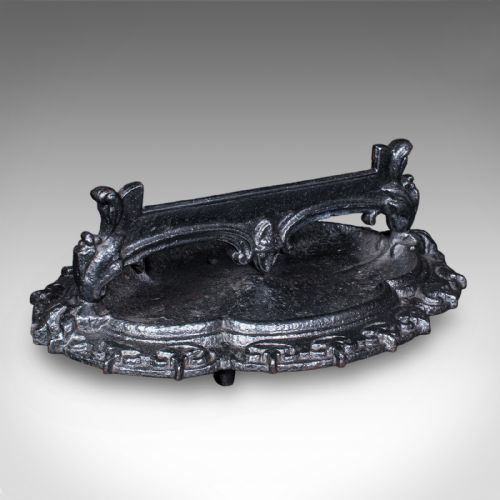


Traditional Front Door Pull
A traditional front door pull sets the character of an entranceway, offering solid brass, bronze, cast iron, and steel hardware from the Georgian to Edwardian eras.
Traditional Front Door Pull
A traditional front door pull encompasses functional entryway hardware, including centre door knobs, door bell pulls, door pull handles, and boot scrapers. These items appear across Georgian, Regency, Victorian, and Edwardian periods.
Centre door knobs dominate the selection, frequently cast in brass with geometric profiles such as bee hive and octagonal shapes. Bell pulls and door pull handles provide alternative methods of operating or announcing entry.
Boot scrapers represent the more utilitarian side of doorway fittings, providing a shoe cleaner mechanism placed at the entrance. Each piece reflects the architectural priorities of its original domestic setting.
How they were made
Metalworking techniques of the eighteenth and nineteenth centuries relied on casting to shape solid brass, bronze, iron, and steel into durable door hardware. Molten metal was poured into moulds to create the heavy structural components required for daily domestic use.
Finishing processes involved turning and polishing the cast metals to achieve the desired surface texture, whether the smooth octagonal facets of a Victorian knob or the ornate contours of a Georgian bell pull.
Materials span brass, bronze, cast iron, and steel across Georgian, Regency, Victorian, and Edwardian periods.
What varies in quality
Quality rests in the crispness of the casting and the weight of the metal utilised in the construction. Heavier brass and bronze components maintain structural integrity and display sharper detailing across mouldings and turnings.
The refinement of the silhouette distinguishes standard domestic items from superior examples. Well-proportioned geometric facets on an octagonal knob or precise detailing on a bell pull indicate higher standards of period manufacture.
The Traditional Front Door Pull Glossary
- Centre door knob
- A stationary handle mounted in the middle of a front door, used for pulling the door closed rather than operating a latch.
- Door bell pull
- A mechanical lever or handle connected to a wire system inside the house, used by visitors to ring a bell before the widespread adoption of electrical buzzers.
- Boot scraper
- A metal blade or trough positioned outside an entrance to remove mud from footwear.
- Bee hive
- A traditional decorative turning style featuring concentric ridges resembling a beehive, popular on nineteenth-century door furniture.
- Octagonal
- Having eight sides, a geometric shape frequently utilised in the moulding of brass door knobs.
Traditional Front Door Pull: Frequently Asked Questions
What is a centre door knob?
A centre door knob is a fixed handle mounted directly onto the middle exterior face of an entrance door. It provides a solid grip for pulling the heavy timber door shut from the outside.
These knobs do not turn or operate a latch mechanism by themselves. They function purely as a pull and often serve an aesthetic role in balancing the symmetry of period front doors.
How do door bell pulls work?
Period door bell pulls operate through a mechanical linkage connected to a bell situated inside the house. When a visitor pulls the handle, tension travels along a wire or crank to strike the bell.
These systems predate modern electrical wiring. They rely entirely on metal levers, pivots, and pulls mounted on the exterior masonry or doorframe.
What metals were used for door hardware?
Period door hardware relies predominantly on brass, bronze, cast iron, and steel. Solid brass and bronze were favoured for their corrosion resistance and bright appearance on formal entranceways.
Iron and steel appeared on more utilitarian items or structural components where maximum strength was required. Over time, these metals develop patinas through exposure to the elements and frequent handling.
How do I date a door pull?
Dating relies on stylistic clues and material choices that align with recognised historical periods. Georgian and Regency pieces often feature clean oval forms or classical bell pull plates, while Victorian examples introduce heavy geometric turnings like octagonal and bee hive shapes.
Edwardian hardware continues these metalworking traditions with robust bronze and brass casting techniques. Examining the manufacturing marks and silhouette helps place the piece within its correct era.