


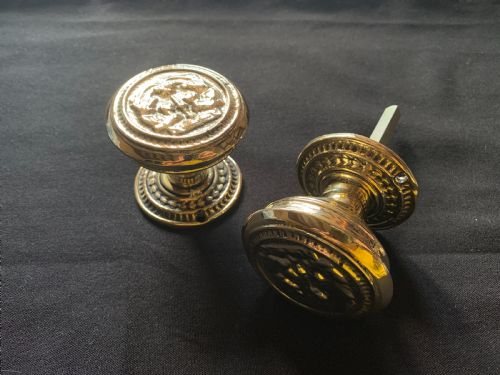


Vintage Brass Door Knob
These vintage brass door knob examples offer tactile period character for doors, combining solid metals and classic shapes in everyday hardware.
Vintage Brass Door Knob
When you search for a vintage brass door knob, you encounter hardware spanning Victorian, Regency, Georgian, Edwardian, and Arts and Crafts periods. The most common version met on this page is the single centre door knob or paired set forged from brass, often taking round, oval, octagonal, or beehive forms.
Pieces frequently incorporate mounting plates, finger plates, or complete lock sets alongside the knob itself. Materials extend beyond pure brass to include bronze, iron, steel, oak, ebony wood, and amber glass elements.
Origins trace across the nineteenth and early twentieth centuries, reflecting changing domestic architecture and interior design preferences. Buyers select these items to restore period properties or add authentic historical detail to modern doors.
What varies in quality
Weight and casting crispness separate substantial examples from lighter productions. Superior specimens display sharp geometric facets on octagonal or beehive turnings and retain original matching backplates or locking mechanisms.
The choice of secondary materials introduces another layer of distinction, with dense ebony wood or cast bronze exhibiting greater durability than simpler brass pressings. Complete pairs and matched sets demonstrate higher desirability than single displaced items.
Vintage Brass Door Knob Retail Price Guide 2026
Typical asking prices for vintage brass door knob among the pieces listed under this phrase on Sellingantiques today, from the lower quarter to the upper quarter. They describe what is for sale here now, not the wider market.
Materials represented include solid brass, bronze, iron, steel, oak, ebony, and amber glass.
The Vintage Brass Door Knob Glossary
- Centre door knob
- A large fixed or rotating handle mounted in the middle of a primary entrance door rather than the edge. These serve a decorative and functional purpose on grander portals.
- Beehive
- A characteristic turned profile featuring concentric stepped rings resembling a traditional skep hive. This pattern provides a secure grip and defines many nineteenth-century designs.
- Finger plate
- A protective metal sheet mounted behind the door handle to prevent fingerprints and wear on the wood finish. These often match the decorative style of the associated knob.
- Bronze
- An alloy of copper and other metals, principally tin, producing a darker and heavier casting than standard brass. It appears frequently on pieces from the Victorian and Regency eras.
- Octagonal
- Formed with eight distinct sides, creating a faceted gripping surface. This geometric shape is common in Georgian and Victorian hardware.
Vintage Brass Door Knob: Frequently Asked Questions
Are these door knobs suitable for daily use?
Most pieces originate from functional nineteenth-century domestic settings and retain sturdy metal construction. They can be installed on interior doors with appropriate modern spindles.
Buyers should verify the spindle dimensions and fixing methods before fitting them to ensure compatibility with standard modern door preparations.
How do I identify a Regency period knob?
Regency items typically display clean classical proportions, smooth oval profiles, and restrained ornamentation. They reflect the neoclassical tastes prevalent in the early nineteenth century.
Comparing the shape and brass coloration against known period examples helps confirm the dating of unsigned hardware.
Can I buy matching pairs?
Several listings offer matched pairs or complete sets intended for both sides of a single door or adjoining rooms. Single items also appear, usually sold as centre pulls or replacement parts.
Checking the title details clarifies whether the hardware comprises a single piece, a pair, or a full lock set.
What maintenance do brass knobs require?
Routine cleaning involves soft dusting and occasional wiping with a dry cloth to preserve the natural metal surface. Harsh chemical polishes can strip historic patinas accumulated over decades.
Allowing the brass to age naturally maintains the authentic appearance valued by collectors of period architectural salvage.