


Traditional Fire Tool Set
A traditional fire tool set brings utility and hearth-side order, combining pokers, shovels, and tongs in brass, steel, and iron.
Traditional Fire Tool Set
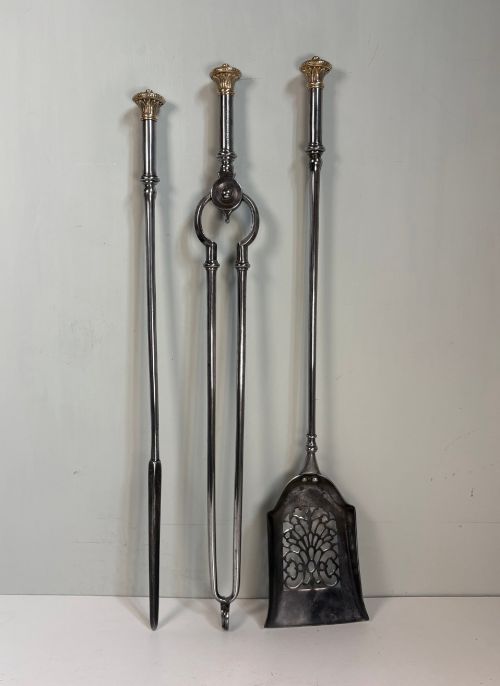
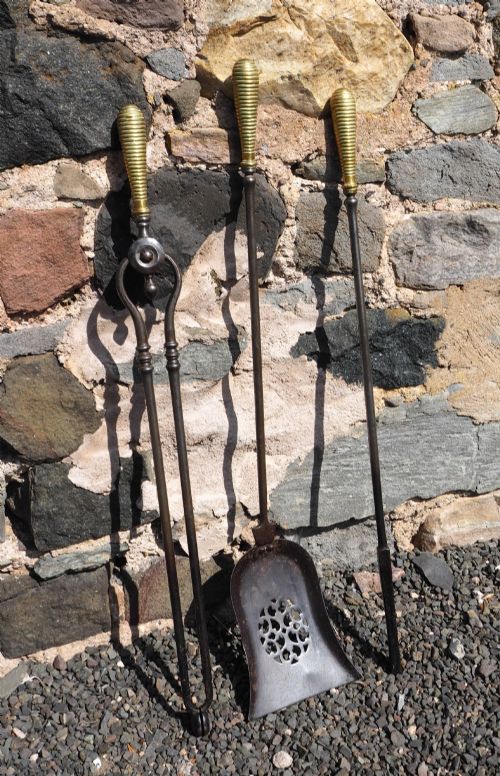
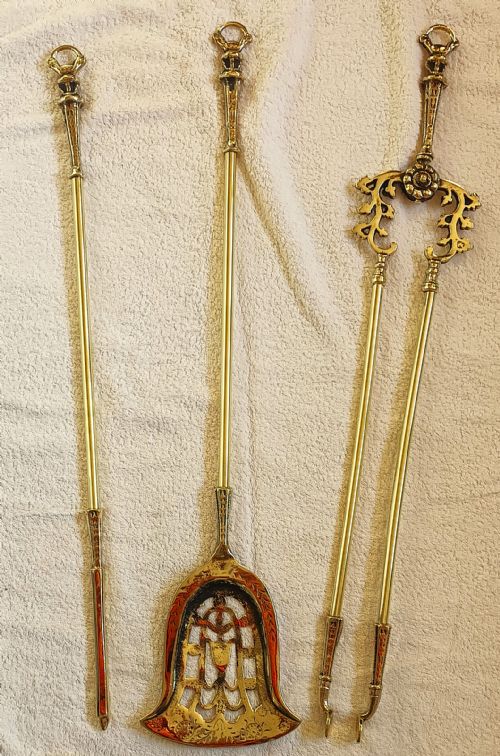
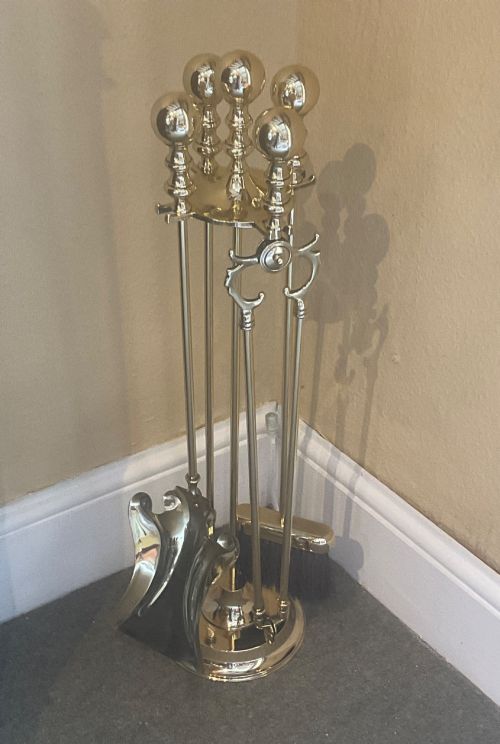
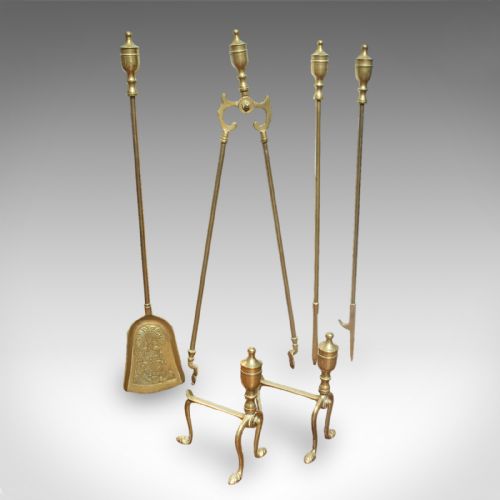
A traditional fire tool set comprises functional implements designed to tend an open coal or wood fire. These collections typically include a shovel, poker, and tongs, frequently accompanied by a stand or matching fire dogs.
The pieces appearing on this page span from the eighteenth century through to the early twentieth century, taking in Georgian, Victorian, and Edwardian periods. Victorian examples in bright or polished brass predominate among the listings.
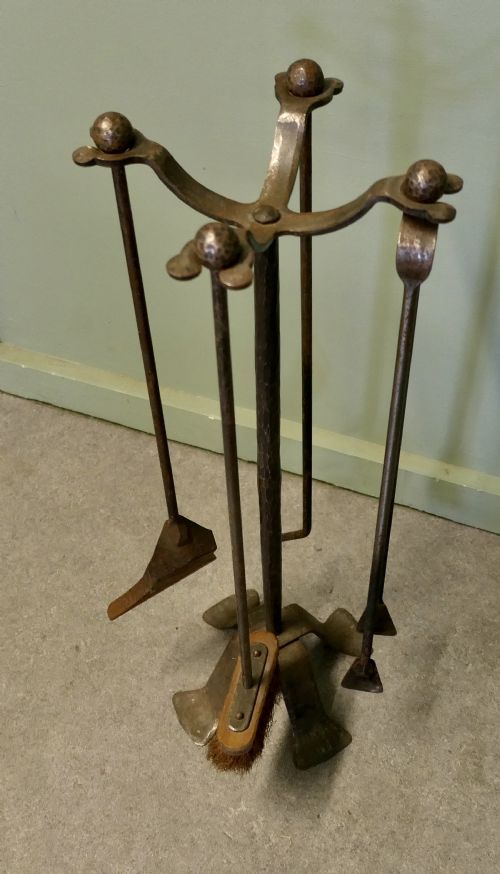
Forms range from simple country house inglenook tools to decorative Rococo and Arts and Crafts suites. Buyers encounter both standalone iron fire irons and comprehensive companion sets complete with fender equipment.
Materials and construction methods
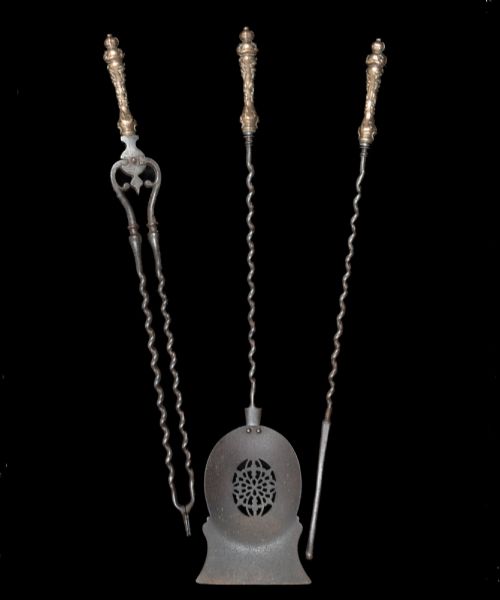
Techniques varied from heavy hand-forging in iron to sophisticated turning and casting in brass. Detail work frequently included rope twist handles and applied Rococo ornamentation.
Styles recorded across the pieces include Georgian, Victorian, French Country, Gothic Revival, Rococo Revival, and Arts and Crafts.
Distinctions in quality and execution
Quality rests in the substantial weight of the metal and the integrity of the joins between handles and shafts. Heavier gauges of brass and thick forged steel indicate superior manufacture designed for daily use.
Refinement in surface finish and decorative detail distinguishes finer examples, such as crisp casting on Rococo companion sets or carefully executed rope twist patterns on brass shafts.
The Traditional Fire Tool Set Glossary
- Companion set
- A matched group of fire tools arranged together on a stand or rack by the hearth. These assemblies typically comprise a shovel, poker, and tongs.
- Fire irons
- Individual implements for tending a coal or wood fire, usually comprising pokers, tongs, and shovels manufactured in steel or brass.
- Fire dogs
- Metal supports placed on either side of a hearth to elevate logs. They frequently accompany period fire tool sets in matching brass or iron.
- Inglenook
- A large recess containing a fireplace, often associated with heavier country house iron fire tools. These spaces formed the warm centre of older domestic rooms.
- Rope twist
- A decorative spiral pattern chased or cast into metal handles. This detail appears frequently on nineteenth-century brass fire tools.
Traditional Fire Tool Set: Frequently Asked Questions
What tools are in a traditional fire tool set?
A standard set comprises a poker for shifting fuel, tongs for handling logs or coal, and a shovel for clearing ash.
Many sets also include a stand to keep the implements organised beside the fireplace.
How do I date a brass fire tool set?
Dating relies on stylistic clues, manufacturing techniques, and the contour of the handles. Victorian and Edwardian examples often display distinct Revival styles or bright polished finishes.
Heavier iron pieces frequently point towards earlier Georgian or country house origins.
Can I use antique fire tools daily?
Most metal fire tools are robust enough for regular use, particularly solid steel and heavy brass examples. Care should be taken with decorative nineteenth-century brass pieces to preserve their finish.
Checking the joins between handles and shafts ensures the implement remains sound for work.
What is the difference between brass and steel sets?
Brass sets offer a bright, decorative presence that became particularly popular during the Victorian and Edwardian eras. Steel and wrought iron tools provide a darker, more utilitarian aesthetic suited to heavy hearth work.