


Traditional Farm Scene Painting
A traditional farm scene painting captures the historic rural landscape, offering buyers a glimpse into 19th and early 20th century agricultural life.
Traditional Farm Scene Painting
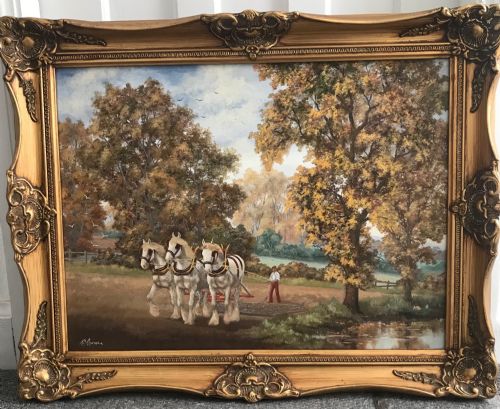
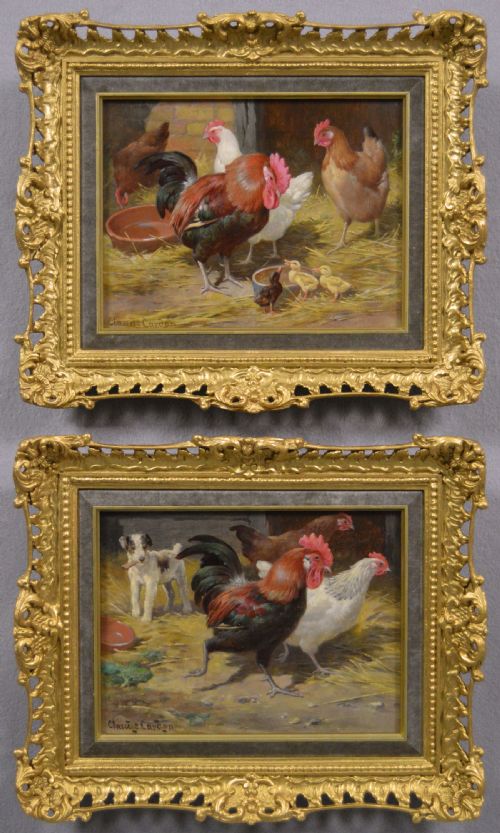
A traditional farm scene painting depicts rural life, agricultural labour, and farm animals across various British and European settings. When exploring this selection, buyers encounter works ranging from expansive pastoral landscapes to intimate depictions of farmyards.
The pieces span from the 19th century into the mid 20th century, encompassing Victorian rural realism and Edwardian pastoral styles. Common subjects include ploughing horses, dairy cattle, poultry, and farmworkers occupied with daily tasks.
Most examples take the form of framed oil paintings on canvas or wood panels, alongside occasional watercolours on paper. These artworks record the changing face of farming through distinct historical artistic movements.
What varies in quality
Quality rests upon the artist's ability to render animal anatomy and human movement with convincing realism and proportion. Superior works display a confident handling of light, shadow, and atmosphere within the landscape.
The distinction between standard decorative pieces and finer works lies in the subtlety of brushwork and the preservation of the original paint surface and frame.
Materials span canvas, oil paint, wood, giltwood, and paper across traditional British and European pastoral artworks.
Claude Cardon·John Frederick Herring Jnr·Samuel Joseph Clark·Charles Vickers·Herbert Royle·Arthur Winter Shaw·Owen Bowen·Edgar Hunt·Ernest Higgins Rigg·George Cole·Robert Gallon
The Traditional Farm Scene Painting Glossary
- Canvas
- A heavy woven fabric stretched across a wooden frame to serve as a support for oil paint. It provides a durable and textured surface favoured by traditional painters.
- Giltwood
- Wood that has been coated with a thin layer of gold leaf or gilt powder. This finish is frequently found on the decorative frames enclosing period oil paintings.
- Pastoral
- A style of art that idealises rural life and agrarian landscapes. These scenes typically focus on the peaceful harmony of farm animals, shepherds, and fields.
- Realism
- An artistic movement focused on depicting subjects as they appear in everyday life without idealisation. In agricultural scenes, this involves accurate portrayals of farmworkers and livestock.
Traditional Farm Scene Painting: Frequently Asked Questions
What subjects appear in these paintings?
The artworks depict horses ploughing fields, dairy cattle by streams, poultry in farmyards, and farmworkers tending to daily tasks.
Settings range from Yorkshire farmsteads and Surrey farms to wider pastoral landscapes and cottage interiors.
Which periods do these artworks represent?
The selection spans the nineteenth century through the early decades of the twentieth century.
Pieces reflect artistic movements such as Victorian rural realism, British Impressionism, and Edwardian pastoral traditions.
How should I care for an oil painting?
Keep the artwork away from direct sunlight and steady humidity levels to protect the canvas and wood frame.
Dust the surface gently with a soft, dry brush and avoid applying liquid cleaners to the paint or giltwood.
What materials were used by the artists?
Artists primarily employed oil paint on canvas or wood panels to create textured and enduring landscape scenes.
A smaller number of works utilise watercolour on paper, presenting a lighter approach to rural views.