




Traditional Executive Chair
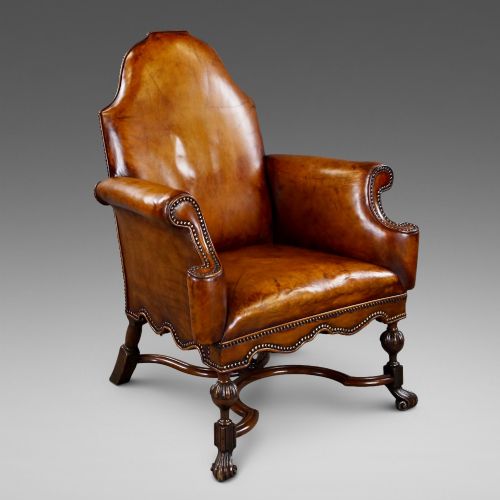
A traditional executive chair brings solid mahogany, supple leather and substantial swivel mechanics straight to the home office or study.
Traditional Executive Chair
When you search for a traditional executive chair, you are looking at substantial seating built for the office or library, primarily taking the form of desk chairs, armchairs, and office chairs. The pieces available span from the mid-nineteenth century through to the early twentieth century, taking in Victorian and Edwardian periods as well as revival styles like Queen Anne and Georgian.
You are most likely to meet mahogany or oak desk armchairs upholstered in leather and supported by revolving or swivel mechanisms. These examples combine the heavy timber frames of earlier decades with the practical height adjustments and mobility required for a working desk.
How they were made
Cabinetmakers constructed these frames using dense timbers such as mahogany, walnut, and oak, often shaping them into period revivals with curved armrests and high backs. Wood was joined with traditional framing techniques to withstand the daily torque of twisting and leaning.
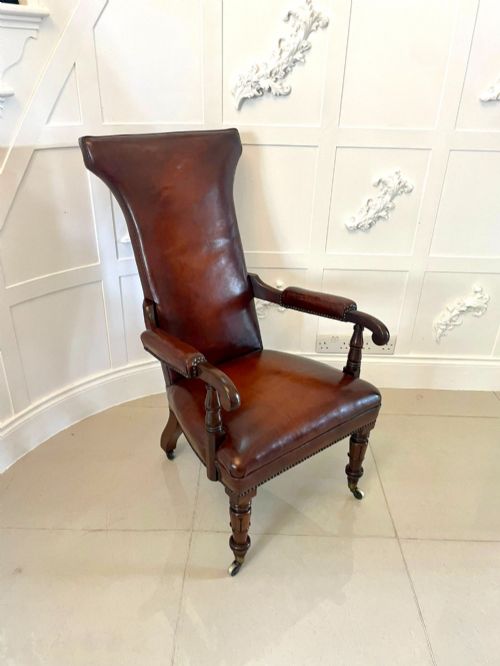
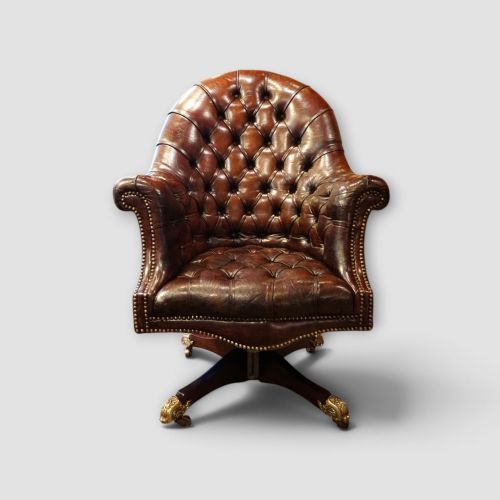
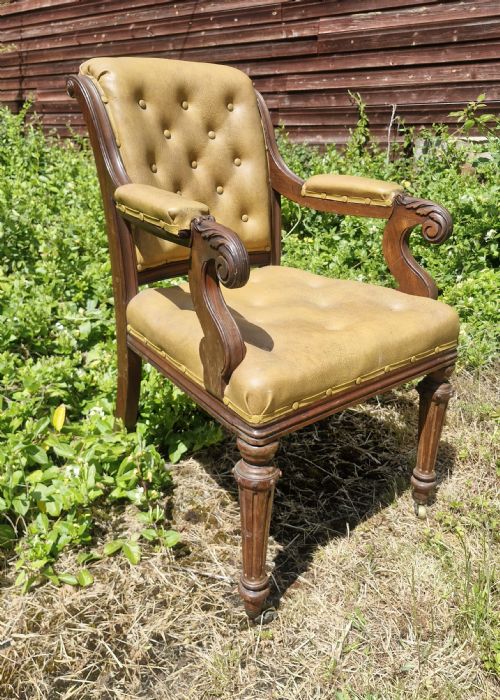
Upholstery departments fitted buttoned leather or fabric directly to sprung or padded seats, securing the hides with brass nailheads along the borders. Steel and brass mechanisms were integrated into later nineteenth and early twentieth-century models to allow swivel and desk mobility without compromising the timber surround.
Listings feature mahogany, oak, and walnut frames paired with leather upholstery across Victorian and Edwardian periods.
What varies in quality
The division between standard workshop production and finer cabinetmaking rests upon timber selection and the carving of the wooden framework. Superior examples display carefully chosen mahogany or walnut grain, crisp mouldings, and robust structural joinery that holds firm over decades of heavy office use.
The grade of the leather upholstery and the execution of buttoning also separate tiers of quality, alongside the mechanical integrity of the revolving or swivel base. Well-engineered steel and brass hardware ensures smooth turning and stability, whereas lesser examples rely on looser, more basic pivot joints.
The Traditional Executive Chair Glossary
- Desk Armchair
- A seating form designed specifically to sit comfortably beneath a writing table while providing arm support. These pieces usually feature sturdy wooden frames and padded upholstery.
- Revolving Office Chair
- A chair fitted with a mechanical pivot or swivel base allowing the sitter to turn in various directions. This innovation became prominent in late nineteenth and early twentieth-century workspaces.
- Buttoned Leather
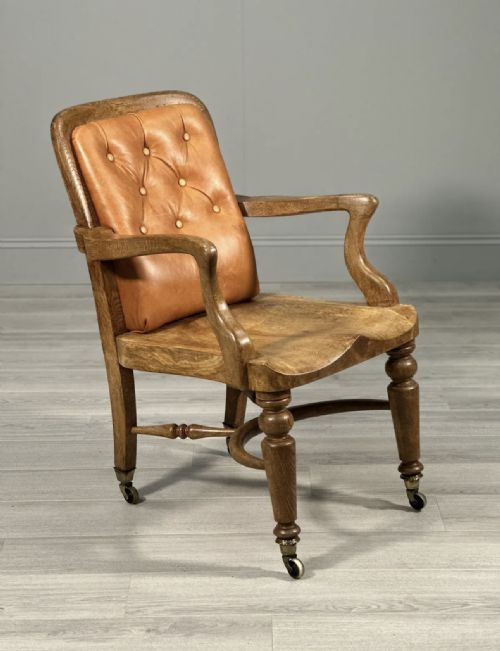
- Upholstery where leather is pulled deep into the padding by tufting and secured with stitches or buttons. It creates a distinctive diamond pattern across the backrest.
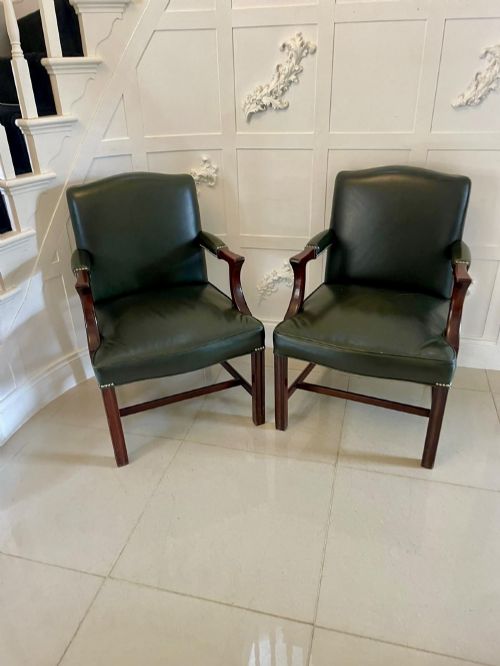
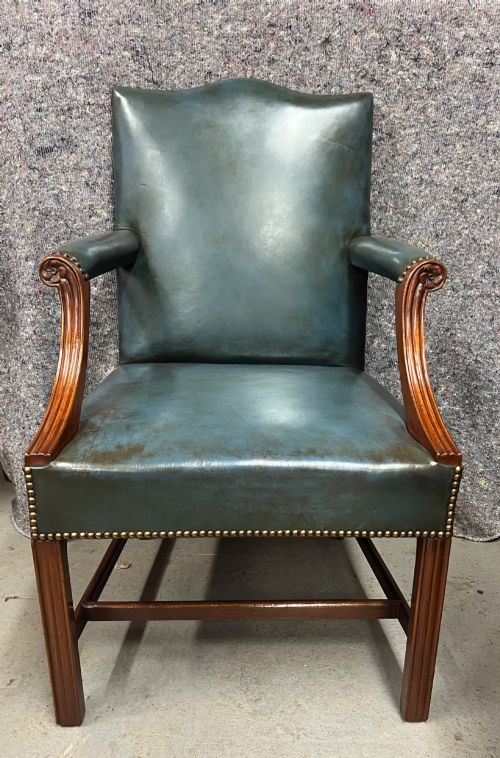
- Gainsborough Chair
- An eighteenth-century style of writing armchair featuring an upholstered back and seat with open padded arms. The design sits on short legs, often terminating in castors.
Traditional Executive Chair: Frequently Asked Questions
How do I date a desk chair?
Dating relies on identifying the underlying timber, the style of the frame, and the mechanics of the swivel base if present. Earlier nineteenth-century examples often feature fixed wooden legs, while later Victorian and Edwardian pieces incorporate steel and brass revolving mechanisms.
Cabinetmaking trends also shift through the periods, moving from solid Georgian proportions to heavier Victorian buttoning and lighter Edwardian revival forms. Examining the construction of the seat frame and the wear on the timber helps confirm the era of production.
Can I use these chairs at a modern desk?
Many traditional executive chairs fit comfortably beneath standard contemporary desks, provided the clearance height matches the armrests. Swivel and revolving models offer the mobility needed for daily computer work and writing.
It is wise to check the seat height and the clearance of the wooden arms before purchase, as older office chairs were built for lower writing tables than standard modern desks.
Are these chairs comfortable for daily use?
These pieces were originally designed for long hours of administrative work, featuring supportive high backs and padded leather seats. The sprung or stuffed upholstery provides a firm, upright posture rather than a soft lounge experience.
Over decades of use, the internal padding may settle, so buyers seeking daily comfort should consider the firmness of the seat and the support of the backrest.
How should I care for the leather?
Leather upholstery benefits from regular dusting with a soft cloth and occasional treatment with appropriate leather conditioners to prevent drying. Avoiding direct sunlight and intense heat sources protects the hide from cracking over time.
Gentle cleaning preserves the original patina of the leather without stripping the historical character or softening the buttoning unduly.