




Traditional Executive Armchair
A traditional executive armchair offers proper support for the working day, combining generous proportions with enduring materials like mahogany and leather.
Traditional Executive Armchair
A traditional executive armchair is a sturdy seat designed for a study or office, built to support prolonged periods of work at a desk. These pieces generally take the form of desk chairs, office chairs, and library armchairs suited to professional spaces.
Most examples found on this page hail from the Victorian and Edwardian eras, alongside pieces built in earlier revival styles. Makers from the nineteenth and early twentieth centuries favoured robust hardwoods and upholstered seats for these heavy-duty furnishings.
How they were made
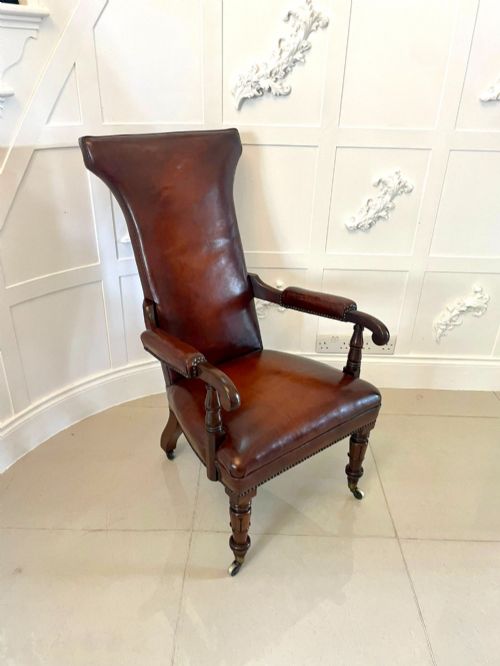
Craftsmen built these chairs using dense timbers such as mahogany, walnut, and oak to ensure structural integrity under daily use. Turned wooden framing and curved armrests required skilled joinery to withstand the twisting and shifting of an active workspace.
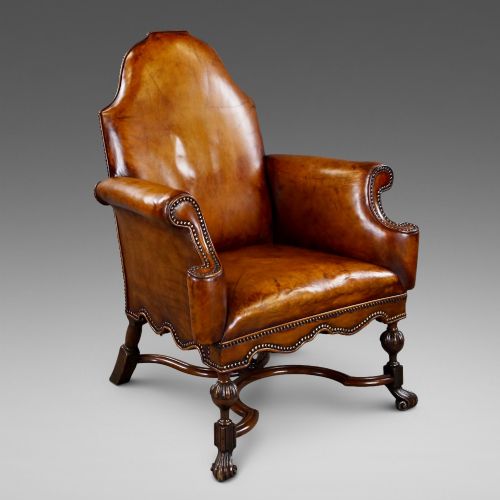
Upholstery departments fitted seats and backs in genuine leather or durable fabric, often secured with brass nail heads along the borders. Steel and brass mechanisms were later integrated into swivel designs, allowing the seat to rotate and tilt smoothly.
Current listings feature desk chairs and office armchairs spanning the Victorian and Edwardian periods, constructed in mahogany, walnut, oak, leather, and steel.
What varies in quality
Quality rests primarily in the selection of timbers and the precision of the joinery rather than mere ornamentation. Denser hardwoods and heavier framing indicate a superior build intended for demanding daily service in a professional study.
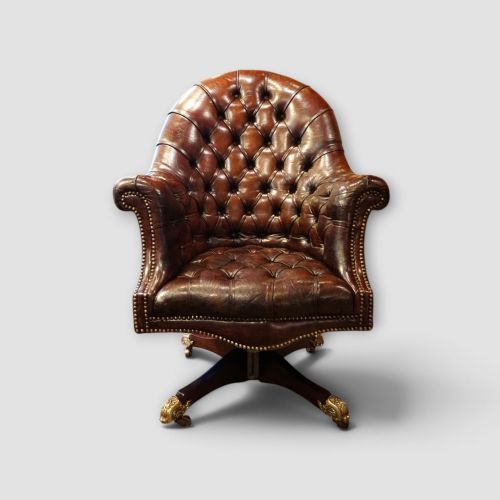
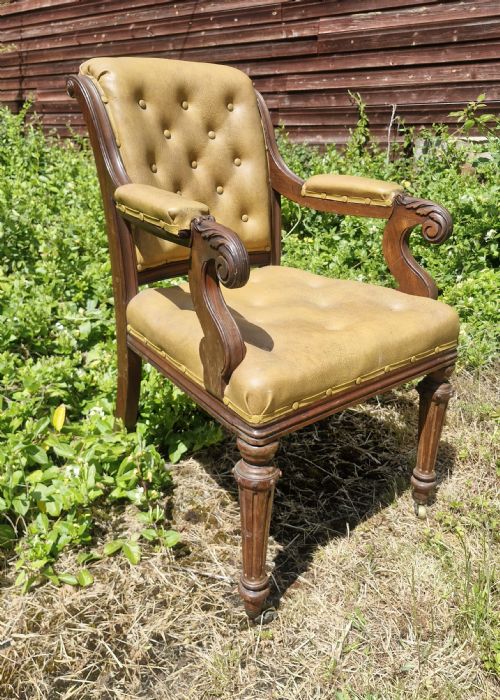
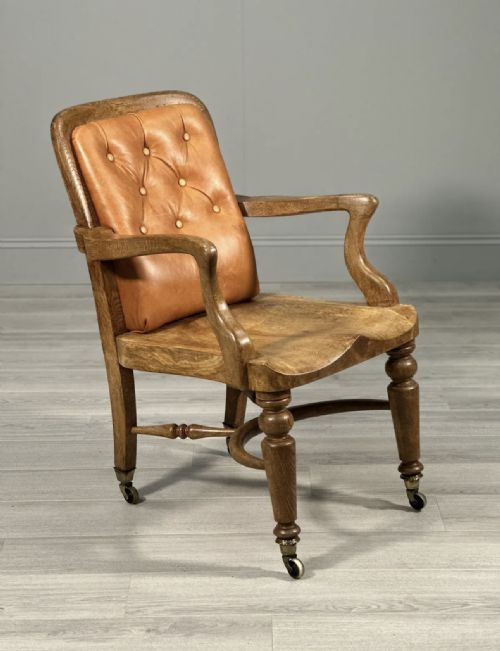
The finish of the leather and the execution of buttoned tufting reveal the hand of a skilled maker. Finer examples maintain tight joints and smooth mechanical actions in swivel models, distinguishing them from simpler utility seating.
The Traditional Executive Armchair Glossary
- Gainsborough style
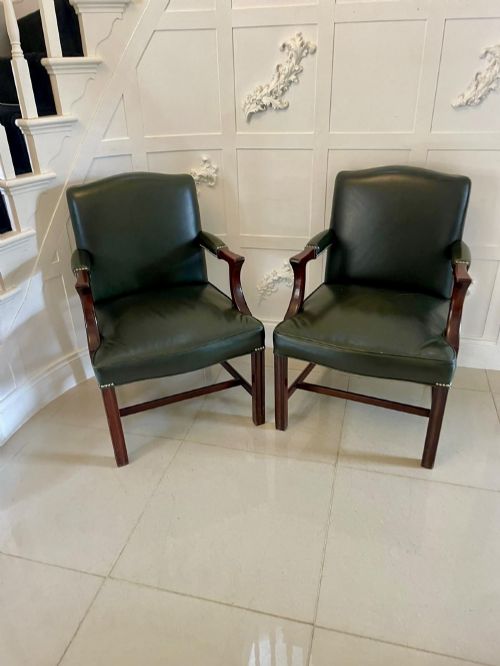
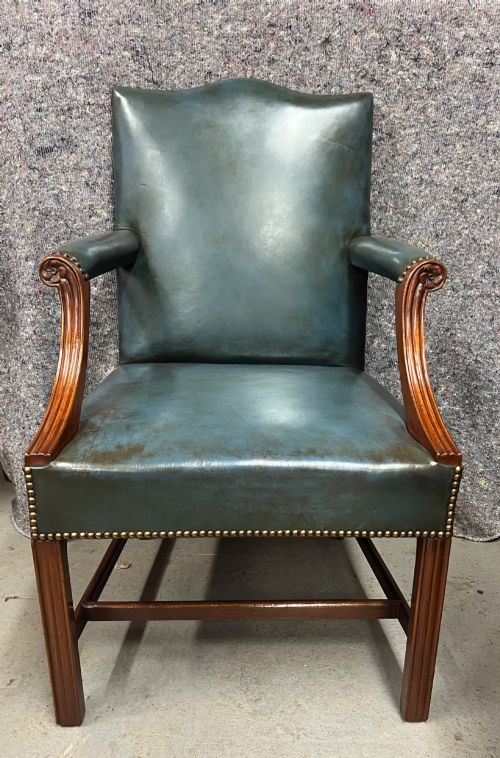
- An armchair characterised by an upholstered back and seat, open padded arms, and short wooden legs. This form originated in the eighteenth century and was frequently revived in later periods.
- Revolving office desk chair
- A seat mounted on a central pivot and fitted with a mechanical swivel base. These models often incorporate steel or brass components to allow rotation and height adjustment.
- Buttoned leather
- An upholstery technique where leather is pulled deep into the padding and secured with buttons to form a diamond pattern. This method adds structural tension and distinct visual depth to the backrest.
- Desk armchair
- A supportive seating option specifically proportioned to slide beneath a writing table or partner's desk. These pieces balance the comfort of a standard armchair with the functional height of a workspace seat.
Traditional Executive Armchair: Frequently Asked Questions
What is a traditional executive armchair?
A traditional executive armchair is a sturdy seat built for a study, office, or library. These pieces combine supportive wooden framing with upholstered leather to handle daily professional work.
Most examples date from the nineteenth and early twentieth centuries. They appear in styles such as Victorian, Edwardian, and Georgian revivals.
How were these chairs used?
These chairs served writers, merchants, and professionals seated at large desks or partner's tables for long hours. Their robust construction and comfortable padding provided necessary support throughout the working day.
Swivel actions and castors allowed users to turn and move easily across wooden floorboards without standing up. Leather upholstery offered a durable, wipe-clean surface for heavy office use.
How do I live with one?
A traditional executive armchair works best pulled up to a wooden partner's desk or placed in a quiet corner for reading. The sturdy hardwood frame and leather seat handle regular daily use quite well.
Leather surfaces require occasional conditioning to stay supple and prevent drying out. Keeping the wooden frame polished preserves the depth of the mahogany, walnut, or oak grain.
How do I tell periods apart?
Victorian and Edwardian models often show distinct turning on the wooden legs and distinct approaches to buttoned leather upholstery. Earlier revival pieces incorporate stylistic cues from the eighteenth century, such as carved mahogany arm supports.
Swivel mechanisms and steel components typically point towards late nineteenth or early twentieth century production. Examining the timber grain and the style of the joinery helps clarify the era of manufacture.