


Traditional Equine Portrait
A traditional equine portrait captures the character and stature of horses through oils and watercolours spanning multiple centuries.
Traditional Equine Portrait
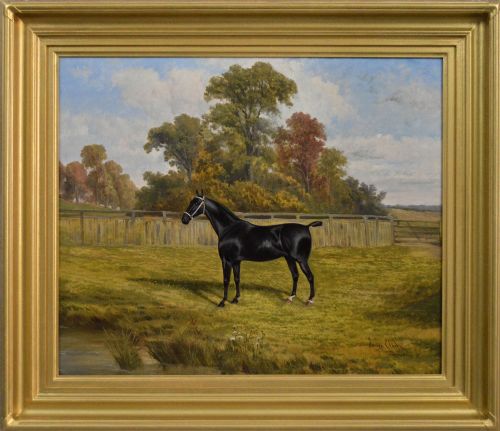
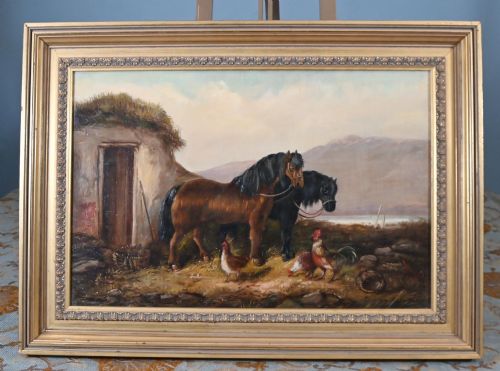
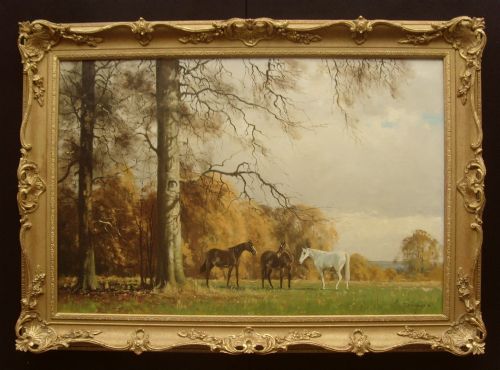
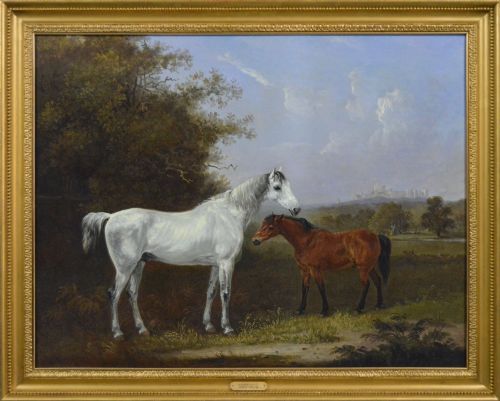
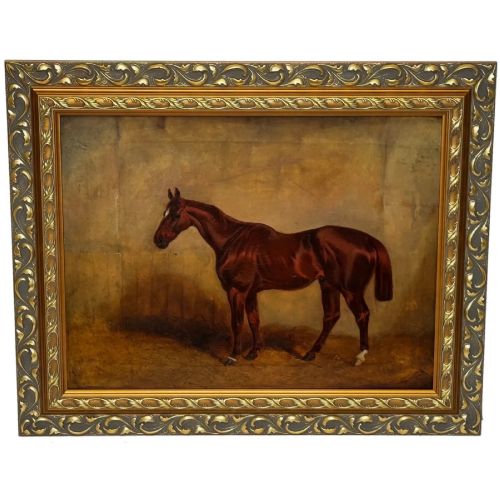
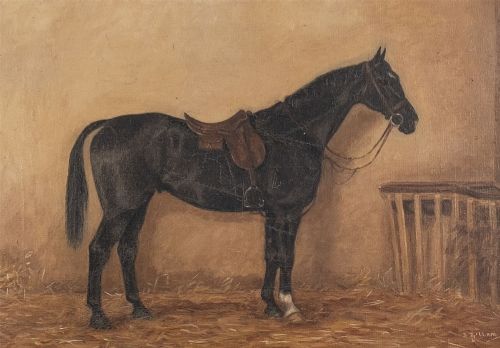
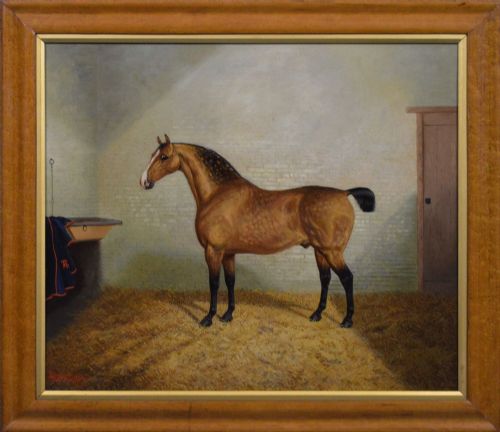
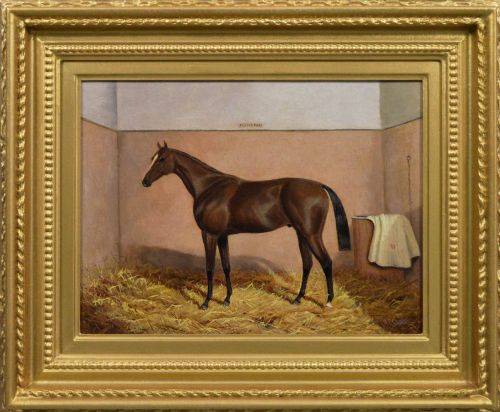
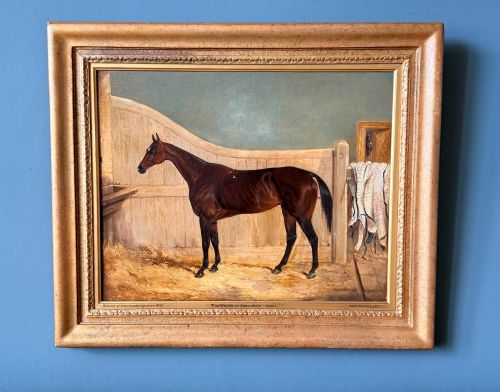
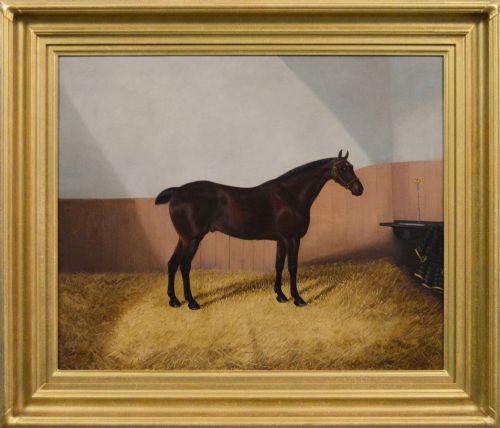
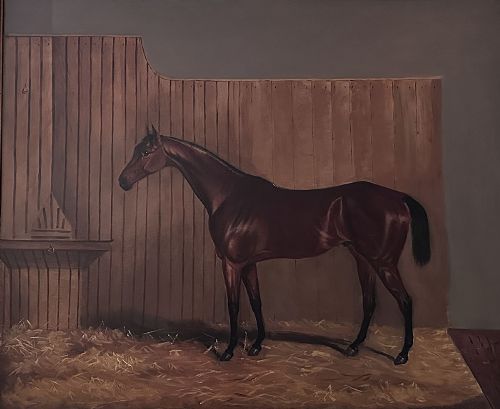
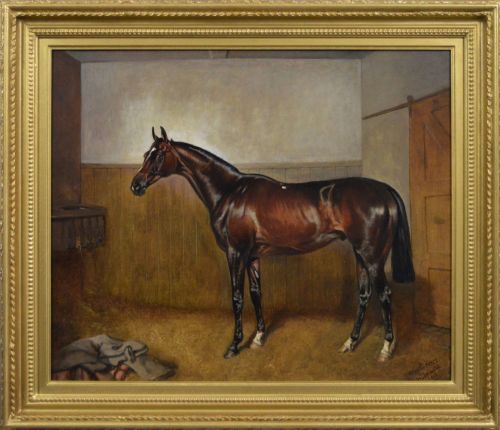
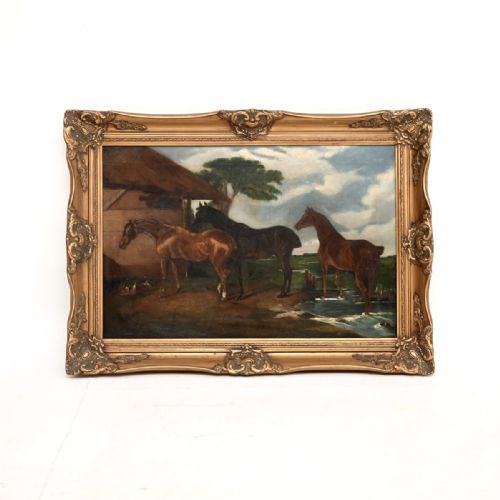
A traditional equine portrait focuses on the depiction of horses, ranging from individual hunters and racehorses to working animals in rural landscapes. These works capture the distinct conformation and personality of specific animals, often recording celebrated winners or everyday farm horses.
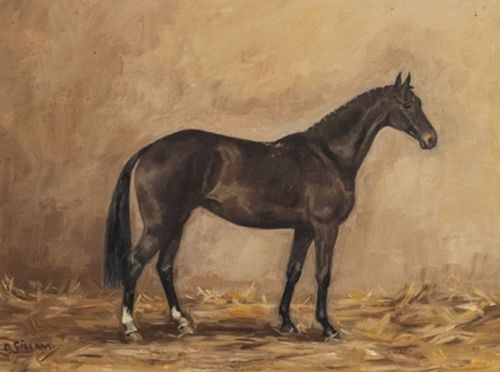
The pieces on this page span the eighteenth, nineteenth, and early twentieth centuries, encompassing Victorian sporting art and Edwardian equestrian studies. Buyers will encounter both intimate canvas studies of horses in stables and broader compositions showing animals with jockeys or grooms.
Most examples utilise oil paint on canvas or wood panel, though occasional watercolours appear. The subjects vary from named champions like Flying Fox and Persimmon to anonymous working shires and bay hunters.
How they were made
Artists typically applied oil paint to stretched canvas or wooden panels, sometimes utilising pine or general wood supports for earlier works. The application of paint builds up the rich texture of the horse coat, whether depicting a glossy bay hunter or a dappled buckskin.
Framing forms an integral part of the presentation, with many period works housed in giltwood frames that complement the depth of the oil paintings. Watercolour paintings on paper offer a lighter alternative, framed behind protective glass.
Traditional Equine Portrait Retail Price Guide 2026
Typical asking prices for traditional equine portrait among the pieces listed under this phrase on Sellingantiques today, from the lower quarter to the upper quarter. They describe what is for sale here now, not the wider market.
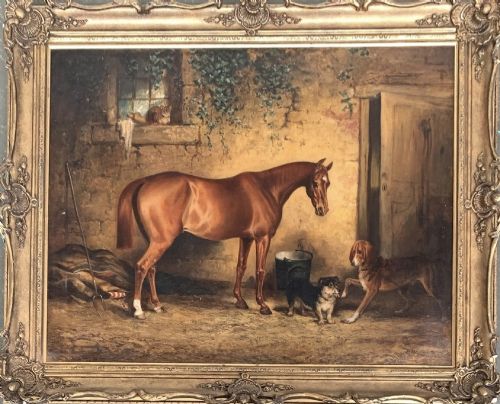
Several horses in these portraits share space with persistent stable cats and attentive farmyard dogs.
What varies in quality
Quality rests primarily on the anatomical accuracy of the horse and the skill with which the artist renders musculature, light upon the coat, and expression. Master painters capture the dynamic tension and precise conformation of an animal, whereas lesser hands produce stiff or disproportionate figures.
The provenance and attribution to recorded artists heavily influence the standing of a painting. Works bearing signatures of established sporting painters or naming specific historic racehorses carry greater artistic and historical significance.
Henry Barraud·Albert Clark·John Alfred Wheeler·Thomas Walker Bretland·George E Sharpe·Benjamin Cam Norton·Clifton Tomson·Abraham Cooper RA·Charles Bilger Spalding RA·W.A. Clark·John Nost Sartorius·William Shayer Snr
The Traditional Equine Portrait Glossary
- Oil on canvas
- A painting technique where pigmented oil paint is applied to a woven fabric support. This medium allows for deep colour saturation and gradual blending.
- Giltwood
- Wood carved and covered with a thin layer of gold leaf. It is commonly found on traditional picture frames from the eighteenth and nineteenth centuries.
- Watercolour painting
- A work executed with water-soluble pigments on paper. These pieces offer a more delicate appearance than heavy oils.
- Sporting art
- A genre of fine art dedicated to the depiction of rural sports, hunting, and prized animals. It forms the backbone of traditional equine portraiture.
- Provenance
- The documented history of ownership of an artwork. It helps verify the authenticity and background of period pieces.
Traditional Equine Portrait: Frequently Asked Questions
What is a traditional equine portrait?
A traditional equine portrait is a painting or watercolour depicting horses, created primarily during the eighteenth, nineteenth, and early twentieth centuries.
These artworks record specific animals, from celebrated racehorses and hunters to working shires, often set within stables, landscapes, or racing greens.
How do I date an equine painting?
Dating relies on stylistic clues, clothing of any figures depicted, framing materials, and clues within the canvas or panel support.
Many nineteenth-century works are marked with specific years or attributed to known artists active within defined periods.
Where should I hang these paintings?
These works suit traditional reception rooms, studies, or hallways where their rich oil colours and gilt frames can be appreciated.
Direct sunlight and damp environments should be avoided to protect the canvas and historical wooden frames.
Are all horses in these portraits named?
Not every horse is identified by name, as many paintings record anonymous hunters, farm horses, or generic rural scenes.
Works depicting famous racehorses or champions often carry inscriptions on the canvas or associated historical records detailing their wins.