
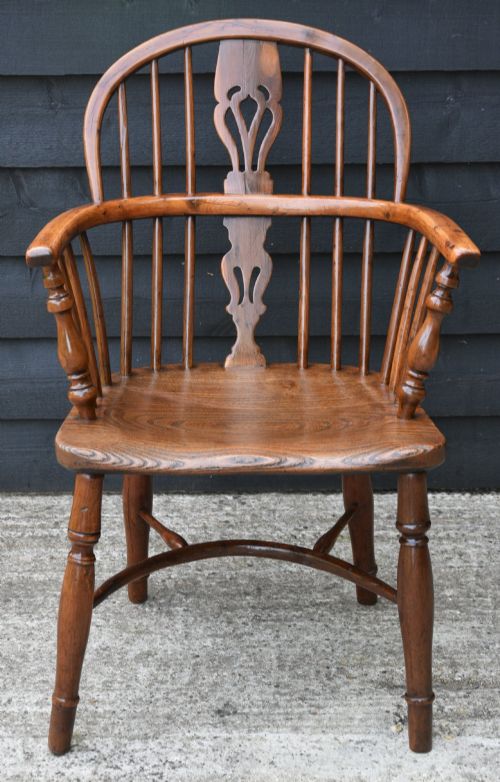
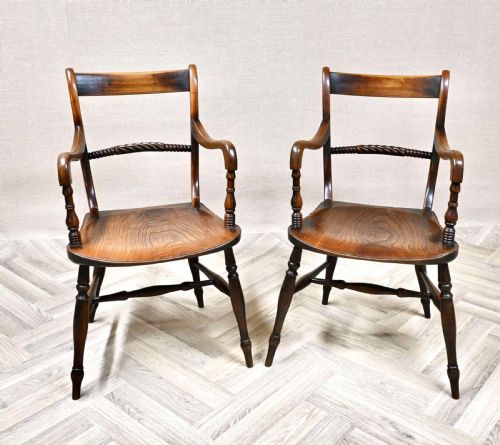
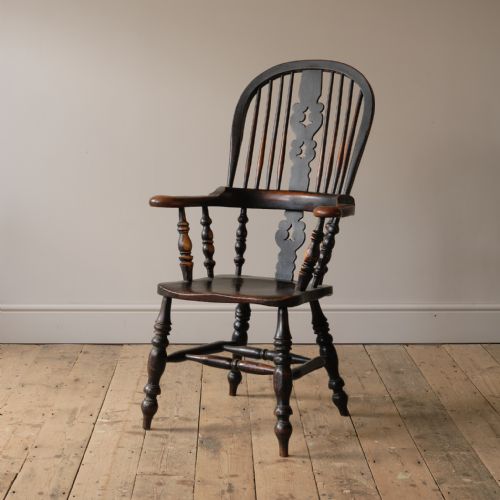
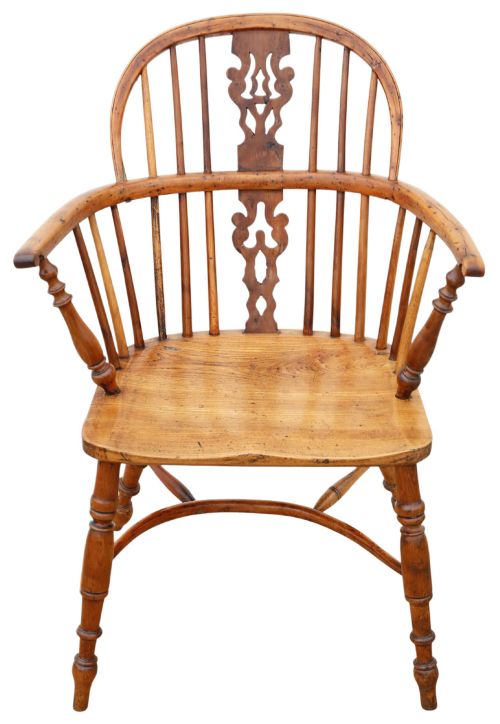
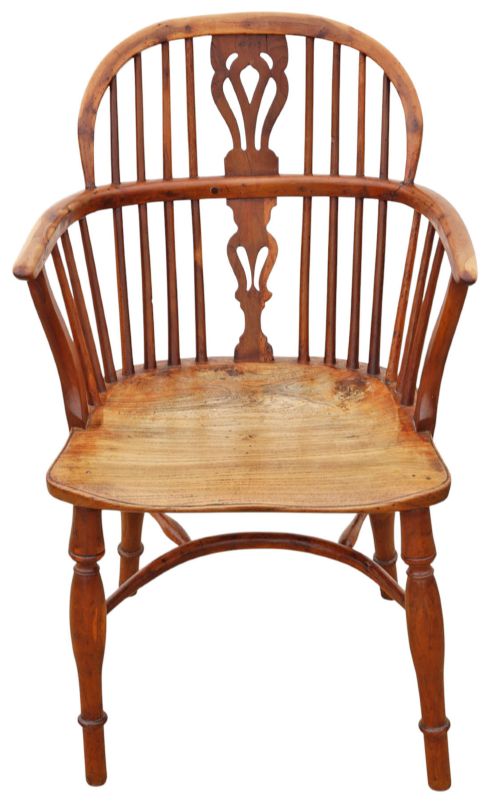

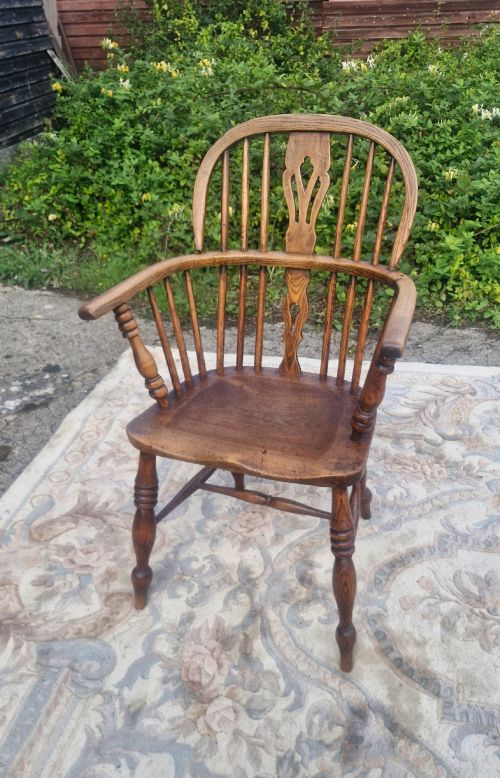

Traditional English Windsor Armchair
A traditional english windsor armchair brings tactile warmth to a room through centuries of vernacular craft.
Traditional English Windsor Armchair
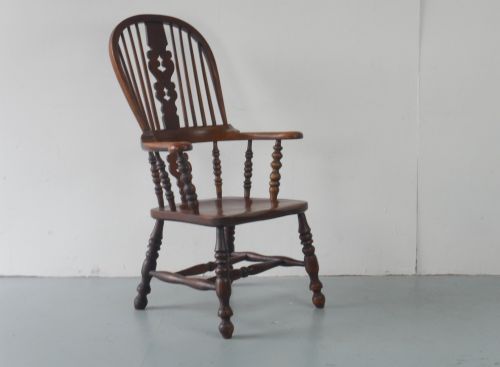
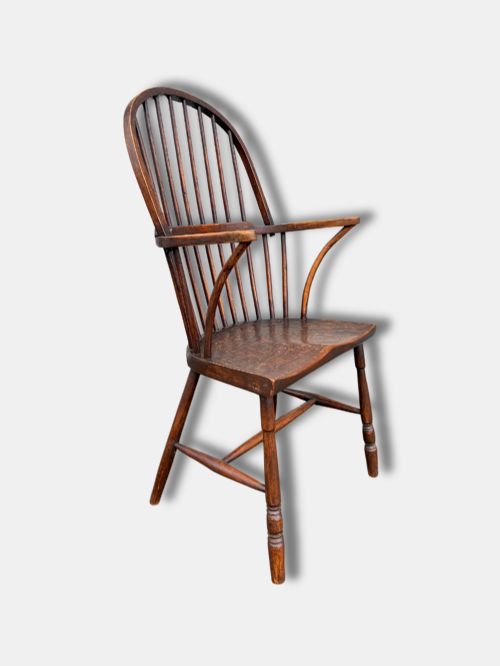
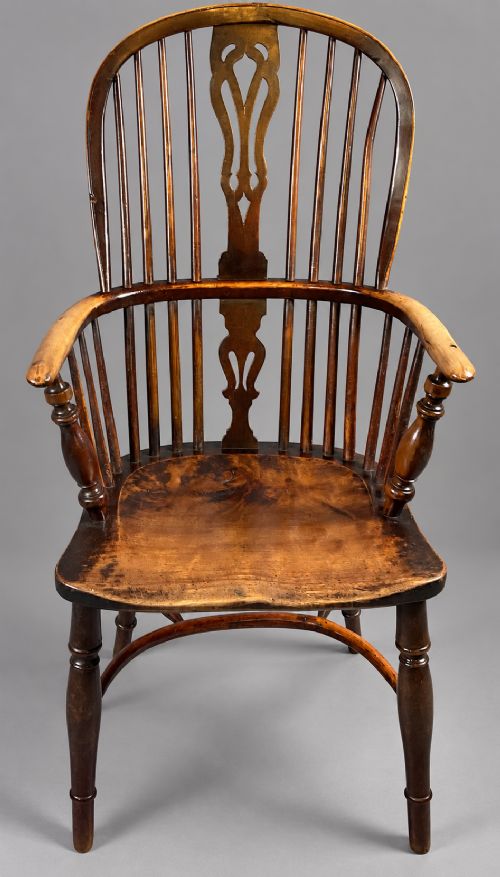
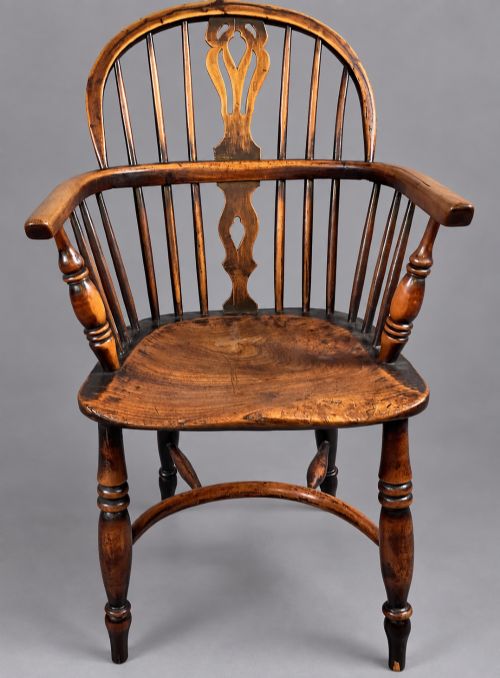
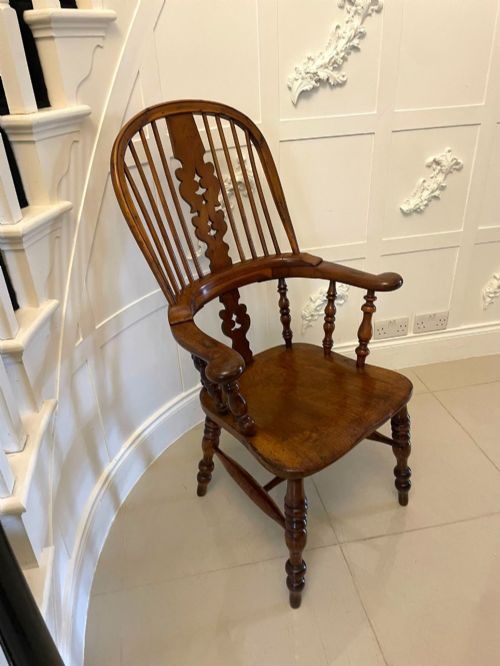
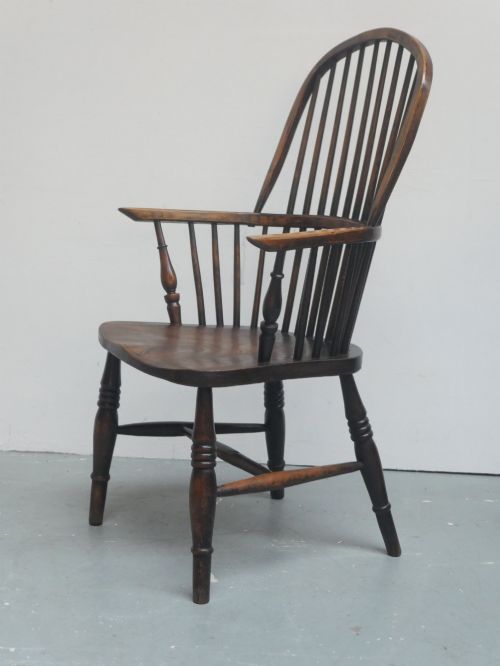
A traditional english windsor armchair is a sturdy seating form defined by a solid wooden seat into which the legs and back spindles are wedged directly. These pieces emerge from regional vernacular traditions spanning the eighteenth, nineteenth, and early twentieth centuries, encompassing farmhouse, kitchen, and parlour settings.
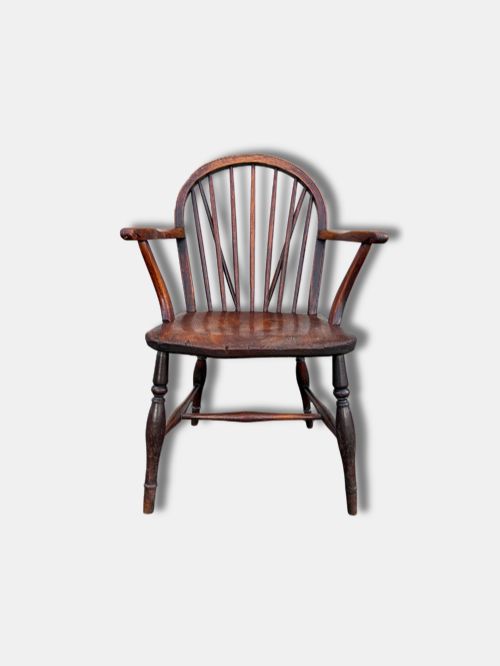
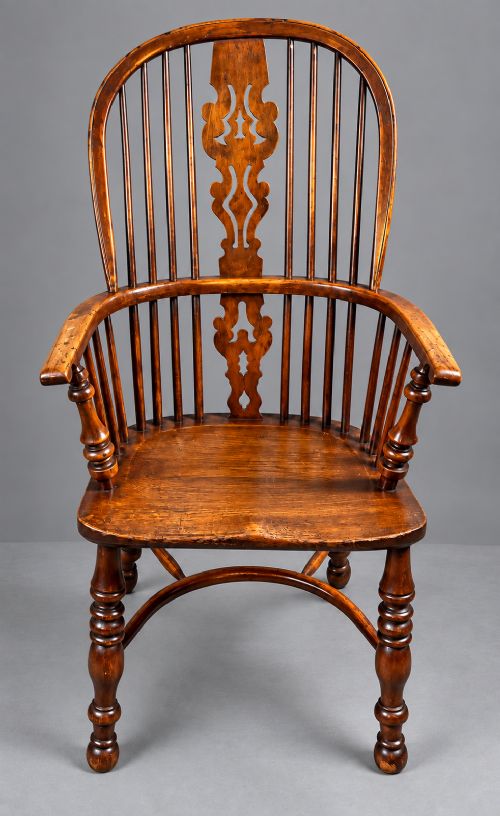
The varieties found on this page span low-back, high-comb, barback, wheelback, and hoop-back designs, often utilised as carver or elbow chairs. They originate from English counties and Scottish workshops, reflecting local timber availability and domestic utility.
Makers fashioned these armchairs for daily domestic resilience, resulting in survivor examples that display practical joinery and honest patination. Buyers encounter everything from compact smoker's bows to expansive high-backed seating intended for fireside comfort.
How They Were Made
Traditional makers combined contrasting native timbers to harness their distinct mechanical properties, pairing elm seats with ash, beech, or oak for spindles and legs. Elm provided a tough, interlocking grain for the carved slab seat that resisted splitting under vertical pressure from the wedged underframe.
Turning lathes shaped the spindles, arms, and legs, while steam bending formed the continuous hoop backs and armbows. Craftsmen secured the components using wedged tenons and drilled socket joints, ensuring rigid construction without metal fixings.
Formats span high-comb backs, low-backs, hoop backs, wheelbacks, and rocking chairs.
What Varies in Quality
Quality rests upon the fluency of the timber selection and the proportional harmony between the bentwood bow and the saddle-shaped seat. Master makers balanced the thickness of the armbow with the slenderness of the turned spindles to achieve structural grace alongside physical support.
The depth of the sculpted seat carving and the richness of the wood grain determine the visual distinction of individual examples. Grain figuring in yew and elm elevates certain pieces, whereas utilitarian kitchen chairs display straightforward ash and beech construction.
J Spencer·Gabbitass Worksop
The Traditional English Windsor Armchair Glossary
- Comb back
- A Windsor chair back featuring a raised horizontal crest rail supported by vertical spindles, resembling the teeth of a comb. This form provides elevated upper back support.
- Hoop back
- A continuous bentwood bow forming the back and arms of the chair in a single flowing line. It distributes weight evenly across the seat structure.
- Smoker's bow
- A low-backed armchair with a rounded continuous arm rail, frequently found in nineteenth-century domestic and tavern interiors. It is also known as a captain's chair.
- Wheelback
- A Windsor chair incorporating a pierced wooden splat carved in the shape of a spoked wheel within the backrest. This decorative motif gained popularity during the nineteenth century.
- Vernacular
- Objects designed by regional artisans for local practical use rather than following academic architectural styles. These pieces emphasise functional honesty and local timber usage.
Traditional English Windsor Armchair: Frequently Asked Questions
What woods were used for these chairs?
Makers utilised native hardwoods, most commonly pairing elm for the solid carved seats with ash or beech for the turned legs and spindles.
Yew wood also appears frequently in finer regional examples, prized for its warm figuring and deep natural lustre.
How do I date a windsor chair?
Dating relies on observing structural changes, such as the transition from heavy eighteenth-century comb backs to Victorian wheelbacks and steam-bent hoops.
Tool marks, timber wear, and the construction methods used for the undercarriage provide further clues to the period of origin.
Were these chairs painted originally?
Many regional examples received coats of dark stain, lacquer, or paint to protect the mixed timbers or imitate more expensive woods.
Over decades of domestic use, these early finishes often wore down to reveal the underlying grain and patinated timber.
How should I care for elm and ash?
Maintain stable humidity in the room and apply occasional natural wax to nourish the dry historical wood surfaces.
Avoid placing antique seating near direct heat sources to prevent timber shrinkage and movement in the pegged joints.