


Traditional Elm Windsor Chairs
Traditional elm windsor chairs combine sturdy country utility with sculptural wooden seats, offering lasting comfort for daily dining and writing.
Traditional Elm Windsor Chairs
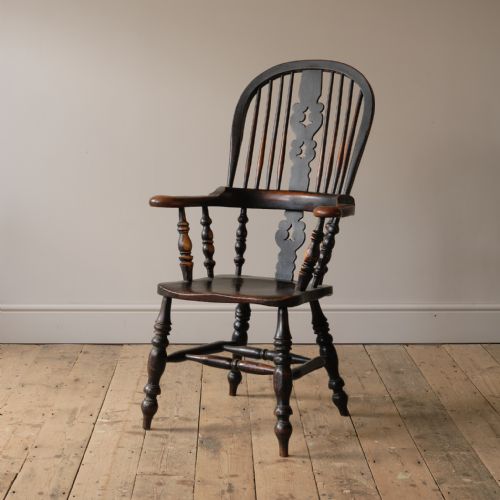
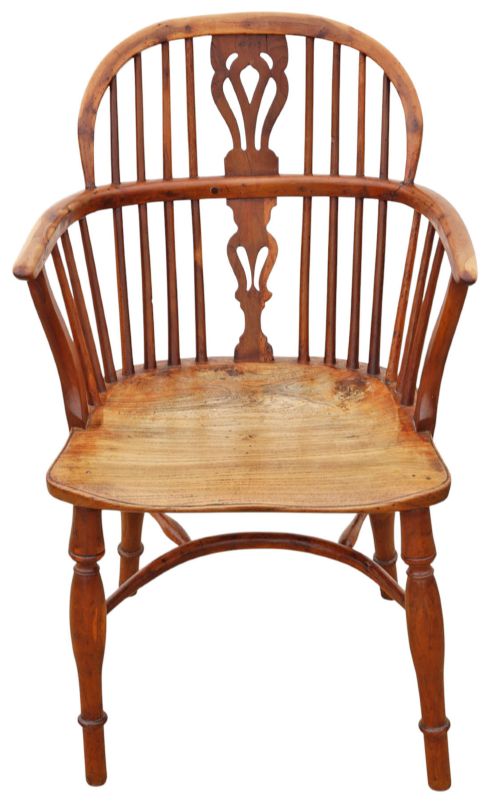
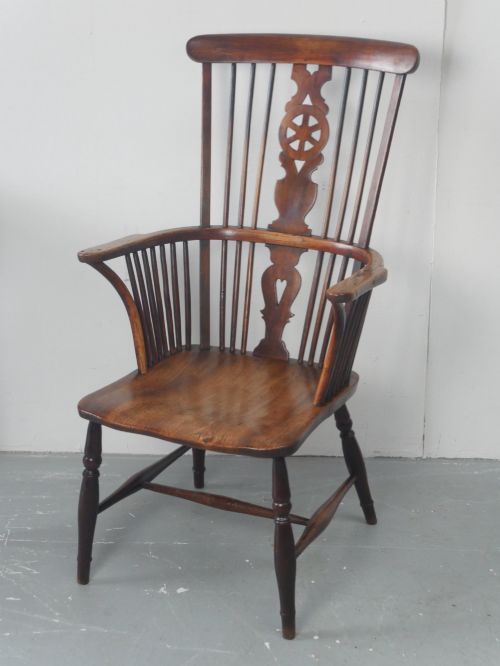
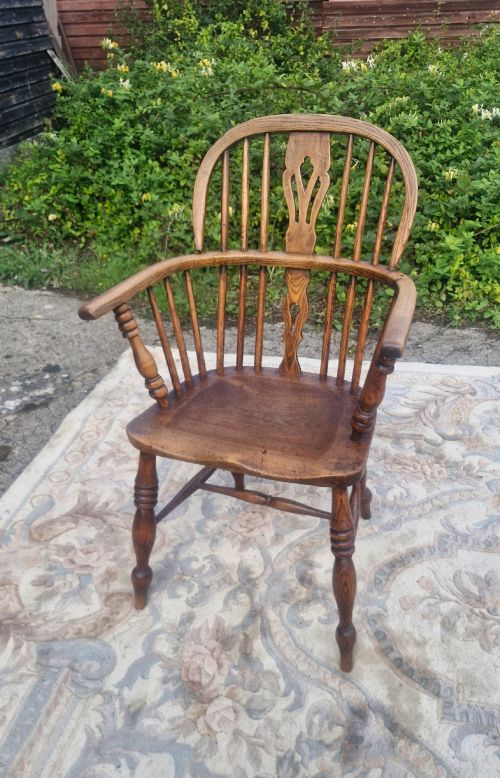
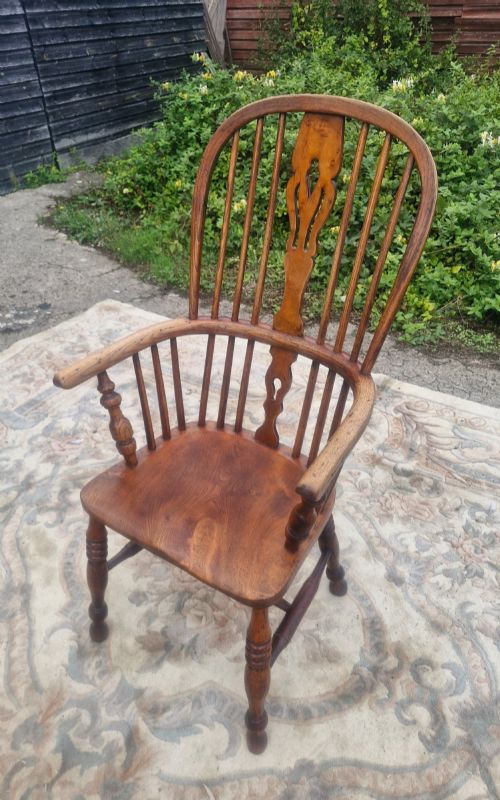
Traditional elm windsor chairs represent a sturdy lineage of seating rooted in English country vernacular design. When exploring traditional elm windsor chairs, buyers encounter forms ranging from low kitchen dining seats to grand high-backed carvers.
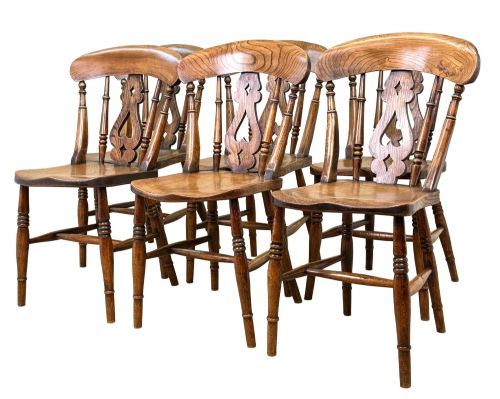
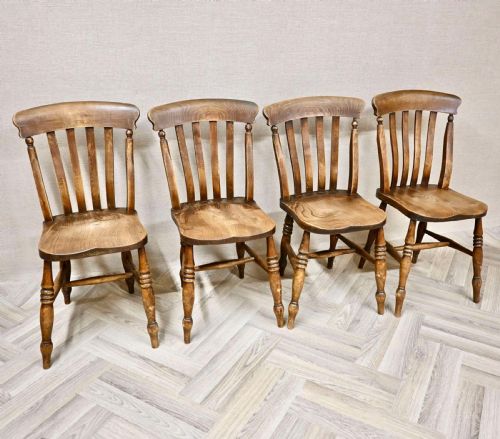
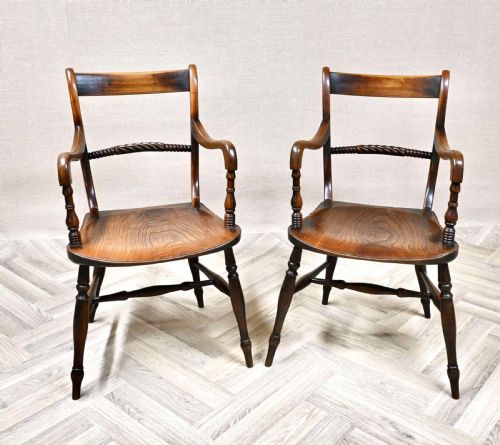
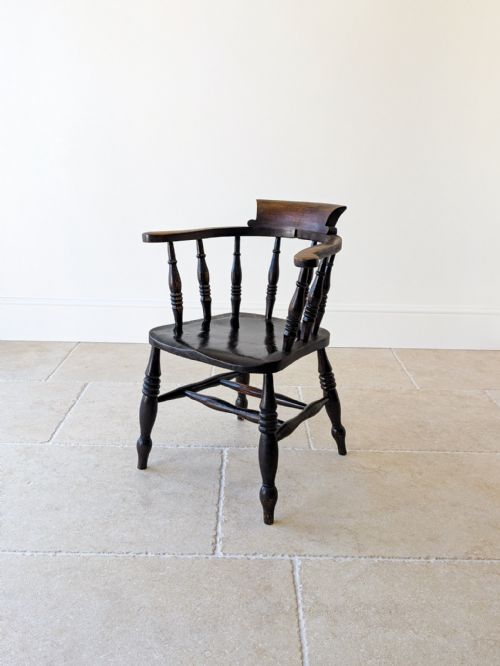
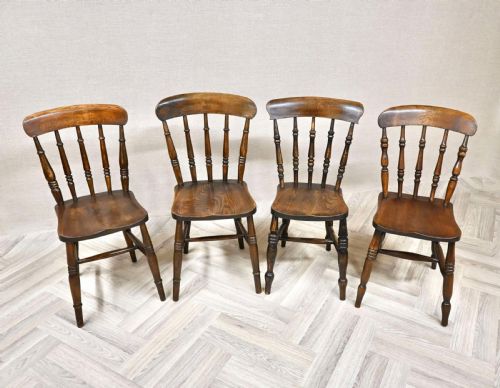
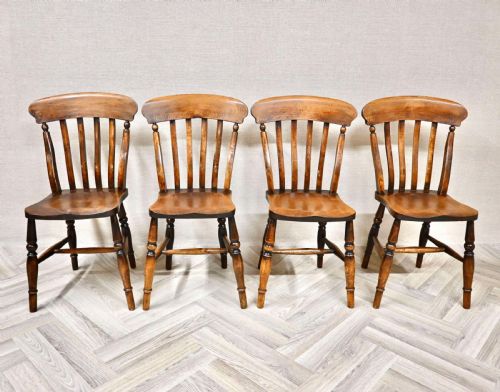
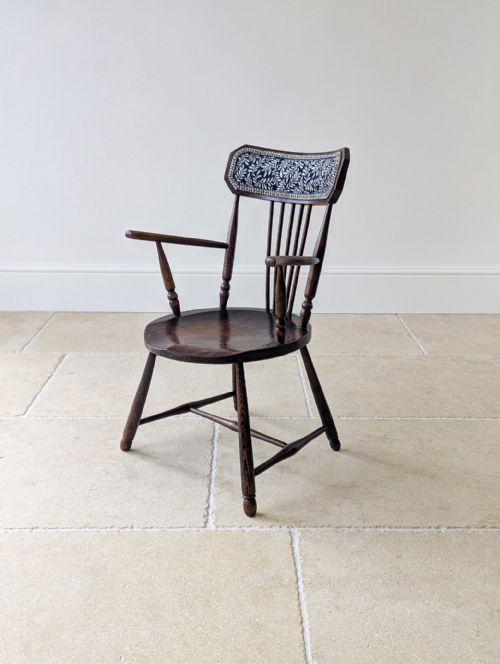
The selection on this page centres primarily on nineteenth-century pieces alongside eighteenth-century examples. Common variants include wheelbacks, lathbacks, stickbacks, and smoker's bows built for farmhouse kitchens and writing desks.
How They Were Made
Maker construction relies on a clever combination of contrasting timbers selected for specific structural roles. Elm provides the solid, heavily dished seat base because its interlocking grain resists splitting under pressure.
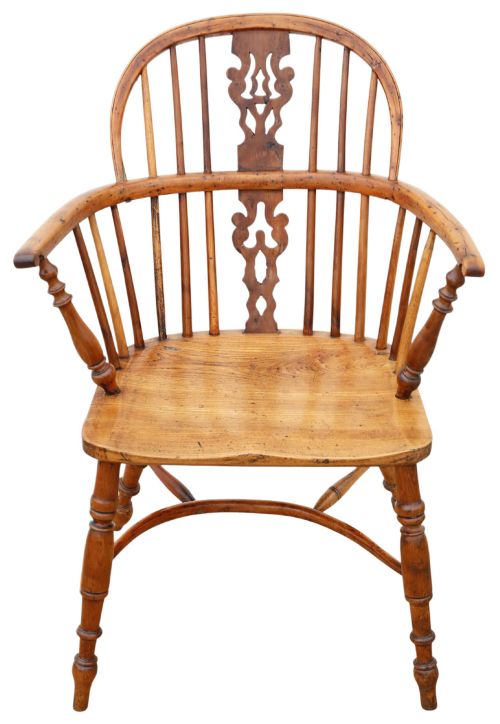
Ash and beech supply the slender turned spindles, legs, and steam-bent bows that form the upper framework. Yew appears in finer examples, offering rich figuring and strength throughout the arms and curved crests.
Listings feature pieces spanning the eighteenth, nineteenth, and early twentieth centuries, utilising elm, ash, beech, oak, and yew.
What Varies in Quality
Quality rests upon the depth of the saddle seat carving and the grace of the turned undercarriage components. Superior examples display generous proportions, thick elm planks with deep dishing, and well-balanced stretcher systems like the crinoline frame.
Thinner timber selections, replaced spindles, or clumsy repairs diminish the integrity of a piece. The relationship between the bentwood bow and the main seat plank determines the overall balance and visual presence.
J Spencer
The Traditional Elm Windsor Chairs Glossary
- Comb back
- A Windsor chair variation where the vertical spindles extend upward to support a horizontal crest rail resembling an eighteenth-century hair comb.
- Crinoline stretcher
- An arched undercarriage brace connecting the legs of a Windsor chair that strengthens the structure while adding decorative curved lines near the floor.
- Smoker's bow
- A low-backed Windsor armchair featuring a continuous curved armrail supported by turned spindles, historically common in West Country pubs and smoking rooms.
- Wheelback
- A Windsor chair backrest centred by a pierced splat carved in the shape of a spoked carriage wheel.
- Dished seat
- A wooden chair seat hollowed out by hand using an adze and scorp to create a comfortable ergonomic contour for the sitter.
Traditional Elm Windsor Chairs: Frequently Asked Questions
What is the difference between a captain's chair and a smoker's bow?
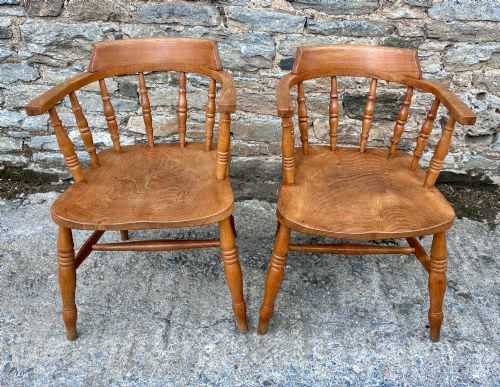
Captain's chairs typically feature a compact rounded back supported by numerous short spindles set directly into a thick wooden seat. Smoker's bows share a similar low profile but often utilise a more sweeping continuous armrail.
Both forms served utilitarian roles in nineteenth-century offices, kitchens, and public houses before entering domestic dining rooms.
Can I use these chairs around a modern dining table?
Traditional elm windsor chairs fit comfortably into contemporary dining spaces due to their versatile vernacular aesthetic and sturdy construction. Their varied seat heights and arm clearances require careful measurement against modern table aprons.
Mixing wheelbacks with simple stickbacks creates an authentic country kitchen look without matching every chair.
Why is elm used for the seats?
Elm possesses a tangled, interlocking grain structure that makes the wood exceptionally difficult to split under heavy downward loads. This property allowed makers to carve deeply dished saddle seats without risking structural failure.
Ash and beech were chosen for the upright parts because those straight-grained timbers bend easily with steam and hold tight turns on a lathe.