


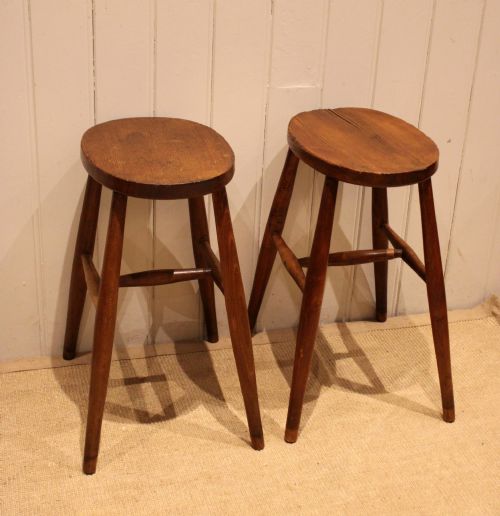


Traditional Elm Stool
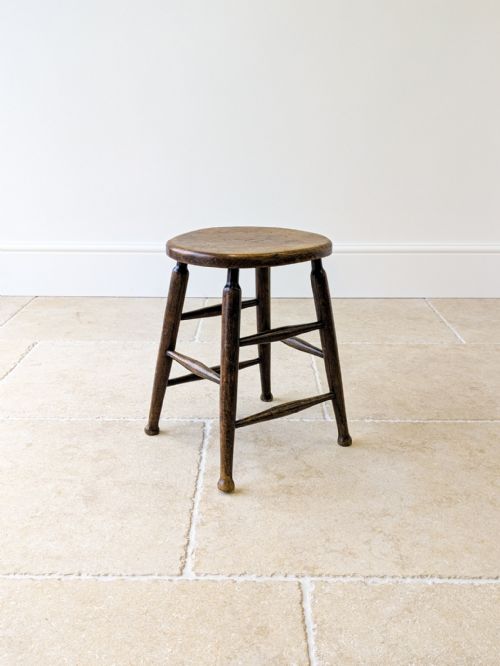
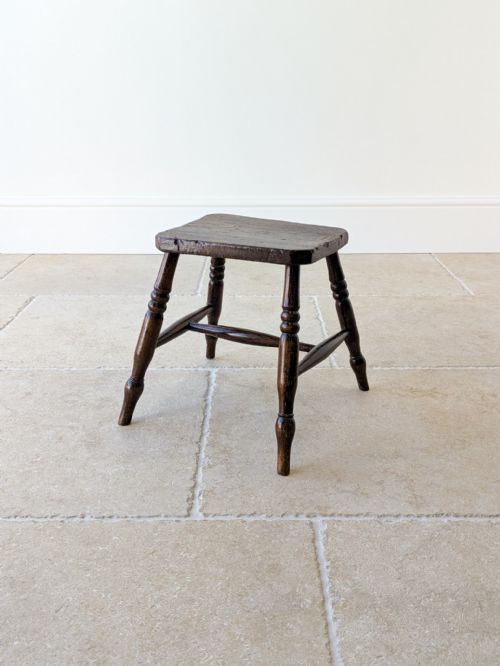
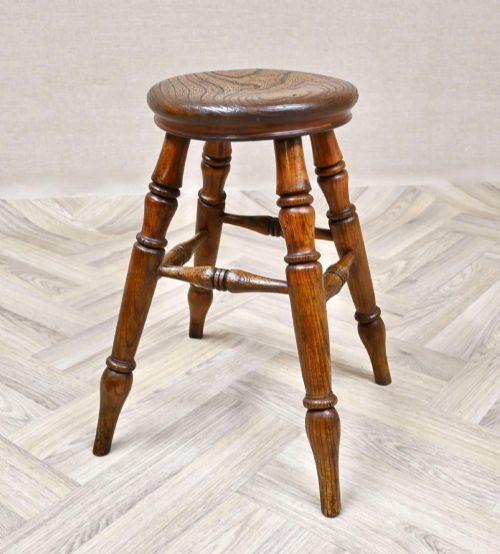
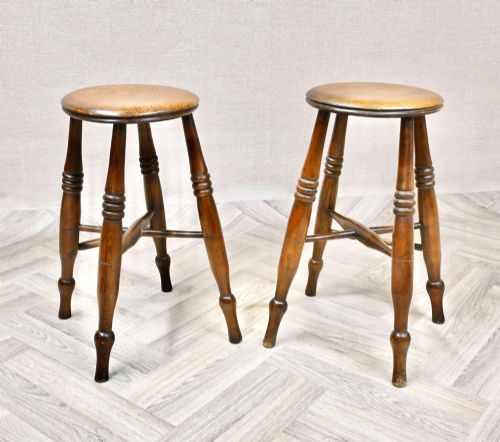
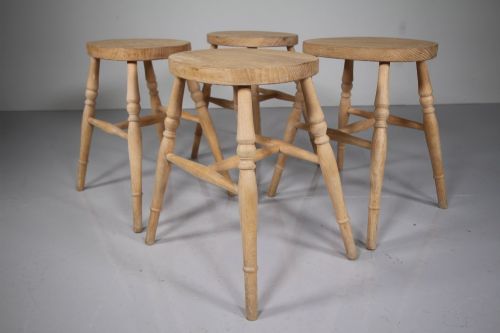
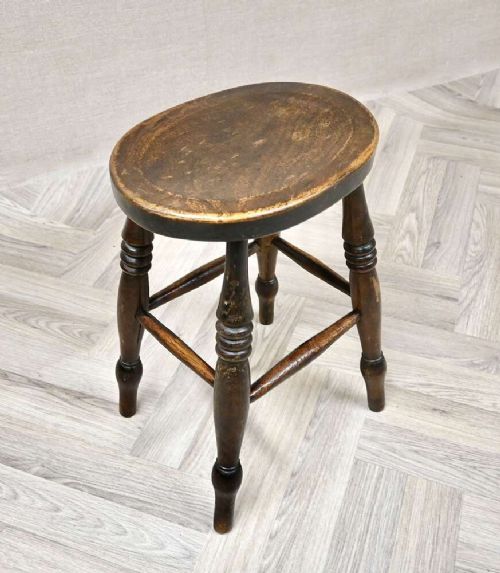
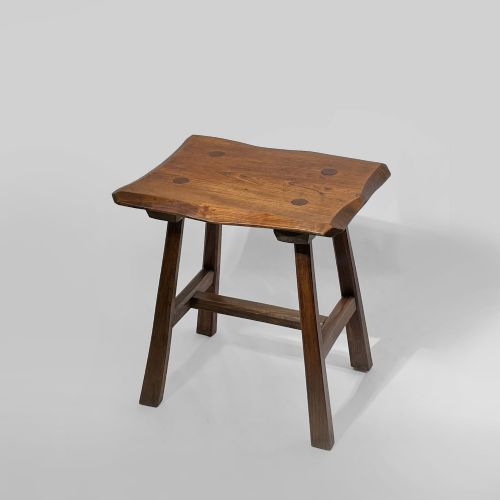
These traditional elm stool examples offer honest utility, formed from durable timber with sturdy legs and practical seats designed for daily farmhouse life.
Traditional Elm Stool
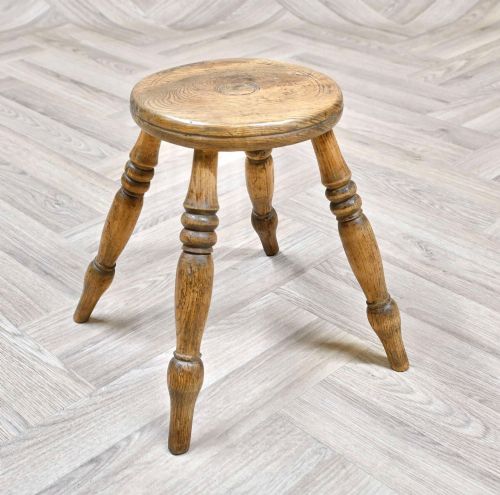
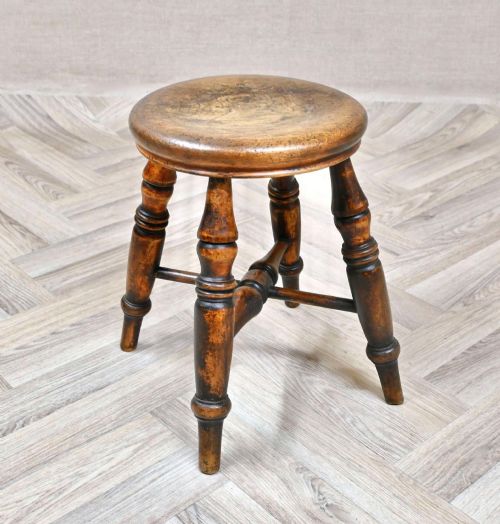
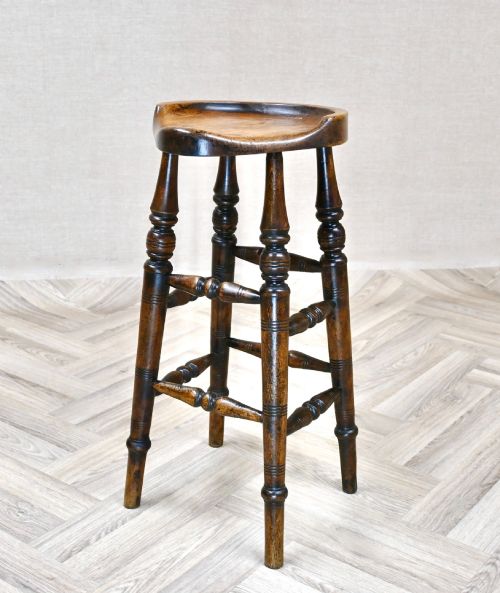
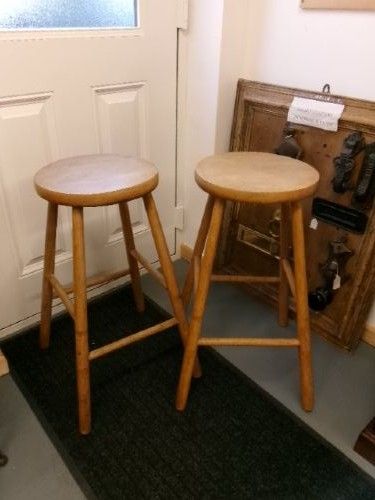
When you search for a traditional elm stool, you encounter practical seating born from rural workshops across the nineteenth and eighteenth centuries. These pieces encompass everything from dairy and milking seats to taller bar designs and kitchen helpers.
The versions most common on this page combine an elm seat with supportive legs fashioned from beech, ash, or oak. Their forms remain resolutely unpretentious, serving hardworking domestic and agricultural roles in British and European country settings.
How they were made
Maker's hands shaped dense elm timber for the seats, valued for its resistance to splitting when wedged with tenons. Supporting legs in beech or ash were typically turned on a pole lathe before being wedged tightly into drilled holes through the underside of the seat.
Surface finishes range from bare scrubbed timber to traces of old paint and historic lacquer. Carpenters relied on simple pegged joints and primitive wedge construction to ensure daily stability under heavy loads.
Traditional Elm Stool Retail Price Guide 2026
Typical asking prices for traditional elm stool among the pieces listed under this phrase on Sellingantiques today, from the lower quarter to the upper quarter. They describe what is for sale here now, not the wider market.
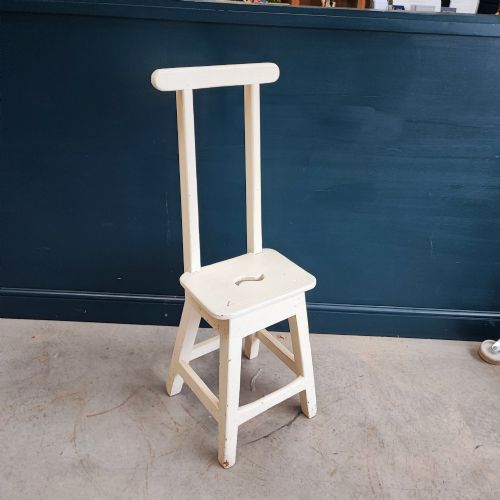
Listings span the eighteenth, nineteenth, and twentieth centuries, featuring elm combined with beech, ash, and painted timber.
What varies in quality
Quality rests in the proportional balance of the turned legs and the thickness of the solid timber top. A well-balanced frame shows clean junction work where the legs meet the underside of the seat without excessive wobble.
Desirable examples retain their original surface patination, whether aged through scrubbing or preserved in old paint. Lesser versions suffer from over-zealous sanding or replacement legs that disrupt the historic harmony of the piece.
The Traditional Elm Stool Glossary
- Elm
- A durable hardwood characterised by an interlocking grain that resists splitting. Furniture makers prized it for stool seats that endured constant movement and heavy wear.
- Vernacular
- Everyday objects made by local craftsmen using regional materials without grand architectural pretension. These pieces reflect practical domestic needs rather than fashionable metropolitan trends.
- Windsor
- A construction method where legs and spindles are fitted directly into a solid carved seat rather than a separate frame. This technique provided exceptional strength for simple country seating.
- Patina
- The surface sheen and colour acquired by timber through decades of handling, polishing, and natural ageing. It offers visual evidence of a piece's history and active use.
Traditional Elm Stool: Frequently Asked Questions
What were traditional elm stools used for?
These pieces served practical daily tasks around farms, dairies, and kitchens where movable seating was essential. Workers used them for milking, pantry work, and sitting at low tables.
Their robust construction allowed them to double as small side tables or step-ups when reaching high shelves.
How do I care for a traditional elm stool?
Keep the timber away from direct heat sources and sudden temperature shifts to prevent the wood from drying out or splitting. An occasional application of clear beeswax helps nourish the surface.
Clean the wood using a soft, dry cloth rather than harsh liquid polishes that might damage historic painted or scrubbed finishes.
How can I tell the age of a stool?
Examine the tool marks on the underside of the seat, where adze and drawknife traces reveal hand-working methods. The type of joint construction and the wear patterns around the footings also indicate age.
Older examples often display shrinkage cracks and a deep, mellow surface patination that modern replicas cannot replicate.
Are these stools comfortable for daily sitting?
Most country stools feature sculpted saddle seats shaped to fit the body through careful adzing. While they lack upholstery, their ergonomic wooden contours provide surprising support for short periods.
They function well pulled up to a desk, kitchen island, or used as an occasional perch in a hallway.