
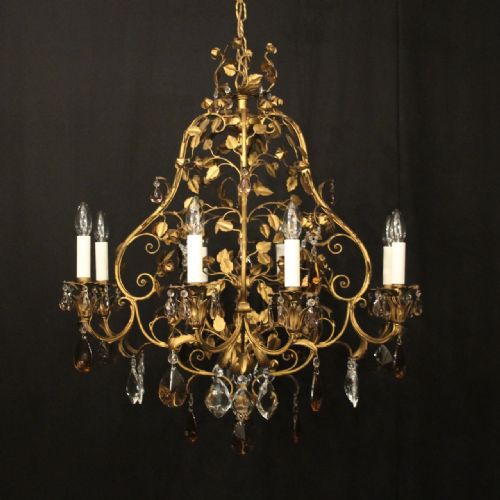


Traditional Eight Light Chandelier
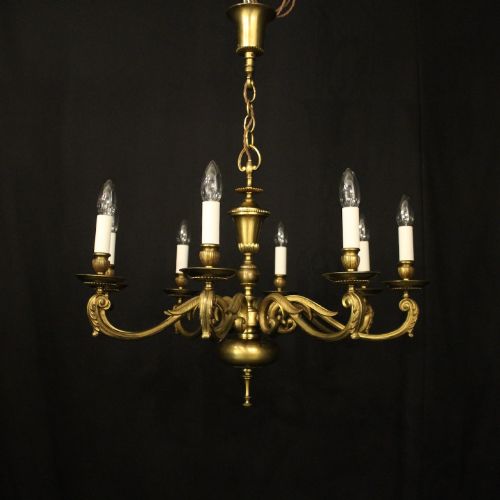
A traditional eight light chandelier brings grand scale and abundant illumination to a high ceiling, drawing the eye upwards with its multiple branching arms.
Traditional Eight Light Chandelier
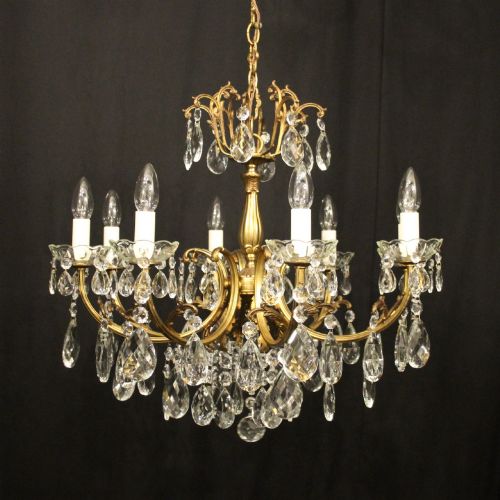
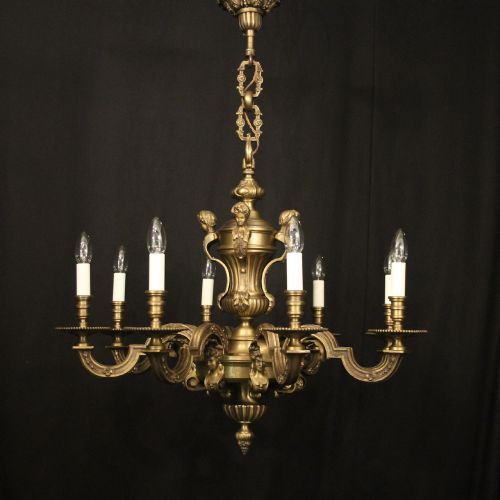
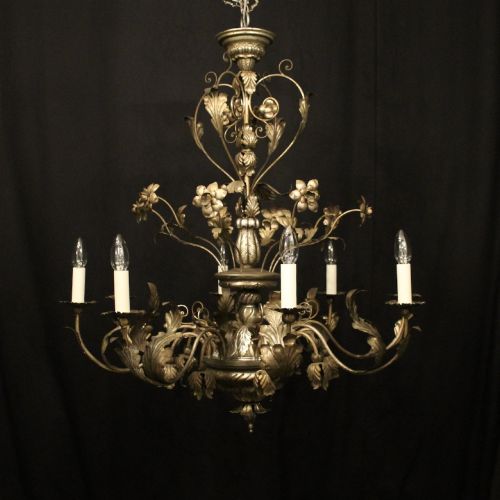
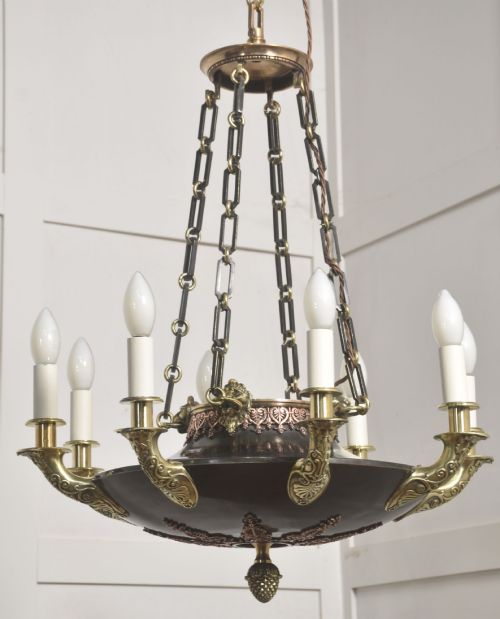
When searching for a traditional eight light chandelier, you encounter multi-armed fixtures originating primarily from the nineteenth century, the Edwardian era, and the decades around nineteen-twenty and nineteen-thirty. These pieces span French Chateau, French Rococo, Empire Revival, and Dutch Baroque styles, offering substantial presence for principal rooms.
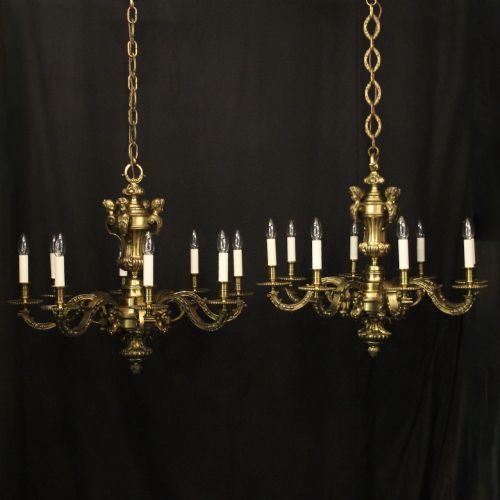
The dominant forms on this page feature eight distinct arms or branches radiating from a central column, often ornamented with cast acanthus leaf mounts or delicate crystal drops. Most examples rely on brass, bronze, gilded bronze, or gilt metal as their primary structural material, frequently paired with glass and crystal elements.
Origins heavily lean towards French and Dutch workshops, encompassing styles such as French Neoclassical, English Neoclassical, and Dutch Baroque Revival. Buyers select these fixtures to anchor historic interiors or to introduce period character into substantial modern spaces.
Distinguishing quality in eight light chandeliers
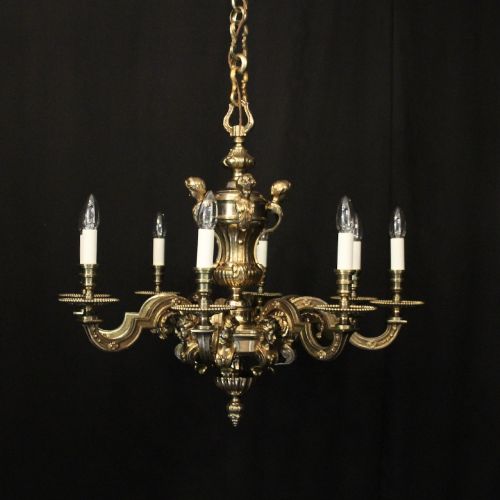
Quality reveals itself in the crispness of the metal casting, particularly in the definition of decorative elements like acanthus leaf mounts and scroll arms. Finer pieces demonstrate superior hand-chasing after casting, which removes casting seams and sharpens intricate botanical or architectural motifs.
The choice of materials and the richness of the surface finish dictate the upper tier of the range. Heavy-gauge bronze, deep mercury gilding, and dense, highly refractive crystal glass separate exceptional workshop output from simpler commercial production.
Current listings feature pieces spanning the nineteenth century, Edwardian era, nineteen-twenty, and nineteen-thirty, predominantly constructed from brass, bronze, and crystal.
The Traditional Eight Light Chandelier Glossary
- Acanthus leaf
- A classical ornamentation motif derived from the foliage of the Mediterranean acanthus plant. Casters frequently utilised this design to embellish the shoulders and arms of brass and bronze chandeliers.
- Cage chandelier
- A lighting form where a metal framework encloses the central stem and supports numerous glass drops or beads. This style became particularly popular in French workshops during the early twentieth century.
- Gilded bronze
- Also known as ormolu, this material consists of a bronze base treated with a finely ground gold-mercury amalgam. The technique produces a rich, durable golden surface that resists tarnishing over centuries.
- Scroll arm
- A curved branching member shaped like a spiral or scroll that supports a drip pan and candle nozzle. These arms define the silhouette of eighteenth and nineteenth-century multi-branch fixtures.
- Toleware
- Painted or lacquered sheet metal utilised in specific decorative lighting components. It provides vibrant colour contrast against polished brass and gilt metal elements.
Traditional Eight Light Chandelier: Frequently Asked Questions
How do I clean an antique chandelier?
Dust the frame and crystal elements regularly with a soft feather duster to prevent grime accumulation.
For deeper cleaning, apply a mild soapy solution to a cloth and wipe metal surfaces gently, avoiding harsh commercial polishes that strip historical patinas.
Can these chandeliers be wired for modern electricity?
Most antique fixtures of this scale have already been adapted for modern electrical standards during their lifespan. A qualified electrician can easily inspect the internal wiring and install contemporary bulb fittings.
Rewiring ensures the chandelier meets current safety regulations while preserving the historical exterior presentation.
What ceiling height do I need?
These eight arm fixtures possess substantial physical dimensions and require rooms with generous vertical space to hang properly. They suit formal dining rooms, entrance halls, and high-ceilinged reception spaces.
Ensure adequate clearance beneath the lowest pendant point for foot traffic and door swings.
How do I distinguish French from Dutch styles?
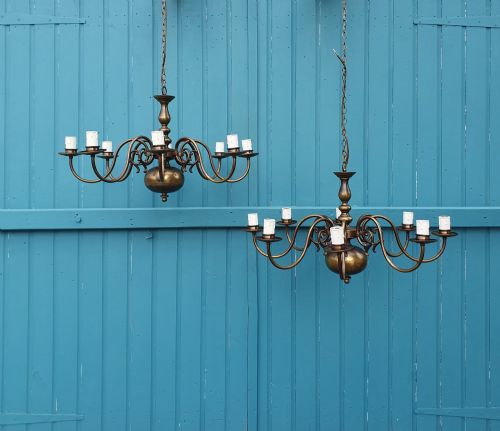
French examples frequently exhibit Neoclassical, Rococo, or Empire Revival influences with refined gilded bronze, crystal drops, and elaborate casting. Dutch pieces often emphasise robust brass construction with simpler, heavy scroll arms rooted in Baroque traditions.
Examining the metal alloy and decorative vocabulary clarifies the regional workshop origin.