





Traditional Drop Dial Clock
A traditional drop dial clock is a reliable wall timekeeper that brings practical British horology and handsome timber to a room.
Traditional Drop Dial Clock
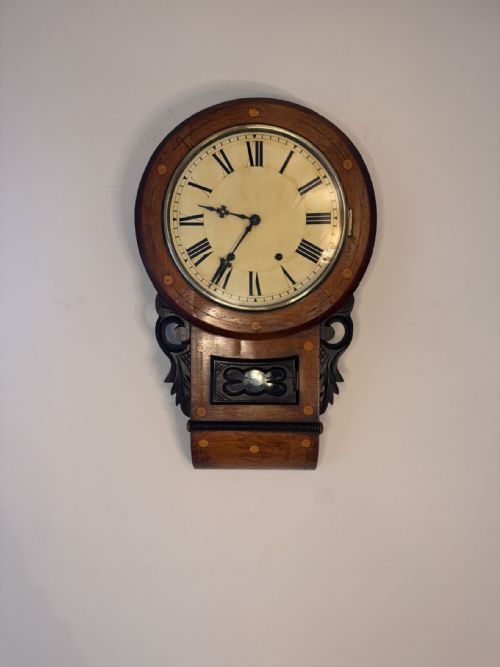
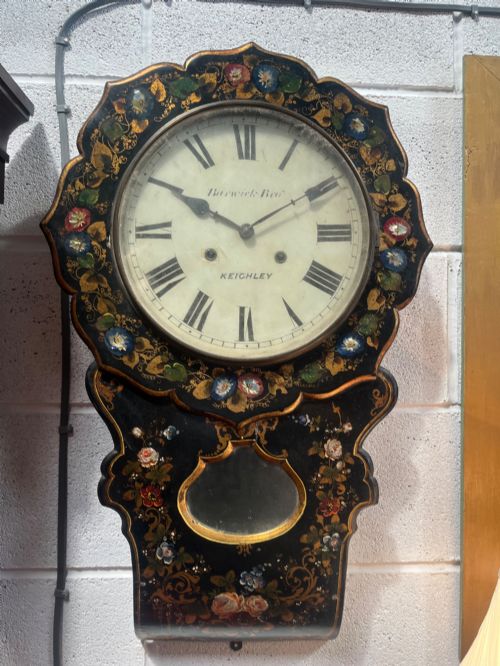
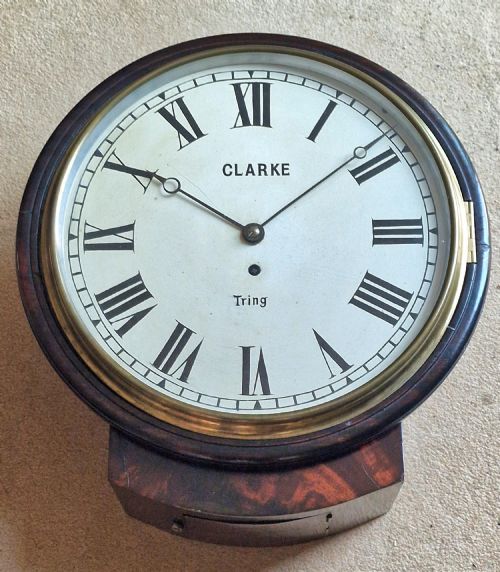
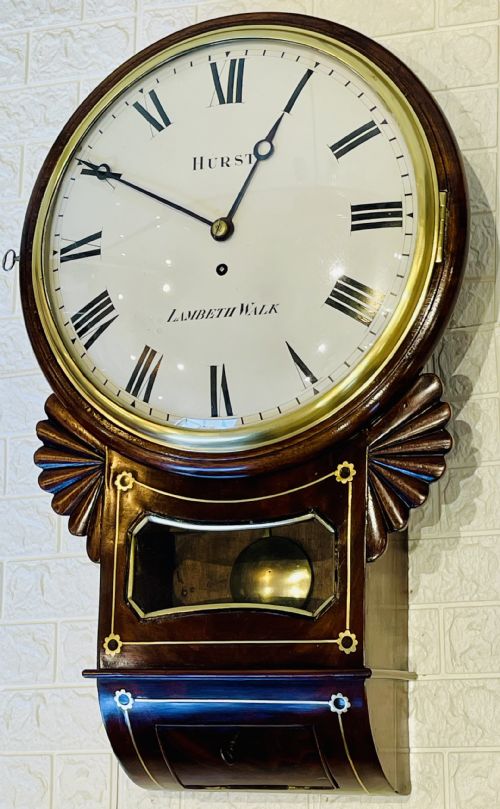
A traditional drop dial clock is a wall-mounted timepiece featuring an upper circular dial and an extended lower case designed to house a pendulum. These pieces appear predominantly from the nineteenth century, including Victorian, Regency, and Georgian periods, alongside Edwardian examples.
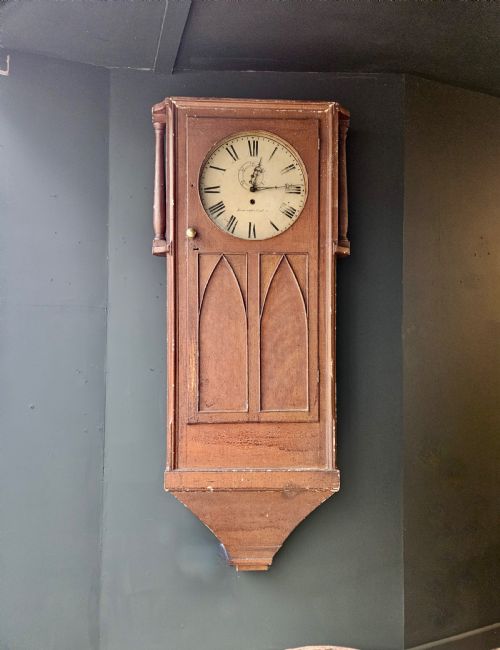
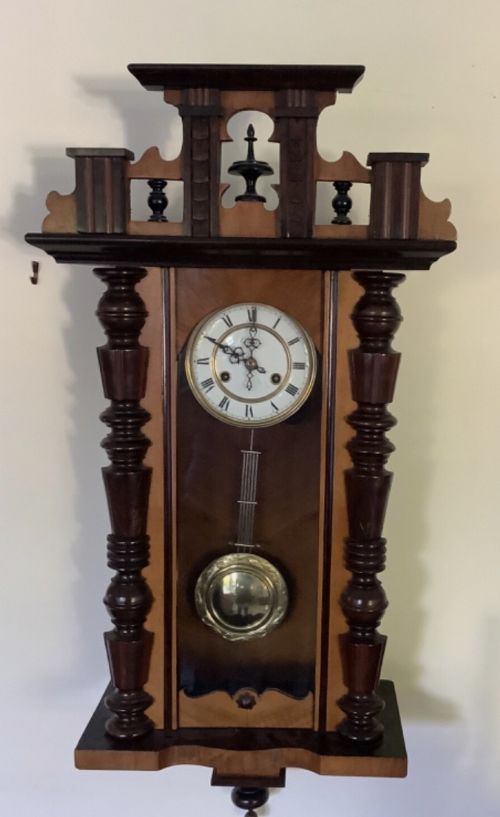
The specimens on this page take the form of wall clocks and tavern clocks constructed in various dimensions. Makers house these movements in timber housings designed for public spaces, offices, and domestic halls.
Buyers encounter variations ranging from simple single fusee timepieces to twin fusee striking movements with bell-striking capabilities. The cases incorporate distinct lower boxes with side doors to allow access to the pendulum bob.
Materials and construction
Horologists built the cases of a traditional drop dial clock using solid timbers such as mahogany, rosewood, walnut, oak, and pine, occasionally applying ebonised finishes or mother of pearl inlay. Glass protects the painted metal or wooden dials, while brass components form the internal gear trains and bezels.
Makers utilised fusee movements driven by a cord or chain wrapped round a conical drum to maintain steady power as the mainspring uncoils. These mechanisms sit behind painted dials, which often display the maker's name and location of origin.
Traditional Drop Dial Clock Retail Price Guide 2026
Typical asking prices for traditional drop dial clock among the pieces listed under this phrase on Sellingantiques today, from the lower quarter to the upper quarter. They describe what is for sale here now, not the wider market.
Distinctions in quality
Quality in a traditional drop dial clock rests upon the crispness of the cabinetwork and the sophistication of the internal movement. Twin fusee striking mechanisms represent a higher grade of engineering than simple single fusee timepieces.
The choice of timber and secondary decoration elevate certain pieces, with figured mahogany, rosewood veneers, and built-in wooden brackets marking out superior workshops. Original painted dials and untouched movement components carry greater weight among collectors.
George Clarke·Henry Lamb·Joseph Mansfield·John Thwaites·Edward Hannam
The Traditional Drop Dial Clock Glossary
- Fusee
- A conical pulley connected to the mainspring barrel by a chain or cord. This device ensures uniform torque is delivered to the gear train as the spring unwinds.
- Drop dial
- A clock design where the circular dial sits above an extended lower case. This lower section encloses the swinging pendulum.
- Tavern clock
- A large wall clock with a prominent dial and a long trunk, frequently found in public houses and coaching inns during the eighteenth and nineteenth centuries.
- Double weight
- A clock movement driven by two suspended weights rather than a mainspring. These systems require vertical drop space within the case.
Traditional Drop Dial Clock: Frequently Asked Questions
How do I wind a fusee wall clock?
Winding requires a dedicated key inserted into the dial aperture to tension the fusee chain or cord. Care must be taken not to overwind the mechanism.
Most traditional movements run for eight days on a single wind, demanding steady, measured turns until resistance is felt.
Where should I hang a wall clock?
These clocks require a sturdy wall and secure fixings to support the weight of the timber case and internal movement. A solid masonry wall or firm stud positioning prevents vibration.
Level placement ensures the pendulum beats evenly, which keeps the timekeeping accurate throughout the day.
What is a twin fusee movement?
A twin fusee movement separates the timekeeping train from the striking train, each powered by its own fusee cone and spring. This configuration provides independent power sources for the clock and the bell.
Clocks with this feature typically sound the hours on a cast brass bell mounted inside the upper case.
How do I distinguish Regency from Victorian examples?
Regency clocks generally date from the early nineteenth century, displaying restrained lines and select timber grains. Victorian pieces span a broader later era, encompassing more varied decorative styles.
Regional differences and maker signatures inscribed on the painted dials also help establish the chronological period of production.