




Traditional Door Pulls
Traditional door pulls are robust entry hardware pieces in brass, bronze, and iron that instantly anchor an entrance with period character.
Traditional Door Pulls
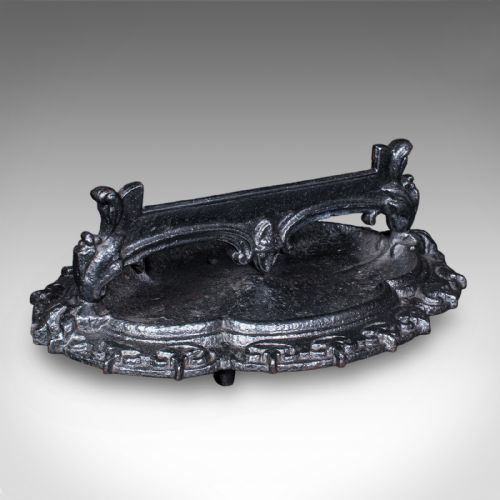
Traditional door pulls encompass entrance hardware and door furniture spanning Georgian, Regency, Victorian, and Edwardian periods. These pieces include centre door knobs, bell pulls, door pull handles, and boot scrapers.
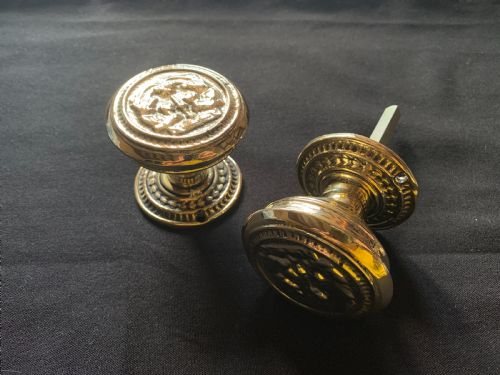
The version a buyer meets most frequently on this page is the brass Victorian centre door knob, alongside Georgian brass door bell pulls and Edwardian bronze pull handles. Formations range from simple octagonal and ovular profiles to bee hive designs and matching push plates.
Originating in eras spanning from the eighteenth century into the early twentieth century, these items bridge functional entryway utility and classical revival style. They attach directly to timber doors to regulate access and operate mechanical bells.
How they were made
Makers utilised cast bronze, cast iron, copper alloy, and heavy brass to produce durable structural components for daily domestic use. Metal casting allowed founders to pour molten brass or bronze into detailed moulds, creating crisp architectural profiles.
Nickel plating and black china ceramic inserts provided contrasting textures and finishes on later Victorian hardware from the eighteen eighties. These combined media required skilled assembly to secure ceramic bodies into metal collars without fracture.
Listings feature hardware spanning Georgian, Regency, Victorian, and Edwardian periods, constructed from brass, bronze, cast iron, nickel, and ceramic.
What varies in quality
The heft of the metal and the crispness of the casting define the upper tier of traditional door pulls. Superior examples exhibit deep, well-defined moulding on octagonal and bee hive profiles, whereas lesser pieces show smoothed detail from worn production moulds.
Completeness of original matching components, such as associated push plates or paired handles, elevates the integrity of an installation. The quality of the underlying alloy determines how cleanly the metal ages over time.
The Traditional Door Pulls Glossary
- Centre door knob
- A large stationary or operational knob mounted centrally on an entrance door, frequently gripped to pull the door shut.
- Bell pull
- A lever or handle connected to a mechanical wire or crank system that rings a house bell indoors, common in Georgian and Victorian properties.
- Push plate
- A flat metal plate screwed to a door surface beside a handle or pull to protect the timber from hand marks and wear.
- Boot scraper
- A heavy metal blade or trough fixed near an exterior doorway to scrape mud and dirt from footwear before entry.
- Copper alloy
- A broad category of metal mixtures containing copper, including brass and bronze, utilised extensively for durable historical door hardware.
Traditional Door Pulls: Frequently Asked Questions
How do I install a centre door knob?
Centre door knobs typically mount through a single spindle hole bored directly through the centre of the door stile. They secure with heavy fasteners from the interior side.
Ensure the backplate aligns correctly with the exterior face to support the weight of the turning or pulling action.
What is a door bell pull?
A door bell pull is a vertical lever or handle mounted on the exterior door frame that operates a mechanical interior bell via a crank mechanism.
These predate electrical doorbells and rely on robust metal linkages hidden within the door or wall.
How do I clean antique brass hardware?
Clean antique brass gently with warm soapy water and a soft brush to remove surface dirt without stripping the historical patina. Avoid harsh chemical polishes that strip age from the metal.
Microfibre cloths help dry the surface completely to prevent water spots on Victorian and Georgian components.
How can I tell a Victorian knob from a Georgian one?
Georgian centre door knobs often feature smooth ovular profiles or simple geometric shapes that reflect classical proportions. Victorian examples frequently introduce more ornate variations like bee hive patterns, octagonal shaping, or nickel and ceramic combinations.
Examining the casting weight and fixing style also helps distinguish the manufacturing decade.
Can I use these pulls on an exterior door?
Most of these pieces were originally manufactured for exterior entrance use from durable brass, bronze, and cast iron. They withstand weathering well when properly mounted.
Period fixings should be inspected to ensure they resist moisture and secure firmly into modern timber.