



Traditional Dog Portrait
Traditional dog portrait works capture individual animals with oil on canvas or board, preserving canine personality through Victorian realism and mid-century styles.
Traditional Dog Portrait
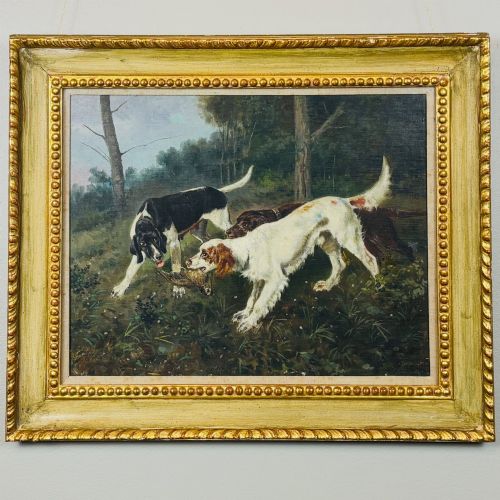
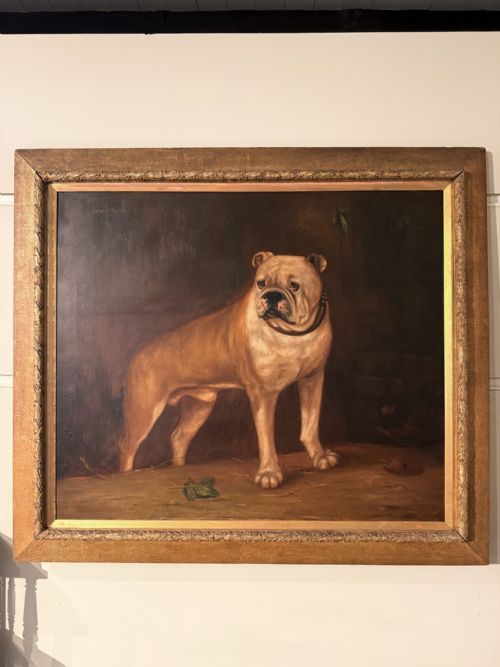
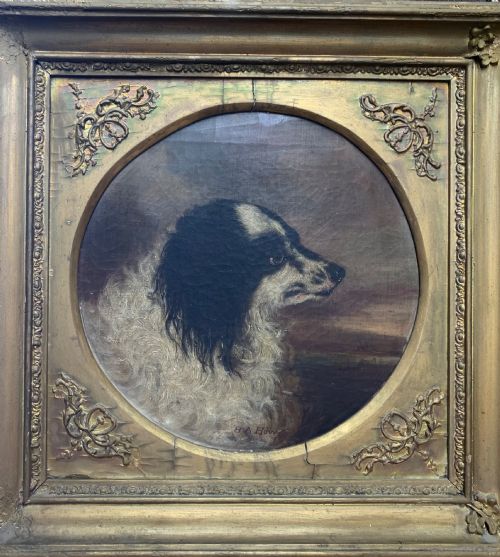
A traditional dog portrait presents a painted likeness of an individual animal, often sitting alone in a landscape or an interior setting. These works range from the nineteenth century into the mid-twentieth century, capturing specific breeds like spaniels, terriers, and hounds.
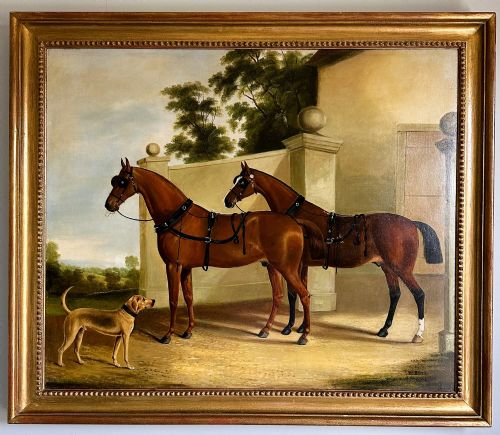
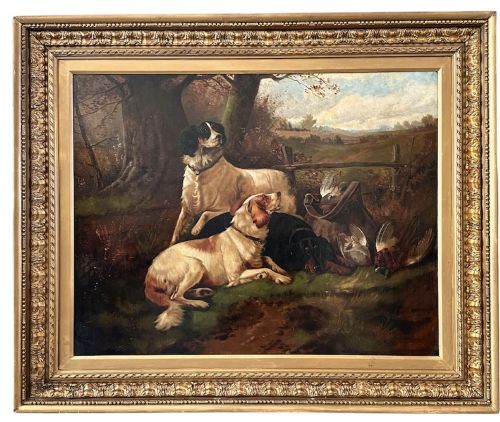
The nineteenth-century pieces frequently lean into Victorian sporting art or realism, showing prized hunting dogs or companion animals beside country houses or within walled gardens. Later examples from the 1920s to the 1960s continue this lineage on canvas and board.
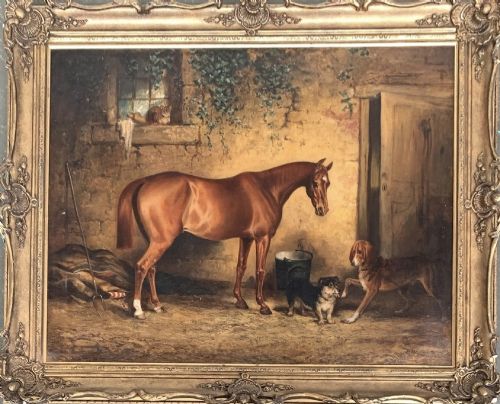
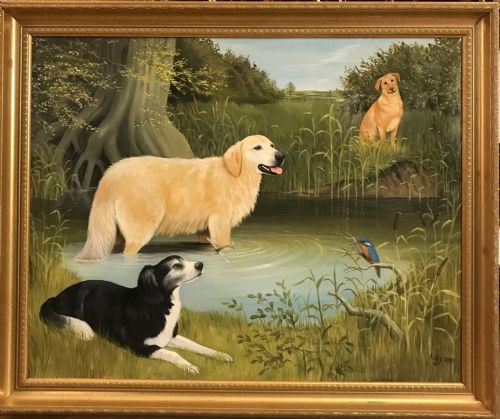
Buyers encounter subjects varying from solitary gun dogs and working terriers to large framing compositions involving horses and human companions. The most common survivals on this page are nineteenth-century oil paintings of individual sporting breeds.
How They Were Made
Artists built these works primarily using oil paint applied to woven canvas or rigid wooden boards, often working within professional studios or out in rural landscapes. The pigments were laid down to build depth in coats and fur, supported by structured wooden stretchers.
Many historical frames incorporate gilt wood and moulded gesso ornamentation, providing a metallic border that complements the deep oil tones of the painting within. This combination of canvas, oil, and gilded wood remains standard for the period.
Traditional Dog Portrait Retail Price Guide 2026
Typical asking prices for traditional dog portrait among the pieces listed under this phrase on Sellingantiques today, from the lower quarter to the upper quarter. They describe what is for sale here now, not the wider market.
Canine sitters include named individuals such as Lord Methuen’s favourite dogs, Mr Quiz, and Dora the boxer.
What Varies in Quality
Anatomical precision and the rendering of light across fur separate accomplished animal artists from ordinary decorative painters. Stronger works capture the distinct intelligence and physical structure of a breed rather than a generic canine shape.
The depth of the surrounding landscape or interior setting also influences the strength of a composition. Works showing careful attention to architectural details, country houses, or natural foliage command greater visual interest than plain backdrops.
Henry Barraud·John Sargent Noble·William Barraud·George E Sharpe·Fannie moody·Edwin Frederic Holt·Colin Graeme Roe·Henri Schouten·Valentine Thomas Garland·James Ward·Charles Bilger Spalding·John Emms·Samuel John Carter·Thomas Blinks
The Traditional Dog Portrait Glossary
- Oil on canvas
- A painting technique where pigmented oil paint is applied to a stretched woven fabric surface. This method allows for subtle blending and rich texture.
- Gesso
- A plaster-like mixture applied to wood before gilding or painting to create a smooth surface. It is commonly found on antique picture frames.
- Sporting art
- A genre depicting field sports, horses, and hunting dogs within rural environments. It gained significant popularity during the Victorian era.
- Naive school
- Art created by self-taught painters who often used direct perspective and simplified forms. These pieces possess a distinct charm separate from academic realism.
- Provenance
- The documented history of ownership belonging to an artwork. It helps establish authenticity and trace past collections.
Traditional Dog Portrait: Frequently Asked Questions
What periods do these paintings cover?
The works span from the nineteenth century through the mid-twentieth century, with a heavy concentration of Victorian pieces.
Later examples extend into the 1920s, 1940s, and 1950s, showing continuity in canine portraiture.
How should I care for an oil painting?
Keep the canvas away from direct sunlight and extreme temperature fluctuations to prevent cracking in the paint layers.
Dust the surface gently with a soft, dry brush and avoid applying liquid cleaners directly to the paint or gilt frame.
How do I identify a Victorian dog painting?
Look for the detailed realism typical of nineteenth-century sporting art, often depicting working terriers, spaniels, or hounds in natural light.
Many of these works feature period stretcher bars and heavy gilt wood frames characteristic of the era.
Were these portraits meant for homes?
Owners commissioned them to celebrate prized hunting companions, working gun dogs, and beloved family pets.
They hung primarily in country houses, libraries, and sporting estates as testaments to valued animals.