




Traditional Dining Room Storage
Traditional dining room storage brings together centuries of timber and craft to keep your silver, linen and glassware in order.
Traditional Dining Room Storage
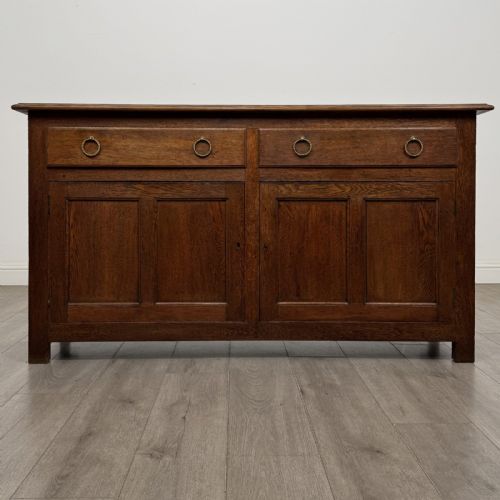
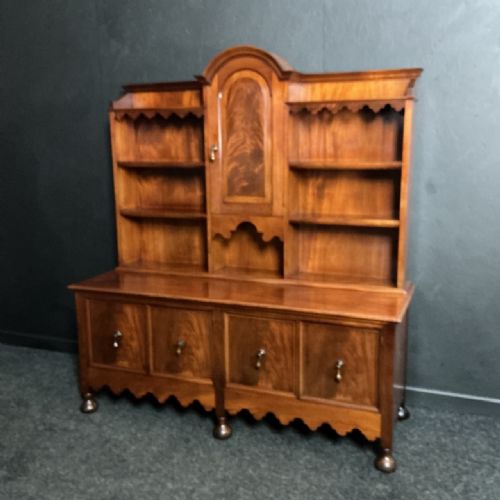
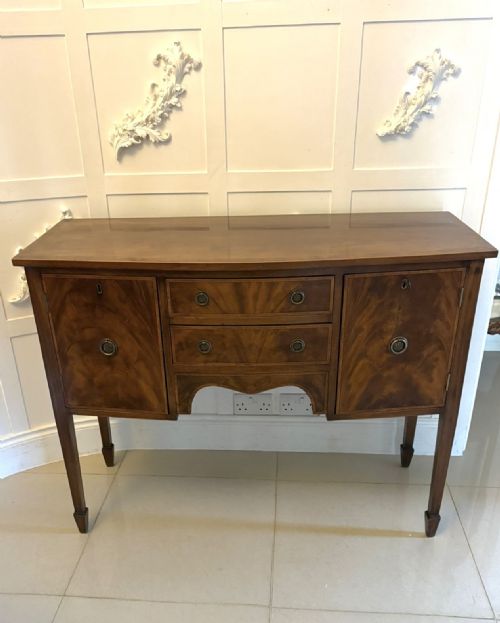
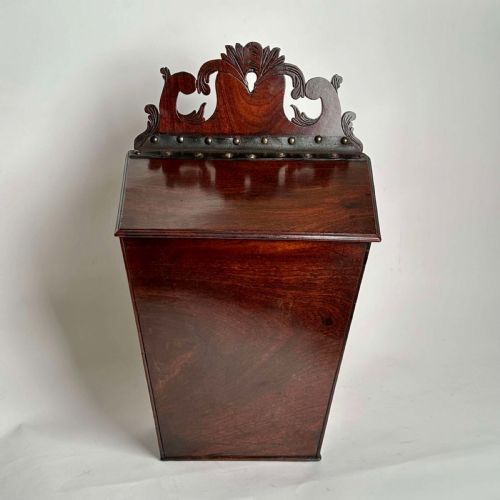
Traditional dining room storage encompasses sideboards, buffets, chiffoniers, dressers, court cupboards and cutlery boxes designed to house tableware and dining accessories. These pieces serve as the practical and visual anchor of a dining space, offering cupboards, drawers and display surfaces.
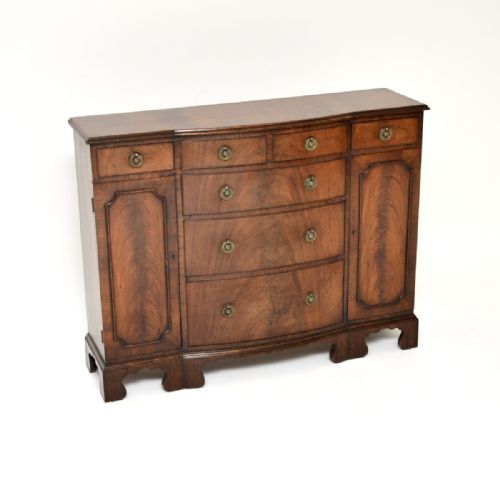
You are most likely to encounter Victorian and Edwardian mahogany sideboards on this page, alongside earlier oak court cupboards and dressers. These forms range from compact bow front cabinets to substantial multi-door pieces with mirrorbacks.
Origins span British and French workshops, utilising classic timber forms that reflect the prevailing domestic habits of their respective periods. The selection covers everything from formal Georgian style breakfronts to rustic Jacobean revival styles.
Materials and construction
Mahogany and oak dominate the construction, often enhanced by flame mahogany veneer for figured grain patterns on drawer fronts and cabinet doors. Walnut and assorted metal fittings provide structural contrast and functional hardware.
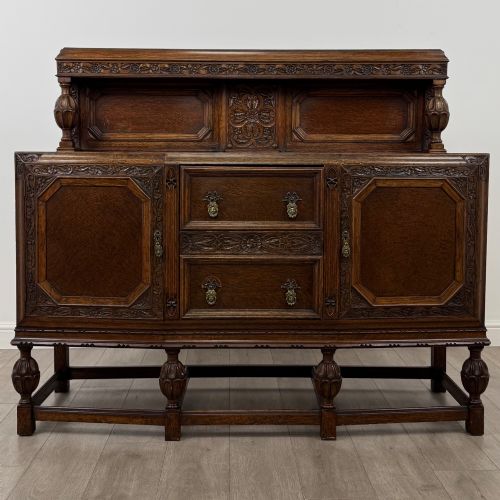
Surface finishes rely on French polishing and wax treatments that highlight the natural depth of figured mahogany and walnut. Carved details are executed directly into solid timbers like oak and mahogany before final assembly.
Traditional Dining Room Storage Retail Price Guide 2026
Typical asking prices for traditional dining room storage among the pieces listed under this phrase on Sellingantiques today, from the lower quarter to the upper quarter. They describe what is for sale here now, not the wider market.
Storage forms on this page include dressers, court cupboards, cutlery boxes and chiffoniers alongside standard sideboards.
Judgement of quality
Quality rests on the selection of timber veneers, where symmetrical flame mahogany patterns denote a superior grade of cabinetmaking. Solid oak carving depth and crispness further distinguish higher tier pieces from simpler commercial output.
Hardware integration, such as original brass face handles and intact mirror glass, maintains the integrity of the piece. The precision of drawer dovetailing and door alignment separates utilitarian storage from workshops aiming at finer domestic markets.
Maple & Co
The Traditional Dining Room Storage Glossary
- Sideboard
- A large dining room cabinet designed for serving food, storing tableware and displaying decorative items. They frequently feature central drawers flanked by cupboards.
- Court cupboard
- An antique enclosed cupboard originating from the seventeenth century or earlier, often heavily carved in oak and utilised for storing provisions or plate.
- Chiffonier
- A low sideboard or cabinet developed in the nineteenth century, typically featuring a raised shelf or small superstructure on the top surface.
- Flame mahogany veneer
- A thinly sliced section of mahogany timber taken from the fork of the tree, displaying a characteristic flickering, flame-like grain pattern.
- Breakfront
- A cabinet design where the central section projects forward from the flanking outer sections, creating architectural depth across the facade.
Traditional Dining Room Storage: Frequently Asked Questions
What is a chiffonier?
A chiffonier is a compact nineteenth-century cabinet designed for the dining room or parlour, typically combining lower cupboards with an upper shelf or small mirrorback.
These pieces offer useful surface space and enclosed storage without dominating the room in the manner of a large sideboard.
How do I spot an Edwardian sideboard?
Edwardian sideboards often incorporate lighter timbers, satinwood stringing, mirrorbacks and refined carving that reflects early twentieth-century revival tastes.
They tend to feel less massive than heavy Victorian pieces while retaining traditional storage configurations.
What is a court cupboard?
A court cupboard is an early form of enclosed storage, usually constructed from solid oak with heavy panels and strapwork carving.
These pieces provide shallow upper cupboards and deeper lower sections, reflecting sixteenth and seventeenth-century domestic storage customs.
How do I care for mahogany?
Mahogany surfaces respond best to regular dusting with a dry cloth and occasional application of traditional beeswax to nourish the polished grain.
Keep timber furniture away from direct heat sources and strong sunlight to prevent the timber and veneer from drying out.