



Traditional Delftware
Traditional delftware brings blue and white tin-glazed earthenware to rooms that favour classic ceramics.
Traditional Delftware
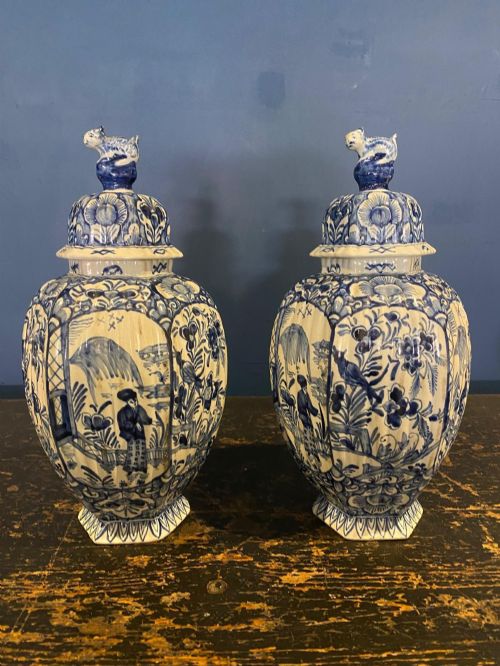
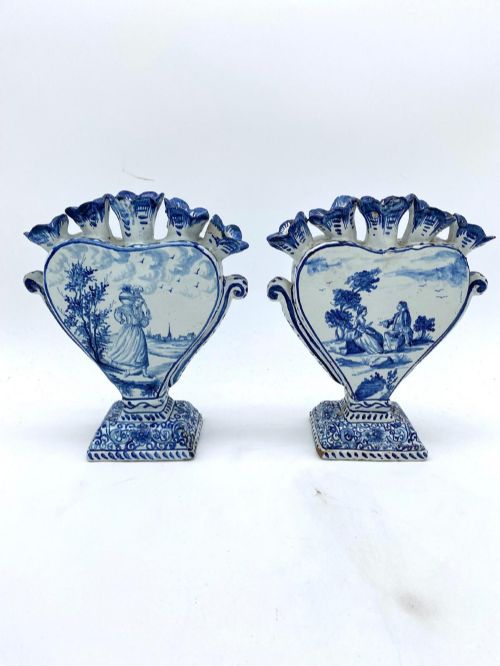
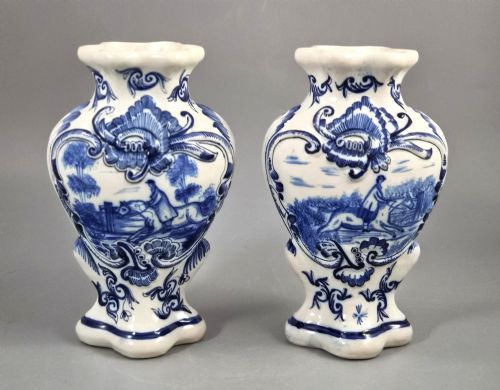
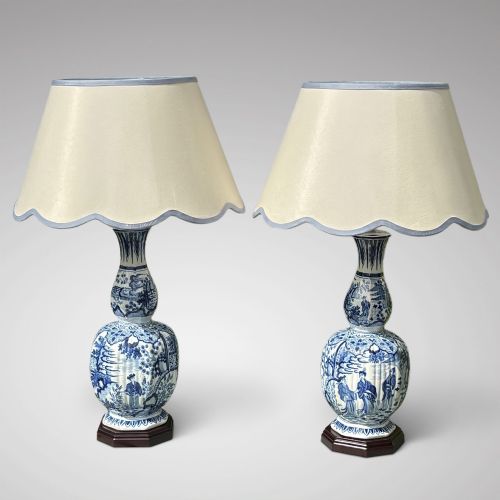
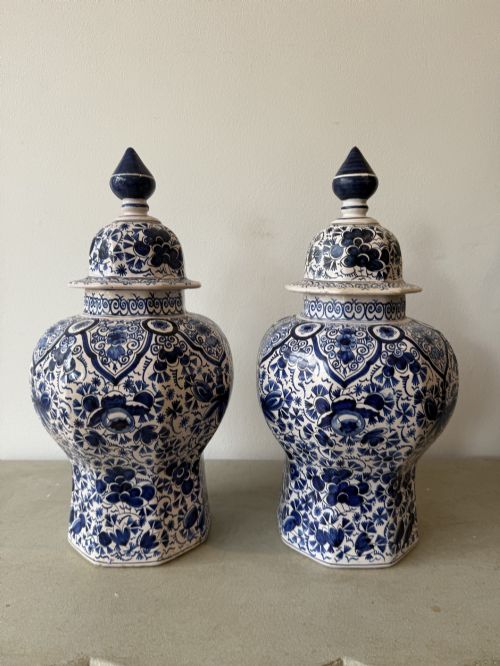
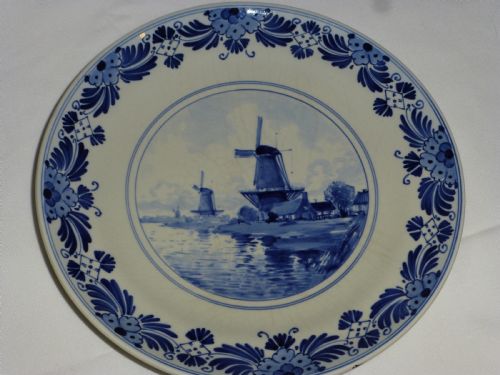
Traditional delftware comprises tin-glazed earthenware objects spanning the eighteenth and nineteenth centuries, originating primarily from Dutch and French workshops. When searching for traditional delftware, buyers encounter pieces ranging from chargers and plates to lidded vases, table lamps, and desk inkstands.
The inventory on this page centres heavily on nineteenth-century examples alongside eighteenth-century specimens. Vases and wall chargers dominate the current selection, often painted in classic blue and white colour schemes.
How they were made
Makers shaped these objects from clay and earthenware before applying an opaque white tin-glaze. Artisans then painted cobalt blue decoration directly onto the unfired glaze surface.
Selected pieces incorporate brass or wood components, particularly in desk accessories and converted table lamps. Firing techniques fixed the blue pigments into the glaze, creating the characteristic durable finish.
Traditional Delftware Retail Price Guide 2026
Typical asking prices for traditional delftware among the pieces listed under this phrase on Sellingantiques today, from the lower quarter to the upper quarter. They describe what is for sale here now, not the wider market.
Current listings feature items from both the 18th century and the 19th century, utilising materials such as tin-glazed earthenware, wood, and brass.
What varies in quality
The distinction between ordinary and superior pieces rests on the precision of the hand-painted brushwork and the smoothness of the tin-glaze. Stronger examples display crisp botanical or figurative motifs executed with confident control.
Proportions and potting weight also divide the range, with finer vessels showing balanced forms and even glaze distribution across the earthenware body.
Fourmaintraux-Courquin
The Traditional Delftware Glossary
- Tin-Glazed Earthenware
- Earthenware pottery covered with a glaze made opaque by the addition of tin oxide. This coating provides the smooth white ground characteristic of delftware.
- Charger
- A large decorative plate designed to be displayed on a wall or dresser rather than used at the dining table. These items frequently feature elaborate blue and white painted scenes.
- Faience
- European tin-glazed earthenware, a term widely applied to French and other continental wares akin to Dutch delft. Pieces from makers such as Fourmaintraux-Courquin fall under this broader heading.
- Inkstand
- A desk accessory holding inkwells and quill pens, often fashioned from ceramic with fitted metal or wooden elements. They represent the more functional side of domestic ceramic production.
Traditional Delftware: Frequently Asked Questions
What is traditional delftware?
Traditional delftware consists of tin-glazed earthenware ceramics, predominantly decorated in blue and white. The category includes utilitarian items like inkstands alongside purely decorative chargers and vases.
Most pieces date from the eighteenth and nineteenth centuries, reflecting European earthenware traditions from Dutch and French kilns.
How do I use a charger?
Wall chargers were made for display rather than dining. Their large diameters and painted surfaces suit placement on walls or plate racks.
When hanging these items, ensure secure fixings that support the weight of the earthenware body safely.
Are delft lamps original?
Vases and vessels from the eighteenth and nineteenth centuries are frequently converted into table lamps. These objects combine historical ceramic bodies with modern electrical wiring.
Such conversions let collectors integrate antique earthenware directly into daily interior lighting schemes.
How do I date these pieces?
Dating relies on stylistic clues, glaze characteristics, and potting techniques. Eighteenth-century examples often exhibit softer earthenware bodies and distinct pigment tones compared to later nineteenth-century output.
Comparing form and decorative motifs against documented kiln styles helps establish the period of manufacture.