


Traditional Cut Glass Chandelier
A traditional cut glass chandelier brings brilliant refraction and refined presence to a room, drawing the eye upwards with cascading crystal.
Traditional Cut Glass Chandelier
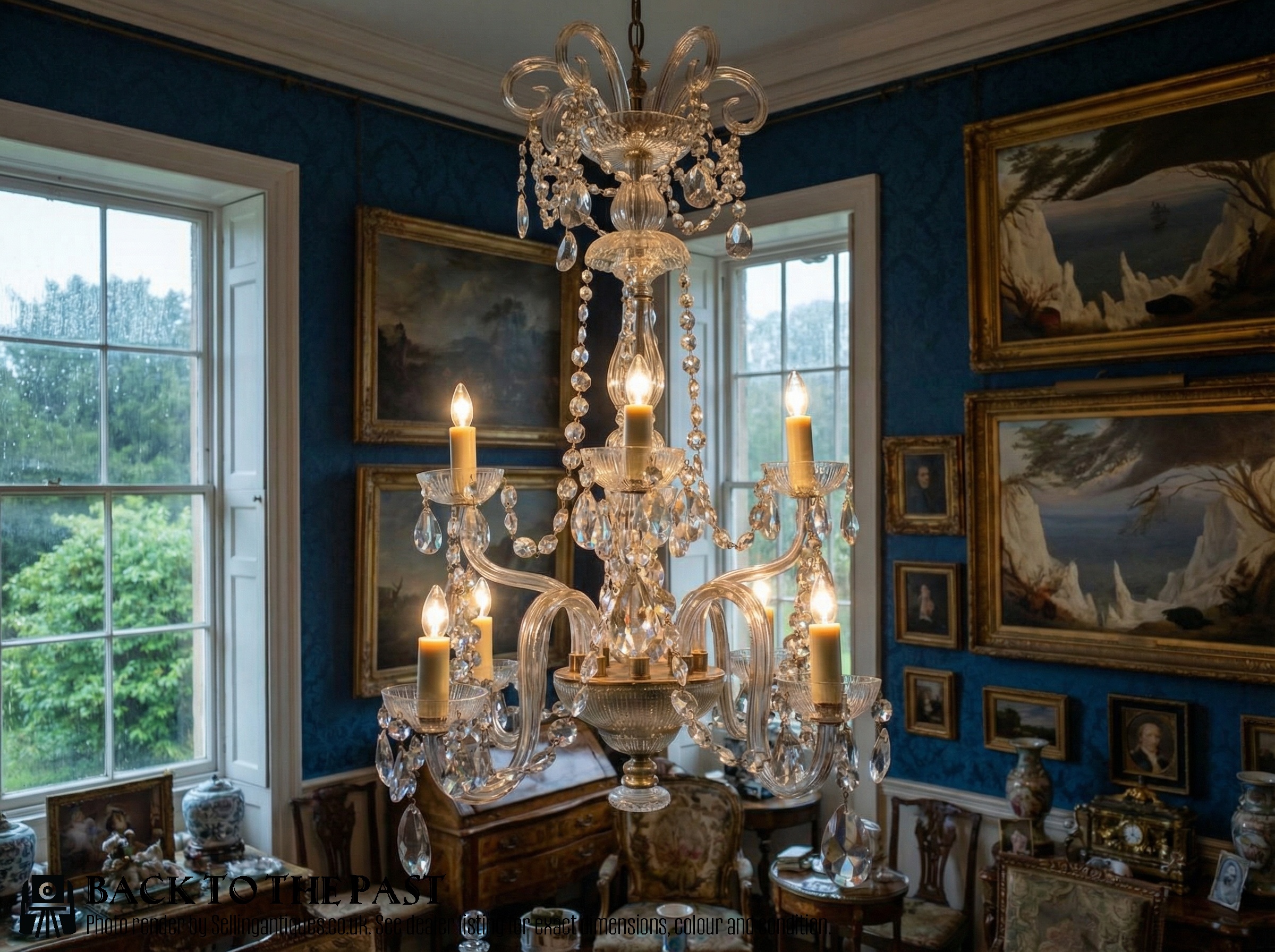
When a buyer searches for a traditional cut glass chandelier, they are looking at overhead lighting fixtures designed to distribute candlelight or electric illumination through faceted hanging elements. These pieces originate predominantly from the nineteenth and early twentieth centuries, spanning Victorian, Edwardian, and early twentieth-century periods.
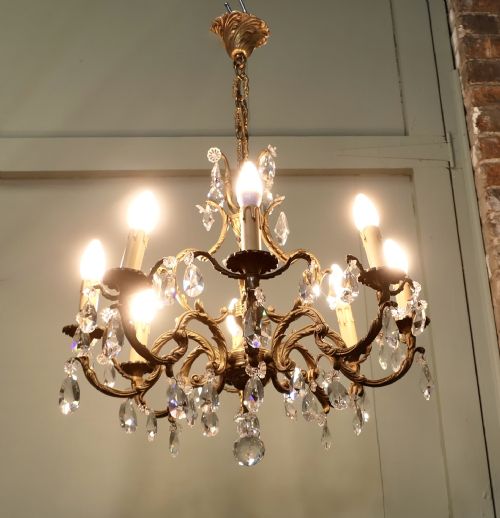
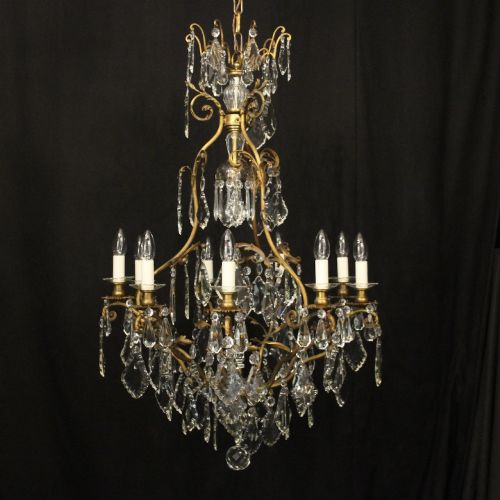
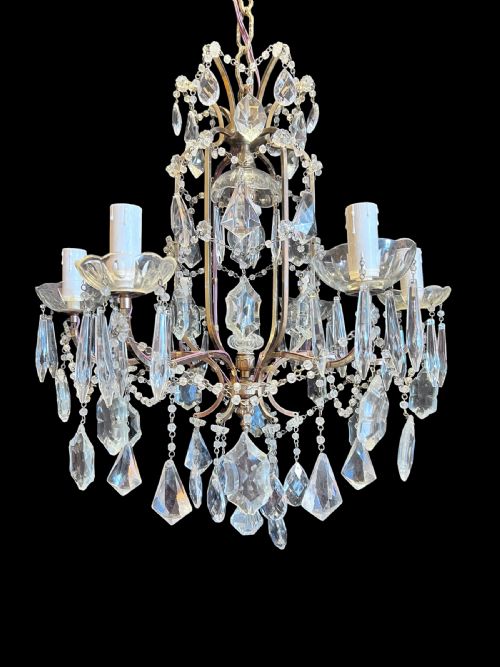
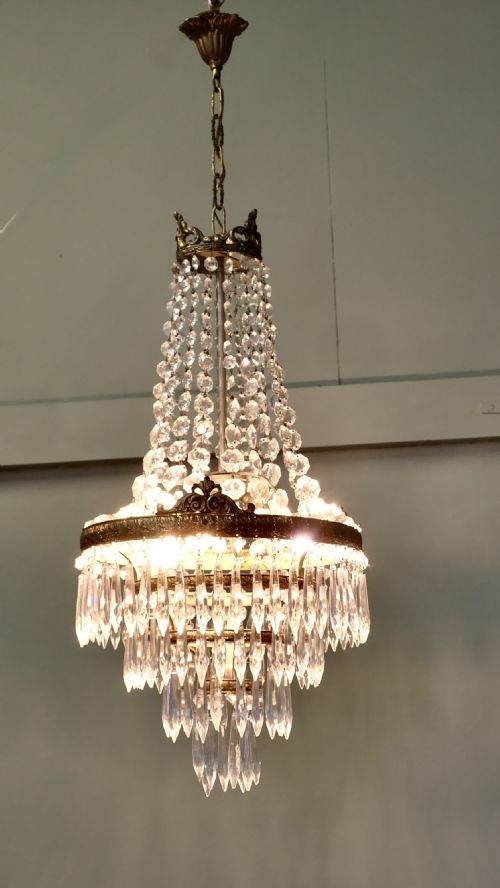
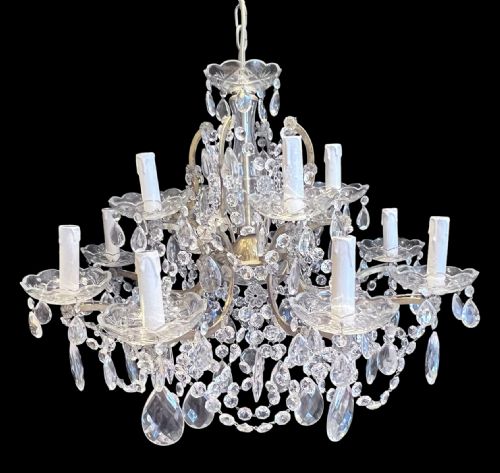
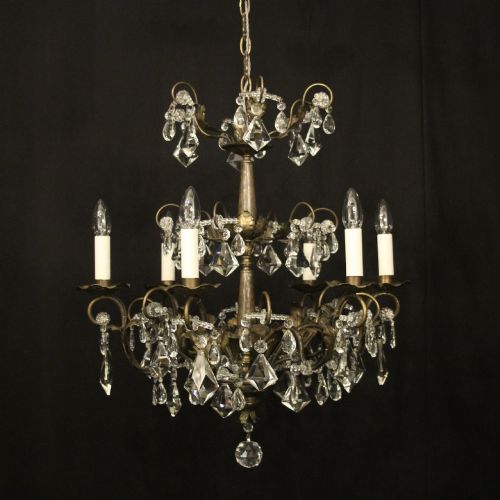
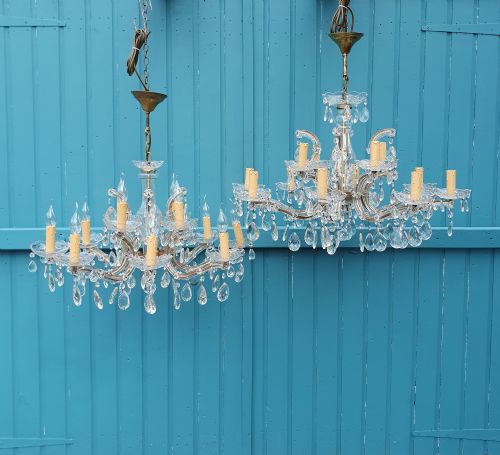
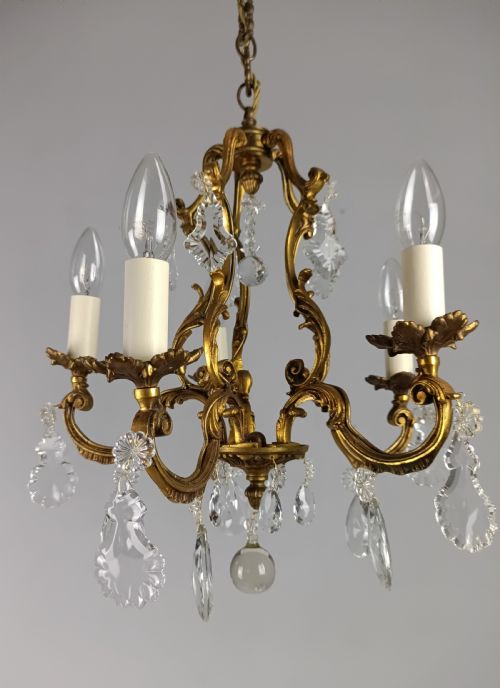
The most common versions met on this page are French and Italian fixtures, often featuring multi-arm brass, bronze, or gilded frames adorned with crystal drops and beads. Forms range from basket and cage silhouettes to grand tent and bag configurations suitable for larger reception rooms.
English examples also appear, alongside Bohemian and grand ballroom iterations carrying numerous lights. The selection leans heavily towards French Chateau, Empire, and Neoclassical styles executed in brass and crystal.
What varies in quality
The distinction between tiers of quality lies in the clarity and cutting of the crystal components, alongside the weight and detail of the metal chassis. Finer fixtures utilise high-lead crystal with sharp, hand-polished facets that catch and disperse light cleanly.
Construction methods also dictate grade, with superior pieces showing integrated cast bronze or brass frames rather than lighter stamped metal. The density of the drop configuration and the complexity of the arm arrangement further separate standard domestic lighting from grand ballroom showpieces.
Listings feature brass, bronze, and silver-gilded frames paired with lead crystal, cut glass, and beaded elements across the Victorian and Edwardian periods.
Baccarat·La Mason Bagues
The Traditional Cut Glass Chandelier Glossary
- Lustre
- A cut glass pendant suspended from the frame to refract light. These drops hang in various shapes including spears, pear drops, and prisms.
- Tent and bag chandelier
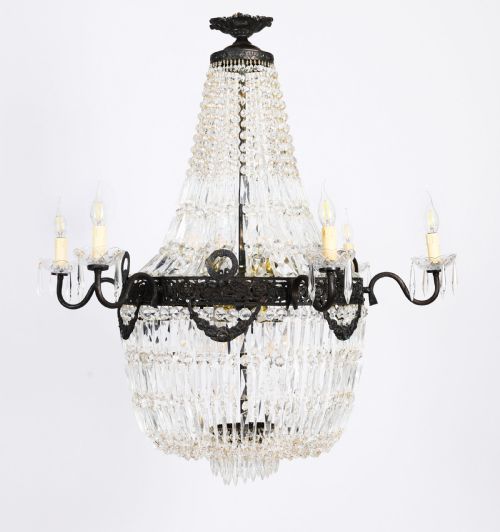
- A lighting form featuring an upper umbrella-like canopy of strings converging to a lower basket or bag of crystals. This configuration creates a dense cascade of glass elements.
- Plafonnier
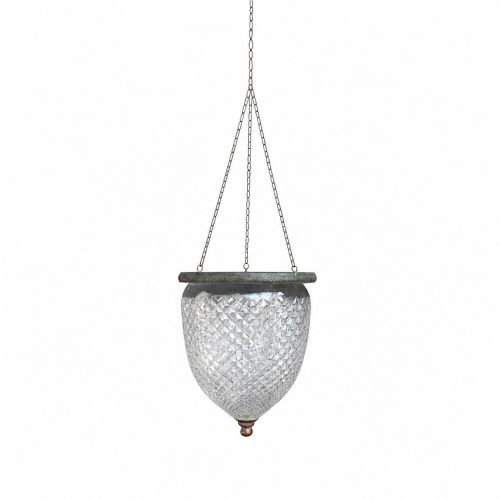
- A ceiling-mounted light fitting that sits flush or very close to the ceiling surface rather than hanging on a long drop. They often incorporate cut glass bowls or acorn-shaped shades.
- Cage chandelier
- A style where the metal framework is shaped into an open skeletal cage supporting internal illumination and external glass drapery. It represents a traditional form seen across French and English periods.
- Marie Theresa chandelier
- A distinct style named in honour of the Austrian Empress, characterised by flat metal arms completely covered in glass plates and secured with rosette pins.
Traditional Cut Glass Chandelier: Frequently Asked Questions
How do I clean a crystal chandelier?
Cleaning requires a specialist glass cleaner and a soft cloth, wiping each pendant individually while it remains suspended from the ceiling. Many restorers recommend spraying the solution onto the cloth rather than directly onto the metal frame to protect historic wiring and fixings.
Careful attention prevents damage to the delicate brass wire ties holding the lustres. Regular dusting helps maintain the refractive quality of the cut glass without needing frequent wet cleaning.
Can these chandeliers take modern electric bulbs?
Most antique fixtures have been adapted over time to accept standard electrical wiring and modern candle-style LED bulbs. A qualified electrician should check the internal wiring and ceiling load capacity before installation.
The weight of brass and crystal structures demands secure ceiling fixings anchored directly into joists. Retrofitting ensures the historical aesthetic remains intact while meeting contemporary safety standards.
How do I determine the right size for a room?
Selecting the correct proportion involves measuring the room dimensions and calculating a suitable diameter based on floor space and ceiling height. A larger ballroom fixture requires significant vertical clearance to hang properly without overwhelming the space.
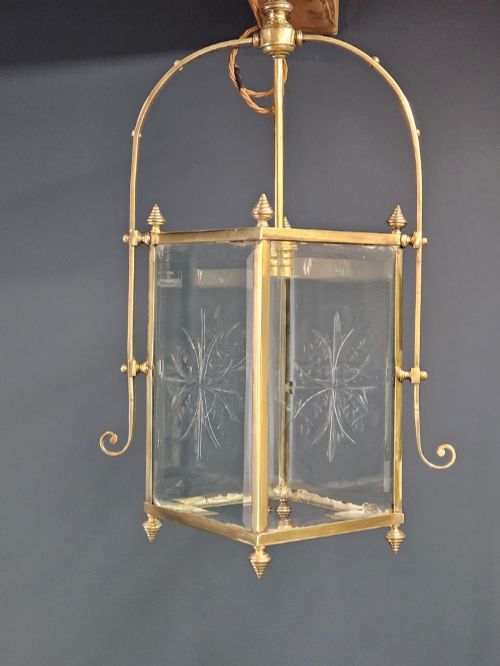
Hang height is equally crucial, ensuring the lowest point clears foot traffic while anchoring the furniture arrangement below. Hall lanterns and flush plafonniers suit lower ceilings where pendant drops prove impractical.
What is the difference between glass and crystal?
Crystal contains mineral additives such as lead oxide that increase the material weight, density, and refractive index compared to standard glass. This high lead content allows cutters to achieve sharper facets that disperse light into prismatic rainbows.
Standard glass remains lighter and lacks the intense brilliance found in lead crystal fixtures. Historical pieces often state their specific composition, distinguishing simple pressed glass from hand-cut crystal.