


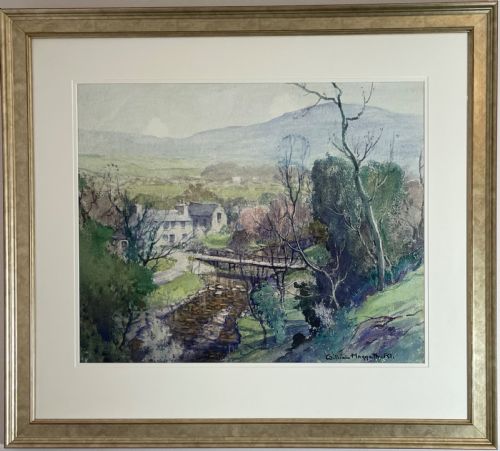


Traditional Countryside Watercolour
Traditional countryside watercolour paintings capture rural British life through delicate pigment on paper, prized by collectors for their authentic pastoral atmosphere.
Traditional Countryside Watercolour
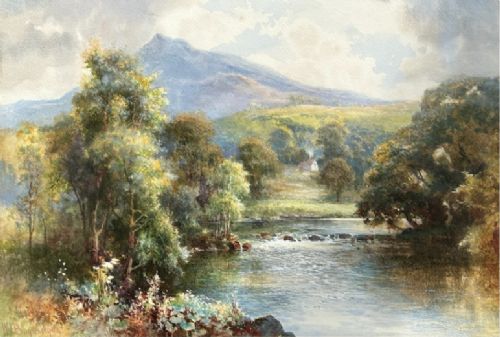
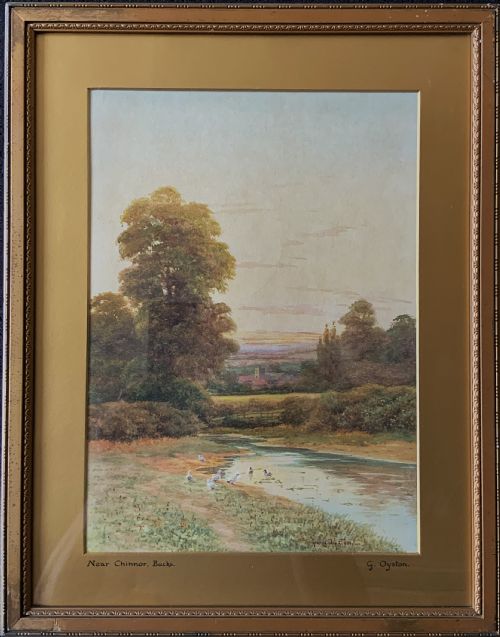
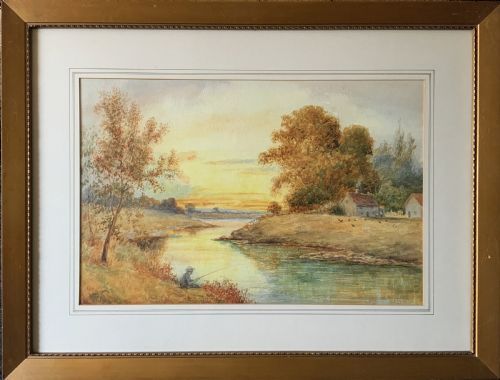
A traditional countryside watercolour depicts rural British scenes, featuring rivers, cottages, pastoral landscapes, and farmworkers rendered with fine detail.
The pieces on this page span from the nineteenth century through the mid-twentieth century, encompassing Victorian, Edwardian, and British Impressionist movements.
Buyers encounter framed original artworks executed on paper, often preserved behind glass within period wooden or gilt frames.
Materials and technique
Artists apply watercolour pigment suspended in water onto sheets of paper, utilising washes to build atmospheric light and fine brushwork for topographical detail.
Finished paintings are traditionally protected behind glass and housed in bespoke wooden frames, occasionally accented with gilt mouldings.
Listings feature paper supports, watercolour pigment, glass, and gilt wood spanning the nineteenth and twentieth centuries.
Judging quality in rural watercolours
Quality rests upon the artist's handling of light and atmospheric depth, distinguishing accomplished plein-air observation from formulaic studio production.
The integrity of the paper support and the vibrancy of the surviving pigments determine the overall visual strength of the piece.
George Oyston·Robert Winchester Fraser·George Arthur Fripp·James Stephen Gresley·Thomas Pyne
The Traditional Countryside Watercolour Glossary
- Watercolour pigment
- Finely ground colour particles suspended in a water-soluble binder, used to create translucent washes on paper.
- British Impressionism
- A painting style focusing on light and everyday subjects, visible in many early twentieth-century rural works.
- Gilt wood
- Timber frames coated with a thin layer of gold leaf or metallic gilt, typical of period framing.
- English School
- A classification for artists trained and working within British artistic traditions across several centuries.
Traditional Countryside Watercolour: Frequently Asked Questions
How should I hang a watercolour painting?
Watercolour pigments are sensitive to strong sunlight, so select a wall in your home that receives indirect illumination.
Keep them away from damp areas like kitchens to protect both the paper support and the period wooden frame.
Are these paintings original works?
Every piece listed is an original painting created by hand on paper rather than a modern reproduction.
Artists signed many of these works directly on the front or recorded details on the reverse.
How do I date an antique watercolour?
Dating relies on the artist's recorded working dates, the style of clothing worn by figures in the landscape, and the framing materials.
Nineteenth-century works often display heavier Victorian gilt frames, while later twentieth-century pieces adopt simpler wooden borders.
What subjects appear in these scenes?
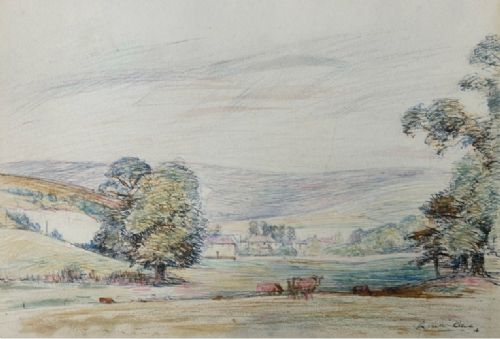
The compositions focus entirely on rural British topography, depicting rivers, farmworkers harvesting crops, cottages, and livestock grazing in fields.
These pastoral views offer a visual record of the countryside across different decades.