



Traditional Cottage Oil Painting
These traditional cottage oil painting works capture rural domestic scenes and rustic landscapes across Victorian and twentieth-century periods.
Traditional Cottage Oil Painting
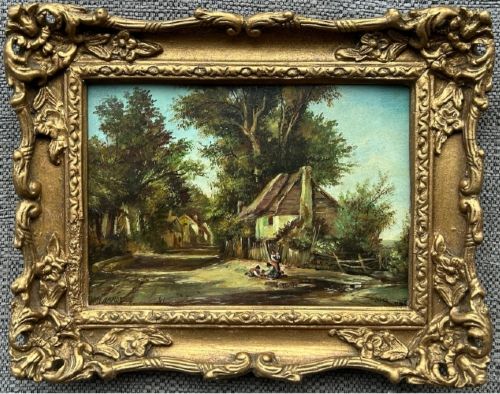
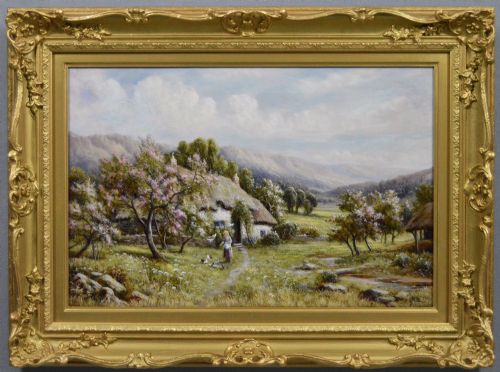
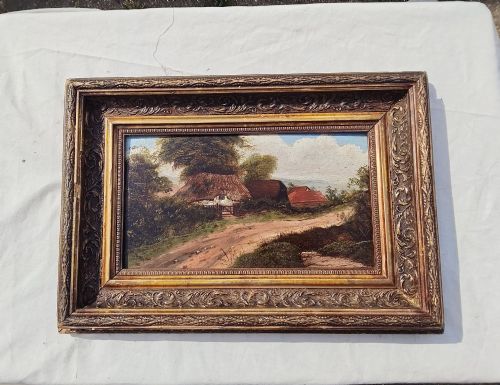
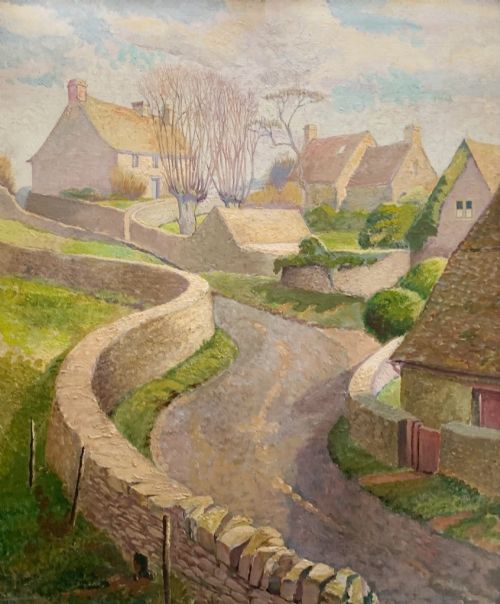
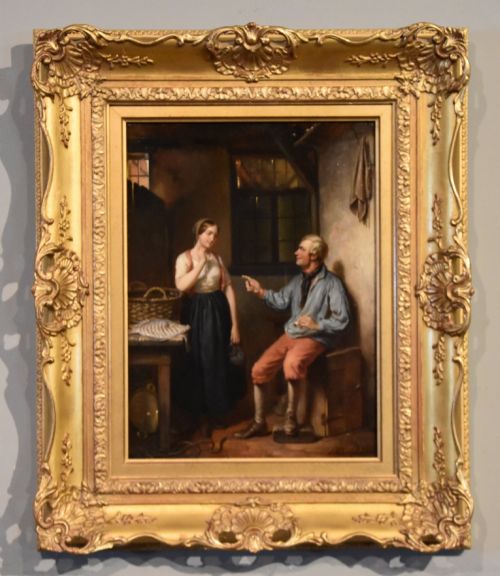
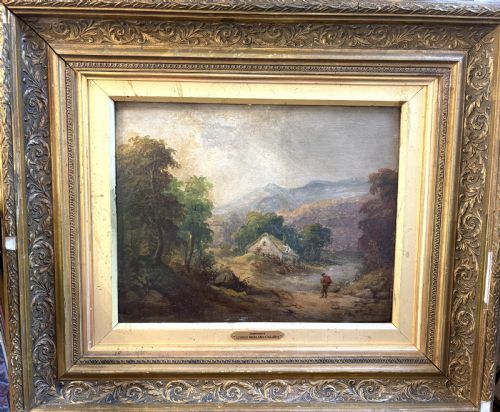
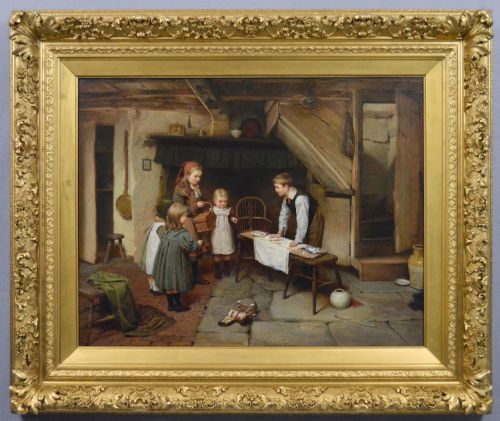
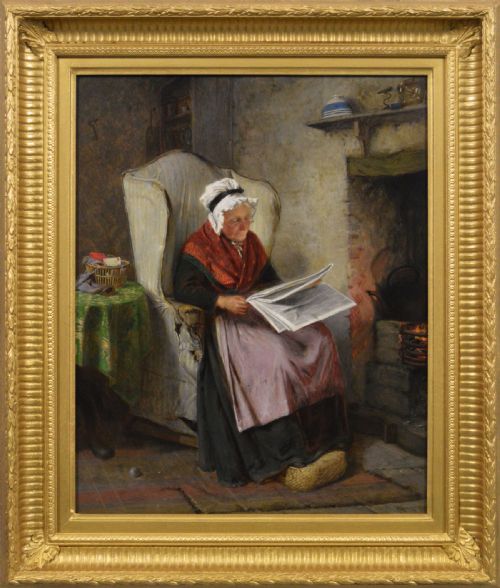
A traditional cottage oil painting typically depicts rural dwellings, farmsteads, and countryside landscapes created by British and European artists. Buyers searching this phrase encounter nineteenth-century canvases, Edwardian boards, and mid-century panels showing domestic scenes or rustic settings.
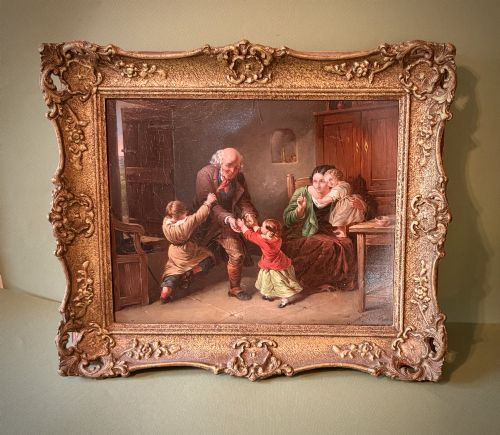
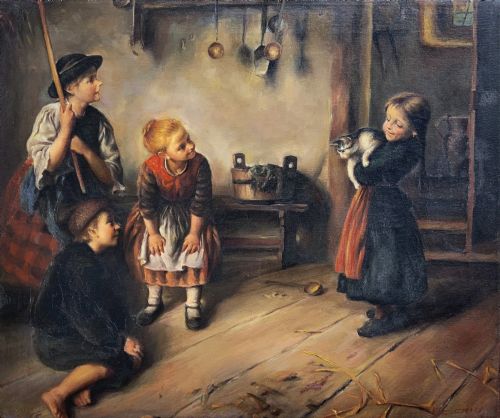
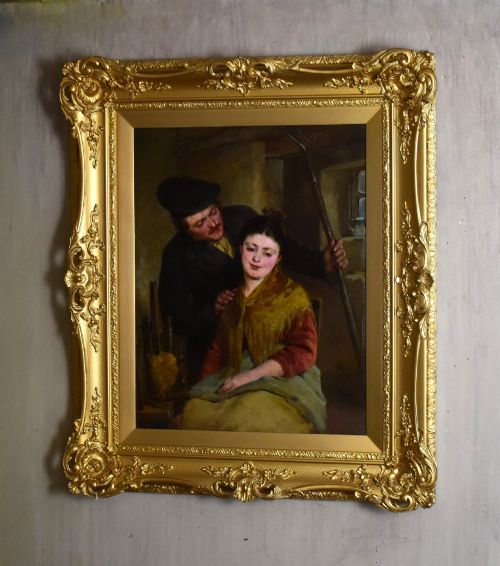
The subjects range from thatched English cottages and Scottish crofts to genre scenes featuring children, elderly women, and figures outside rural homes. Most examples date from the Victorian era through the mid-twentieth century, executed by named painters or regional schools.
Materials and methods
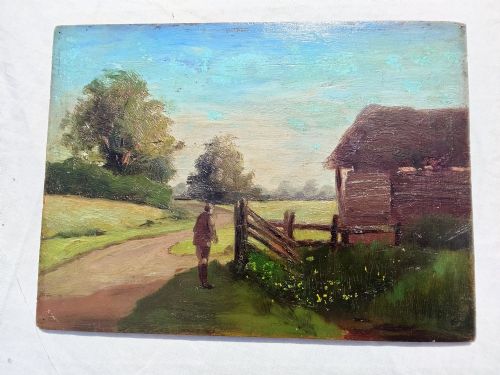
Artists painted these rural scenes using oil paint applied to stretched canvas, wooden panels, cardboard, or card. Supports varied according to the period, with wooden boards and canvas prevailing across nineteenth-century and early twentieth-century works.
Many surviving examples retain their original frames constructed from gilt wood, gesso, and gold leaf, occasionally augmented by carved giltwood mouldings that complement the painterly brushwork.
Several cottages appear alongside unexpected companions, including sheep, pigs, geese, and children playing by ponds.
Factors of quality
The distinction between standard works and superior examples rests upon the dexterity of the brushwork and the precision of the composition. Paintings by documented artists command greater interest than anonymous school pieces due to confirmed attribution and accomplished draughtsmanship.
Condition and originality also dictate standing, particularly the preservation of the pigment layer upon the canvas or board, alongside the integrity of any period gilt frame.
William Howard Hardy·Robert John Hammond·Howard Helmick·Jacob Akkersdijk·George Morland·Harry Brooker·John Horace Hooper·Alexander Rosell·Haynes King·Reginald Grange Brundrit·William Greaves·Charles Vickers·Robert Finley McIntyre·Lorenzo Headley·Helmut Reuter·John Falconar Slater·Abraham Hulk Junior·Harry Pennell·Ernest Walbourn·George Cole·Ernest Cox·Herbert Royle·Ernest Higgins Rigg·James William Stamper·James Ward
The Traditional Cottage Oil Painting Glossary
- Oil on Canvas
- A painting technique where oil paint is applied to a woven fabric stretched across a wooden frame. This was the predominant support medium for nineteenth and twentieth-century landscapes.
- Gilt Wood
- Wood that has been covered with a thin layer of gold leaf or metallic powder. It frequently frames traditional oil paintings from the Victorian and Edwardian periods.
- Genre Painting
- The pictorial representation of scenes from everyday life, typically involving ordinary people engaged in domestic activities or leisure. These often feature figures outside rustic cottages.
- Gesso
- A plaster-like mixture used as a smooth base for painting or applied to wooden frames before gilding. It provides a stable surface for decorative mouldings.
- English School
- A term used by dealers to describe works produced by British artists whose specific identities remain unrecorded or uncertain. These pieces reflect prevailing regional styles of their era.
Traditional Cottage Oil Painting: Frequently Asked Questions
What periods do these paintings date from?
The works span from the eighteenth century through to the mid-twentieth century, with a strong concentration of pieces originating in the nineteenth and early twentieth centuries.
Victorian and Edwardian examples appear frequently, alongside occasional mid-century interpretations of rural cottage scenes.
Are these paintings signed by the artists?
Many pieces feature visible signatures or attribution to known painters, while others are catalogued under regional designations such as the English School.
Signed works often connect directly to established artists who exhibited during the nineteenth and twentieth centuries.
What surfaces were used for these artworks?
Artists utilised oil paint on stretched canvas, wooden boards, and heavy card or cardboard depending on the date and style of the piece.
Canvas remains the most common support for larger landscape and genre compositions.
How should I frame and display them?
Many pieces retain their original gilt wood or gesso frames, which reflect the period aesthetics of the artwork.
Displaying them away from direct sunlight preserves the oil pigments and protects the gilt finish on the frames.