



Traditional Corner Unit
A traditional corner unit makes use of awkward angles, turning empty wall space into architectural storage.
Traditional Corner Unit
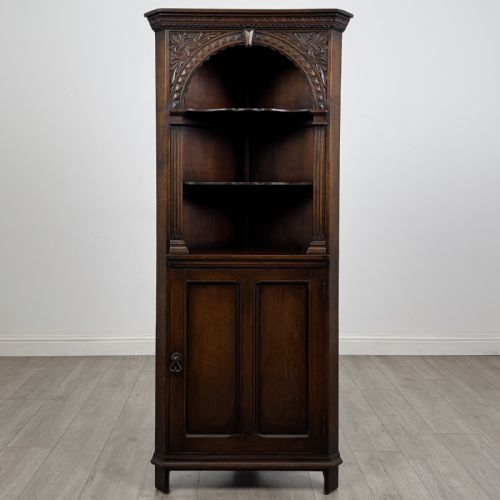
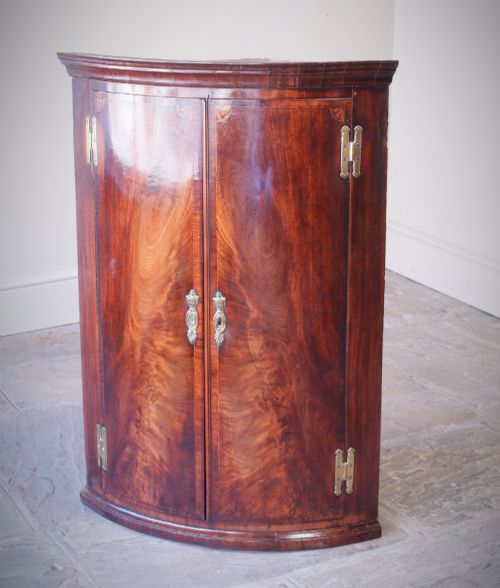
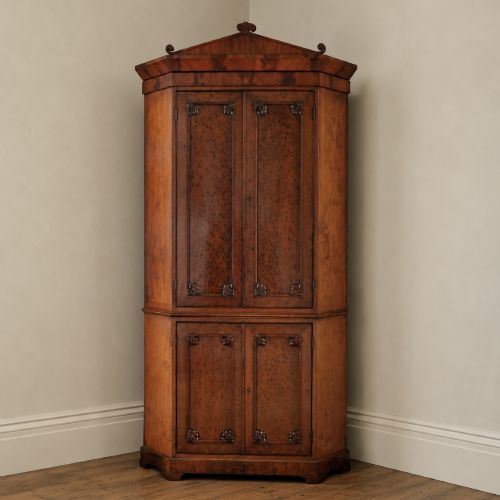
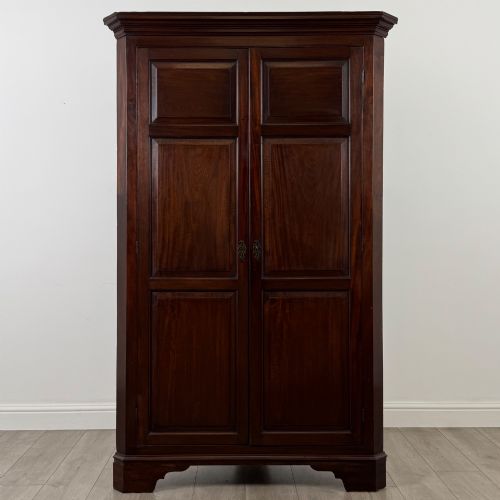
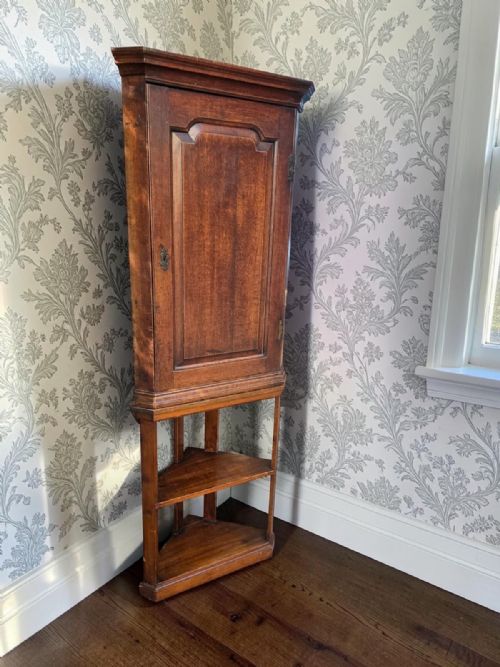
A traditional corner unit is a fitted or freestanding piece of furniture designed to sit snugly into the right-angle intersection of two walls, making efficient use of dead space in a room. These pieces range from small hanging cupboards meant for simple display to large floor-standing cabinets and bookcases with multiple doors.
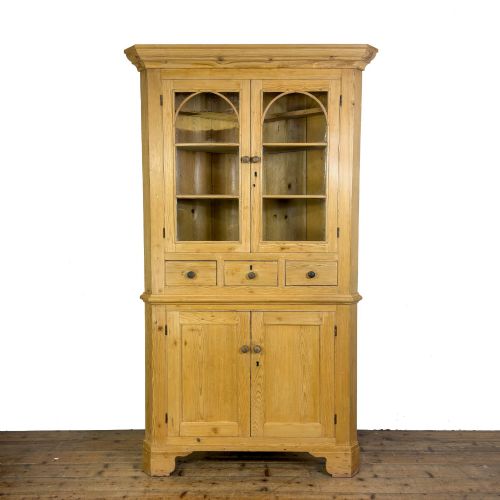
The versions most commonly met on this page span several centuries of British cabinet-making, with heavy representation from the Georgian and Victorian periods. Woods such as oak, mahogany, and pine dominate the selection, appearing in both standing formats and elevated forms mounted on stands.
How they were made
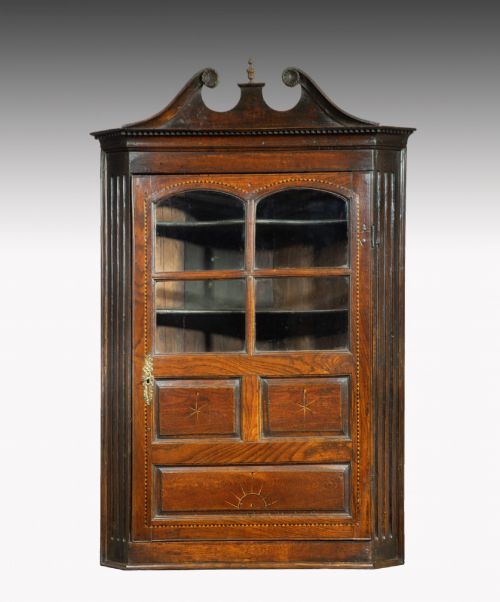
Makers utilised solid timbers like oak and pine for structural carcass work, while employing figured veneers such as mahogany and plum pudding mahogany for decorative exterior surfaces. Brass hardware, including hinges and escutcheons, provides functional articulation alongside glass panes fitted into door panels.
Construction techniques include panelled doors, bracket feet, and inlaid detailing, with some surfaces finished in paint or red Chinoiserie decoration. Pieces often incorporate architectural elements such as bow fronts and canted corners to soften the geometric rigidity of the room junction.
Traditional Corner Unit Retail Price Guide 2026
Typical asking prices for traditional corner unit among the pieces listed under this phrase on Sellingantiques today, from the lower quarter to the upper quarter. They describe what is for sale here now, not the wider market.
Several cupboards survive with their original brass keys still turning in the locks after more than two centuries.
What varies in quality
Quality in a traditional corner unit rests on the selection of timber and the precision of the cabinetmaker's joinery, particularly in the alignment of doors and the crispness of carved or inlaid details. Superior examples feature well-figured grains, such as plum pudding mahogany or carefully matched mahogany veneers, rather than plain or utilitarian surfaces.
Structural integrity also dictates the grade of the piece, where original stands, working brass keys, and intact glass panes elevate the standing of an item compared to heavily altered or stripped variants.
The Traditional Corner Unit Glossary
- Bow front
- A convexly curved front profile that projects outward, commonly seen on Georgian and Victorian cupboards to add visual depth.
- Canted corners
- Vertical corners that are cut away at an angle rather than meeting in a sharp ninety-degree edge, often decorated with fluting or inlays.
- Bracket feet
- Simple, stable feet formed by two pieces of wood joined at a mitre, frequently supporting Georgian floor-standing cabinets.
- Chinoiserie
- European decorative motifs inspired by Chinese art and design, typically executed in paint and lacquer on furniture surfaces.
Traditional Corner Unit: Frequently Asked Questions
How do I choose the right size corner unit?
Measure the height of your walls and the depth available from the corner along each wall to ensure the piece fits its intended angle without protruding past adjacent doorways or windows. Floor-standing models require careful consideration of ceiling clearance and baseboard depth.
Hanging cupboards require secure wall fixings capable of supporting the combined weight of the timber carcass and its contents, particularly when filled with heavy books or ceramics.
Are these units suitable for modern rooms?
These cabinets provide practical storage while introducing period character and warmth to contemporary interiors, successfully utilising otherwise wasted corner space in living rooms, dining rooms, or hallways.
Their varied finishes, ranging from stripped pine to polished mahogany, allow them to blend easily with different design schemes.
How do I tell Georgian pieces from Victorian ones?
Georgian pieces often display restrained classical proportions, premium mahogany veneers, and subtle string inlay, reflecting the architectural tastes of the eighteenth century. Oak is also common in earlier vernacular Georgian country pieces.
Victorian items tend to be heavier in scale, sometimes utilising bolder carvings, darker finishes, or rustic pine construction reflecting nineteenth-century revival styles.
What is the difference between hanging and standing models?
Hanging corner cupboards are designed to be mounted directly to wall studs at eye level or above other furniture, freeing up floor space entirely. Floor-standing models rest directly on the ground, often featuring integrated base cabinets, bracket feet, or separate stands.