

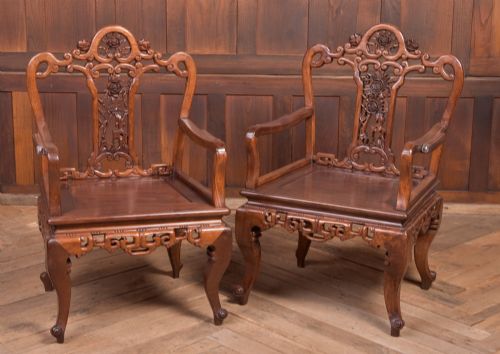


Traditional Chinese Wooden Armchair
These traditional chinese wooden armchair examples bring centuries of seating design into your home with enduring craftsmanship.
Traditional Chinese Wooden Armchair
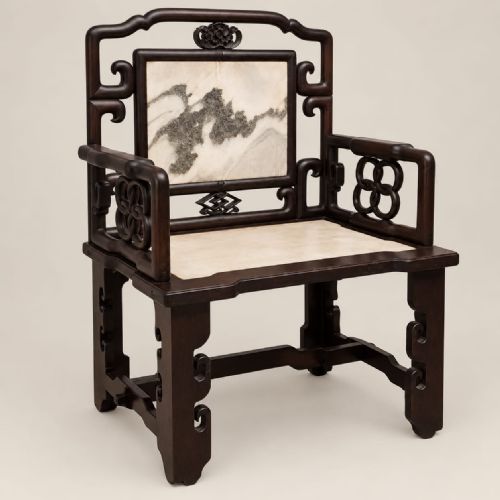
A traditional chinese wooden armchair brings sculptural form and structural integrity to an interior, drawing on centuries of regional woodworking design. Collectors encounter diverse iterations ranging from minimalist scholarly seats to ornate throne chairs.
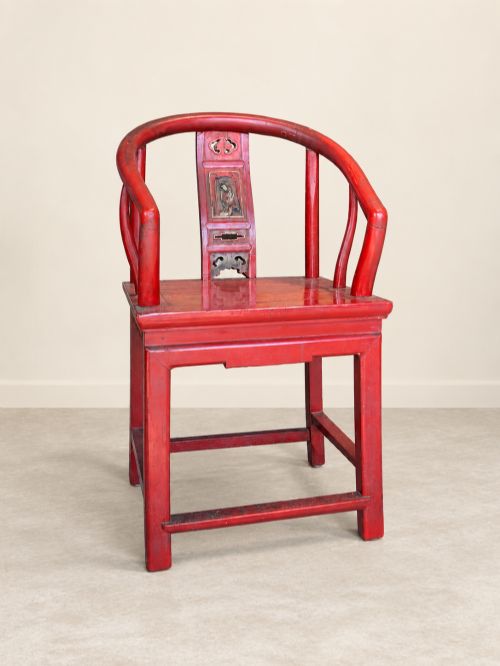
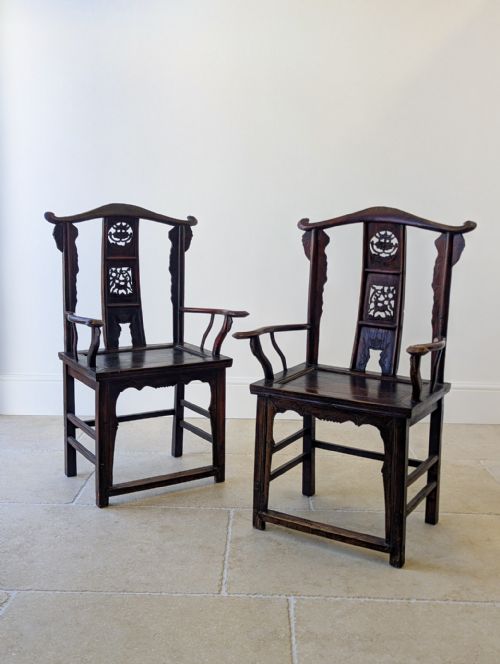
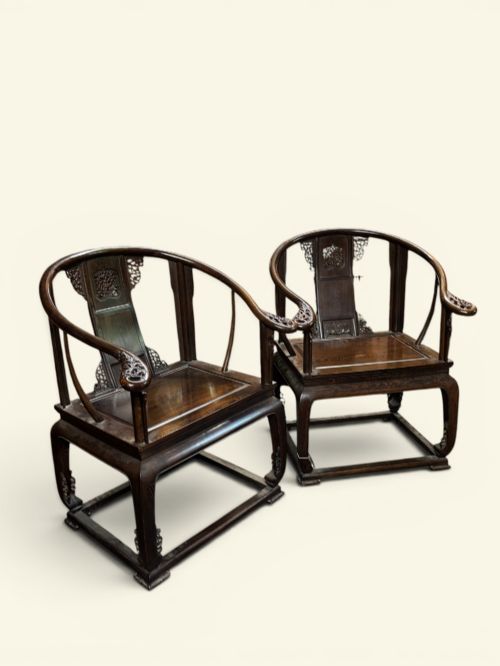
The selections span the nineteenth century and the early twentieth century, encompassing Victorian era interpretations alongside Qing dynasty examples and Ming style revivals. Horseshoe-back and yoke-back silhouettes dominate the offerings, often appearing in matched pairs.
Makers utilised resilient regional timbers to construct these seating forms, creating functional objects that served scholars, officials, and households. The inventory balances simple elm seating with richly finished hardwood and lacquered surfaces.
What varies in quality
The calibre of a traditional chinese wooden armchair rests upon the selection of timber and the complexity of its carving. Dense hardwoods and well-figured elm command higher regard than softer or more plain materials.
Proportion and the integrity of the original joinery dictate the standing of a piece within its period. Chairs retaining original lacquer, brass inlay, or surface colour demonstrate superior historical preservation.
The inventory includes horseshoe-back chairs, yoke-back scholar chairs, and day beds.
The Traditional Chinese Wooden Armchair Glossary
- Horseshoe-back
- A distinctive seating form where the crest rail curves continuously to form the armrests in a single sweeping line. This profile provides ergonomic support and a balanced silhouette.
- Yoke-back
- A chair style featuring a top crestrail that resembles a traditional ox yoke, often paired with a central splat. Scholars and officials favoured this design for its upright posture.
- Elm
- A durable, fibrous timber utilised extensively in regional Chinese cabinetmaking for its resilient grain. It takes lacquer and polish exceptionally well.
- Hardwood
- A dense category of timber including rosewood and other heavy Asian woods chosen for structural longevity. These materials allow for crisp, detailed carving.
- Qing Dynasty
- The final imperial dynasty of China, spanning from the seventeenth to the early twentieth century. Pieces from this era display evolving decorative tastes and refined joinery.
Traditional Chinese Wooden Armchair: Frequently Asked Questions
How do I date a Chinese wooden chair?
Dating relies on examining the timber species, joinery techniques, and surface finishes such as lacquer or polish. Stylistic markers connect pieces to specific periods like the Qing dynasty or the early twentieth century.
Comparing structural wear and construction methods against known regional examples helps establish the likely era of manufacture.
Where should I place an antique armchair?
These armchairs function effectively as statement seating in hallways, living rooms, or studies where their architectural forms can be appreciated. Pairs work well flanking a console table or fireplace.
Placing them away from direct heat sources protects the timber and any historical lacquer finishes from drying out.
What is a scholars chair?
A scholars chair typically refers to yoke-back or upright seating designed to encourage a straight posture during reading and writing. These forms emphasise refined lines and subtle carving over excessive ornamentation.
They reflect the aesthetic values of the Chinese literati class who prized simplicity and intellectual pursuits.